Lewis Hamilton describes terrifying brake failure during Spanish Grand Prix at Madrid street circuit

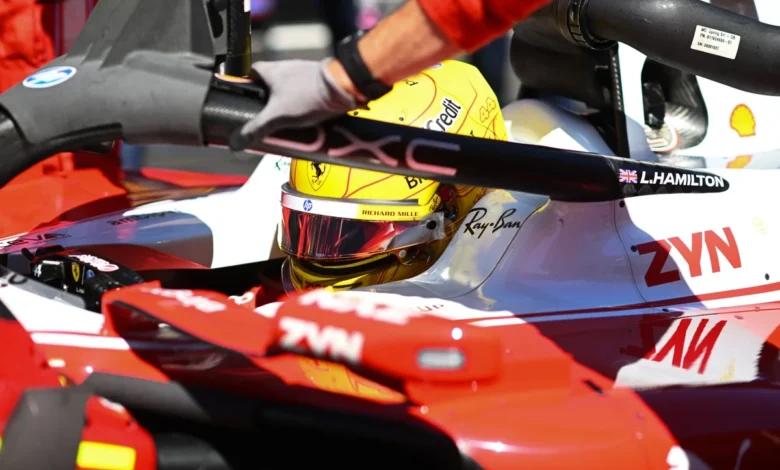
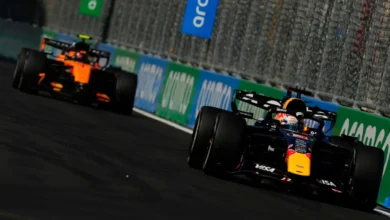
The high-stakes drama of the Formula 1 season reached a fever pitch at the Madrid Grand Prix, where Ferrari’s championship contender Lewis Hamilton was forced into an early retirement following a catastrophic brake failure. The incident, which unfolded during the opening laps of the 57-lap contest, saw the seven-time world champion battling for position against Red Bull’s Max Verstappen before his car’s braking system suffered a terminal malfunction. What began as a promising Sunday for the Scuderia quickly devolved into a hazardous exercise in vehicle control, with Hamilton fortunate to escape the wall-lined, 5.4-kilometer street circuit without a high-speed collision.
A Chronology of the Failure
The trouble began almost immediately as the field navigated the technical opening sector of the Madrid track. According to telemetry and Hamilton’s own post-race account, the initial symptoms were subtle but alarming. As he approached Turn 5 on the first lap, the brake pedal, which had performed nominally during the formation lap and the initial acceleration phase, underwent a sudden change in travel.
"It was really unexpected," Hamilton explained in the aftermath. "I was braking for Turn 5 on the first lap and the car was stopping normally. And then the pedal took a step, and I ended up carrying loads of speed into the corner because it didn’t stop as well."
For a fleeting moment, the system seemed to stabilize, providing a glimmer of hope for the Ferrari garage. Hamilton reported that the pedal pressure returned to a functional level for the subsequent corner, leading both the driver and the pit wall to believe that a software recalibration or a adjustment of brake bias settings might mitigate the issue. However, this optimism was short-lived. By the second lap, the failure progressed from a partial loss of pressure to a complete collapse.
"All of a sudden the pedal just went fully to the end," Hamilton stated. At that stage, the car was effectively a liability, incapable of reliable deceleration on a track where heavy braking zones define the entry points to crucial overtaking opportunities. Realizing the danger to both the driver and the surrounding field, Ferrari ordered an immediate retirement.
The Engineering Perspective: Safety Over Speed
The decision to withdraw the car was not merely a tactical maneuver but a safety imperative. Fred Vasseur, the Ferrari Team Principal, addressed the media shortly after the retirement, emphasizing that the volatile nature of the Madrid street circuit left the team with no viable alternative.
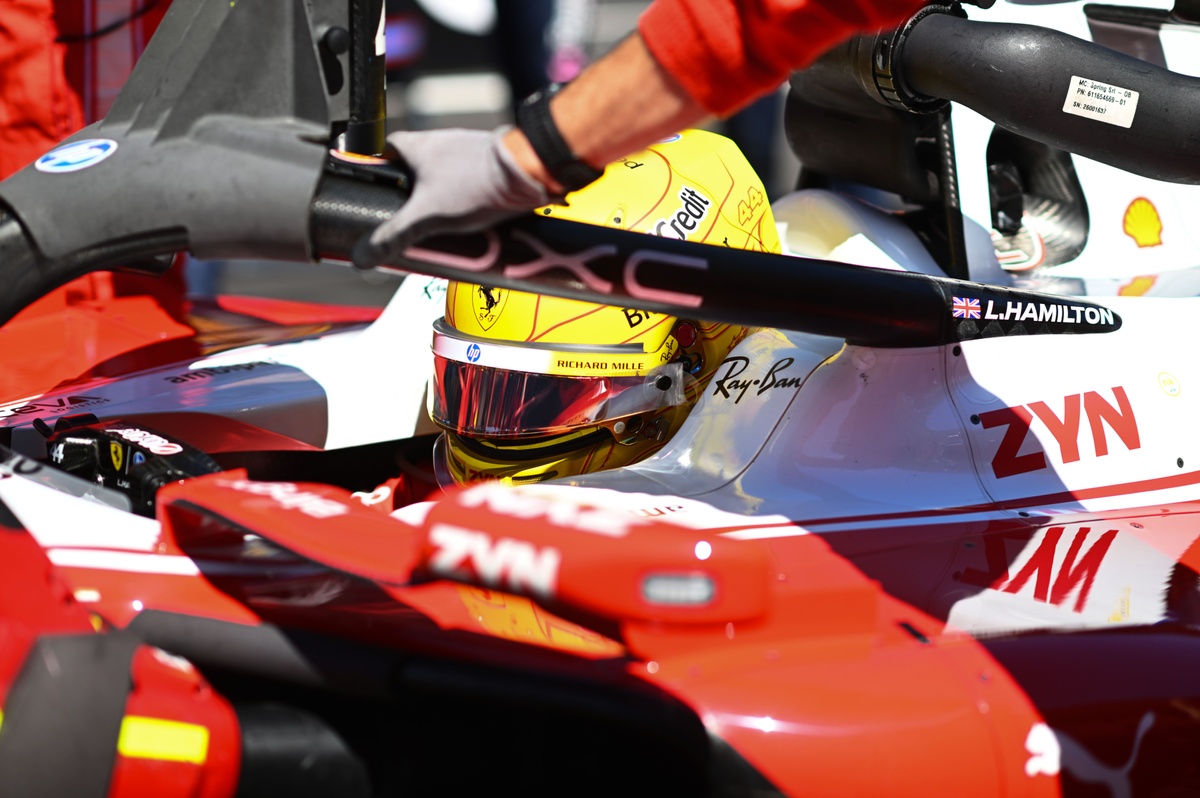
"We tried to fix it from the pit wall and then it happened again a couple of corners later," Vasseur noted. "Staying on track made no sense in a crazy race. We didn’t want to take any risk."
From an engineering standpoint, brake failure in a modern Formula 1 car is an anomaly of the highest order. The systems are dual-circuit, meaning that if one hydraulic line fails, the other is designed to maintain at least partial braking force. The fact that the pedal hit the floor suggests a catastrophic failure, possibly involving the master cylinder or a significant breach in the hydraulic system. On a street circuit like Madrid, where the proximity of the concrete walls leaves zero margin for error, the decision to pull the car off the track prevented what could have been a race-ending accident for multiple drivers.
The Strategic Context of the Madrid Circuit
The Madrid Grand Prix has quickly gained a reputation for being a "procession" track, where track position is the primary currency of success. Because the circuit layout is narrow and characterized by low-speed corners and limited run-off areas, the ability to overtake is significantly diminished compared to traditional purpose-built circuits like Spa-Francorchamps or Silverstone.
Vasseur’s analysis of the race dynamics highlights the frustration felt within the Ferrari camp. Despite the retirement, the team remained confident that their baseline pace was competitive with the leaders. "When you see the pace of Charles [Leclerc], you can imagine that we had the pace to fight with everybody," Vasseur remarked. "It’s more a matter of track position. Honestly, it was mega difficult to overtake today."
This reality places even greater weight on the retirement of Hamilton. In a race where the "DRS train" effect dominates, losing a high-qualifying car early in the race removes a key defensive asset that could have protected the team’s overall points haul. By the time Hamilton was forced to retire, the window for recovery had already closed, leaving the Scuderia to focus their resources entirely on Leclerc’s car to salvage the weekend.
Implications for the Championship Standings
The retirement is a significant blow to Hamilton’s campaign, especially given the tight margins in the current Constructors’ and Drivers’ championships. Every point dropped due to mechanical reliability issues represents a missed opportunity to close the gap on the dominant Red Bull machinery.
Furthermore, the incident has drawn scrutiny toward Ferrari’s quality control processes. This is not the first time Hamilton has faced mechanical challenges in Madrid; earlier in the weekend, he was involved in a controversy during Free Practice 3 where he reportedly ignored team instructions to stop the car following minor damage. While that incident was unrelated to the race-day brake failure, it created a narrative of tension that the team will be eager to move past.
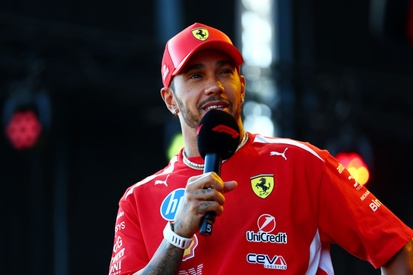
The technical team at Maranello is currently conducting a full forensic analysis of the braking system. The recovered components have been shipped back to the factory for laboratory testing to determine whether the failure was caused by a faulty sensor, a hydraulic leak, or a heat-induced breakdown of the brake material. Such investigations are standard procedure, but the findings will be critical in ensuring that the failure is not systemic, especially with the upcoming high-speed rounds of the championship.
The Broader Impact on the 2024 Season
As the F1 circus prepares to depart Madrid, the focus shifts to reliability and consistency. The 2024 season has been defined by the fine margins between the top teams, and mechanical DNFs (Did Not Finish) are the most damaging outcome for any driver’s championship aspirations.
For Lewis Hamilton, the focus now turns to the next race. Despite the disappointment, the seven-time champion remained composed in his post-race interviews, acknowledging the luck involved in avoiding a crash while maintaining his focus on the developmental trajectory of the car. The data collected from the first two laps of the Madrid race, even in their failed state, will be integrated into the team’s simulation models to prevent a repeat of this scenario.
For the spectators and the sport as a whole, the incident serves as a stark reminder of the inherent dangers of Formula 1. Even in an era of unprecedented safety technology, the physical limits of the machinery can still be tested in unpredictable ways. The race in Madrid will be remembered as a day of "what ifs" for Ferrari—what if the brakes hadn’t failed, what if the track position had been easier to defend, and what if the championship challenge had remained intact.
As the season progresses, the technical failure in Madrid will likely be viewed as a pivotal moment—either as the turning point where reliability concerns were addressed, or as a cautionary tale of how quickly a championship bid can be derailed by a single faulty component. Ferrari’s ability to rectify these issues and regain their competitive edge will be the defining narrative of their season in the coming weeks. For now, the team returns to the drawing board, leaving the wall-lined streets of Madrid behind, with the sobering knowledge that in Formula 1, speed is nothing without the ability to stop.