As Michael Mann’s seminal forensic thriller, Manhunter, approaches its 40th anniversary, a special theatrical re-release of Manhunter: The Final Cut on July 24th prompts a renewed examination of this critically acclaimed yet often overlooked masterpiece. While many cinephiles champion films that linger in the mind, prompting repeated viewings and deep emotional connections, Manhunter stands as a singular example of a film that not only captures the viewer but fundamentally alters their perception of the thriller genre. The author of this analysis, a self-proclaimed "movie freak" who penned a memoir on the subject, cites Manhunter as a supreme instance of cinematic possession, alongside influential works like Nashville, Carrie, and Mean Streets. This deep dive into Mann’s 1986 film explores its unique contributions to cinema, its often-misunderstood aesthetic, and its enduring relevance in a world grappling with complex narratives and the very nature of seeing and being seen.
The Genesis of a Forensic Masterpiece
Manhunter, adapted from Thomas Harris’s 1981 novel Red Dragon, introduced the world to Hannibal Lecter, albeit in a performance far removed from the iconic portrayal that would follow. The film’s initial reception was somewhat muted, overshadowed by the later success of The Silence of the Lambs. However, for a dedicated contingent of film enthusiasts and critics, Manhunter has long been recognized as a superior, more artistically profound exploration of the serial killer psyche and the intricate process of forensic investigation.
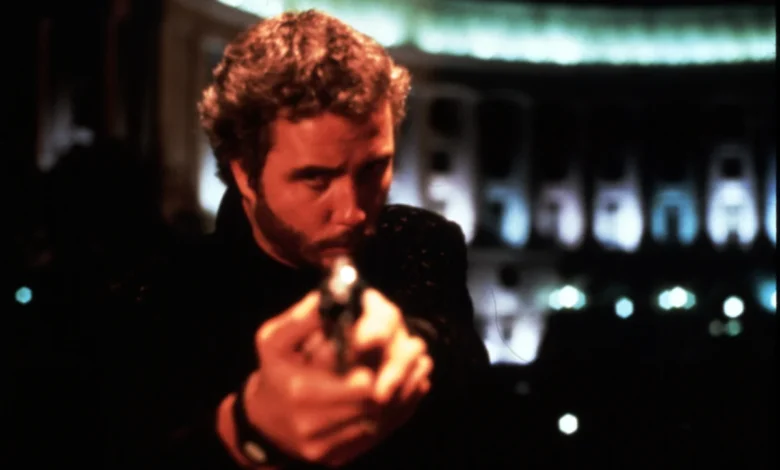
The narrative centers on Will Graham, a brilliant but haunted FBI profiler, portrayed by William Petersen. Graham is coaxed out of retirement to hunt a terrifying serial killer known as the "Tooth Fairy," who meticulously murders entire families. Graham’s method involves an unnerving psychological immersion into the killer’s mind, a process that risks his own sanity. This approach, coupled with the film’s distinctive visual style and haunting soundscape, set Manhunter apart from contemporary thrillers.
Aesthetic Innovation and the "Cool" Factor
Michael Mann, already a recognized force in television for his groundbreaking work on Miami Vice, brought his signature visual flair and atmospheric storytelling to Manhunter. The film’s aesthetic, characterized by saturated neon colors, moody lighting, and a meticulously curated soundtrack featuring synth-pop and post-punk tracks, was both a product of its time and remarkably prescient. This stylistic boldness, while contributing to the film’s "cool" factor, also led to its initial categorization as a product of the 1980s, a label that, for some, implied superficiality or datedness.
The cinematography by Dante Spinotti is particularly noteworthy. The film employs a unique visual language that is both sensual and clinical, blending the soft glow of "magic hour" with the starkness of fluorescent lights. This visual dichotomy mirrors the film’s thematic exploration of the juxtaposition between primal savagery and the cold, analytical nature of forensic science. Mann himself has described the film’s visual style as a "lush neon fever dream," a deliberate choice to reflect its profound engagement with the act of seeing.
The Pillars of Manhunter‘s Brilliance
The enduring power of Manhunter can be attributed to several key elements:
The Dawn of the Forensic Thriller
Manhunter is widely regarded as a foundational text in the forensic thriller genre. It moved beyond conventional detective work to showcase the nascent, cutting-edge techniques of FBI profiling and crime scene analysis. The film’s depiction of technologies such as infrared imaging to reveal hidden markings or detailed examinations of blood spatter provided audiences with an unprecedented glimpse into the scientific underpinnings of criminal investigation. However, the film transcends mere procedural depiction by using these forensic details as a metaphorical gateway into the killer’s consciousness and the broader societal implications of technology’s pervasive influence. The meticulous collection of evidence becomes a testament to the ordered universe that the killer’s animalistic rage violently disrupts.
An Unflinching Portrayal of the Serial Killer
Tom Noonan’s portrayal of Francis Dollarhyde, the "Tooth Fairy," is a masterclass in chilling authenticity. Noonan, who passed away in February 2023, delivered a performance that eschewed sensationalism for a deeply unsettling depiction of a truly psychotic mind. His halting voice, the projection of rage fused with a condescending superiority, and his chilling pronouncements like "You owe me awe" immerse the audience in Dollarhyde’s damaged psyche. Unlike other fictional serial killers, Dollarhyde is presented not as a caricature but as a profoundly damaged individual driven by deep-seated trauma and a disturbing desire for connection, albeit through violence. This nuanced portrayal, where the killer is haunted and his actions stem from a profound sense of being wronged, distinguishes Manhunter from more gratuitous explorations of the subject.
Brian Cox’s Mesmerizing Hannibal Lecter
Before Anthony Hopkins became synonymous with Hannibal Lecter, Brian Cox delivered a mesmerizing and original interpretation of the character in Manhunter. Confined to a sterile white cell, Cox’s Lecter is a figure of immense intellectual power and chilling amusement. His performance is defined by precise line readings, a sardonic wit, and an unnerving ability to manipulate and observe. Cox’s Lecter is not merely a monster but a profound philosophical provocateur, questioning the nature of existence and the very definition of humanity through his chillingly detached commentary on murder. His iconic lines, such as "Have you ever seen blood in the moonlight, Will? It appears quite black," reveal a disturbing fascination with the aesthetic of violence, suggesting homicide as a perverse expression of a higher state of being.
William Petersen’s Compelling Will Graham
William Petersen’s portrayal of Will Graham is central to the film’s emotional resonance. In an era often defined by information overload and conflicting narratives, Graham’s quest to piece together disparate clues and restore order to a chaotic world mirrors the viewer’s own struggle for understanding. Petersen imbues Graham with a quiet intensity, a steely gaze, and a profound vulnerability. The film’s most moving scene, where Graham explains to his stepson how his immersion into Lecter’s mind fractured his own, underscores the personal cost of confronting profound darkness. This scene highlights the film’s exploration of the psychological toll that witnessing extreme evil can exact, even on a fundamentally good man.
The Transcendent Power of the Soundtrack
The music in Manhunter is not mere accompaniment but an integral part of its narrative and emotional fabric. While Michael Mann was unable to secure the rights to Pink Floyd’s "Comfortably Numb," he ingeniously incorporated its final chord sequence into the film’s synth score, creating a poignant and haunting sonic landscape. The soundtrack, featuring a curated selection of post-punk and electronic music, enhances the film’s atmosphere of dread, longing, and psychological tension. Songs like Shriekback’s "This Big Hush" capture the internal sadness and desire of the characters, while The Prime Movers’ "Strong as I Am" amplifies the mounting paranoia and ominous undertones. The inclusion of Iron Butterfly’s "In-A-Gadda-Da-Vida" signals a pivotal moment where the film embraces a sense of exhilarating madness.
A Tapestry of Unforgettable Moments
Manhunter is replete with indelible images and scenes that contribute to its lasting impact. The terrifying reveal of crime scene photos when Graham’s file falls open on an airplane, the visceral image of a tabloid reporter engulfed in flames, and the chilling exchange between Dollarhyde and Reba ("Take my word for it. I’m smiling.") are just a few examples of the film’s potent visual storytelling.
However, the film’s ultimate triumph lies in its depiction of the moment of deduction. Graham’s breakthrough is not a single epiphany but a culmination of layered observations and insights, beginning with the subtle clue of the killer removing surgical gloves. This leads him to a profound understanding of the killer’s desperate need for love and recognition from his victims. By piecing together the killer’s methods, his use of fractured mirrors to engage with his victims’ reflections, and his covetous desires, Graham achieves a profound synthesis of perception. At this juncture, Manhunter transcends its genre to become a powerful fable of empathy and the profound human need for connection, even in its most twisted manifestations.
The "Final Cut" Debate: Artistic Integrity and Legacy
The release of Manhunter: The Final Cut on the occasion of the film’s 40th anniversary reignites discussions surrounding director’s cuts and the integrity of artistic works. The author expresses a general skepticism towards director’s cuts, arguing that great films, like novels or paintings, possess a unique identity that should not be altered. While acknowledging the DVD restoration released in 2003 as a precursor to this new version, the author finds fault with certain additions and subtractions.
Specifically, the extended dialogue in the Atlanta police station scene and additional lines in the Lecter sequence are seen as diluting the original impact. The omission of visual details like splattered condiments during a shootout is also noted with disappointment. The most significant criticism is reserved for a newly added scene at the end where Graham visits another family, which the author deems "incredibly bad." This perspective emphasizes the belief that Manhunter, in its original form, achieved a sacred balance of form and content that should remain undisturbed.
A Greater Thriller Than Its Successor?
The enduring debate over Manhunter‘s standing in relation to The Silence of the Lambs continues to fascinate. While acknowledging the critical and commercial success of Jonathan Demme’s 1991 Oscar winner, the author argues that Manhunter offers a richer, deeper, and ultimately more profound cinematic experience. The comparison of Lecter performances, while subjective, highlights Manhunter‘s possession of a more terrifying and psychologically complex villain in Dollarhyde, whose motivations are rooted in profound damage. Where The Silence of the Lambs excelled in its crafted suspense and iconic characters, Manhunter is posited as the thriller that truly captures the zeitgeist of our complex times, revealing the light that illuminates the darkness within.
In conclusion, as Manhunter: The Final Cut graces screens once more, it offers an opportunity to re-evaluate a film that, despite its initial underappreciation, has cemented its place as a groundbreaking work of cinematic art. Its innovative aesthetics, profound psychological depth, and compelling performances continue to resonate, solidifying its status as a timeless masterpiece of the thriller genre.