Methane Emissions and the Global Climate Crisis: Sources, Measurement, and Solutions for a Warming Planet

Methane, a colorless and odorless hydrocarbon, has emerged as a central focus of international climate policy due to its status as the second most significant contributor to global warming after carbon dioxide. Comprising one carbon atom and four hydrogen atoms (CH4), methane is the primary component of natural gas, a fuel source currently responsible for roughly 25 percent of the world’s electricity generation. Despite its relatively short lifespan in the atmosphere—approximately 12 years compared to the centuries-long persistence of CO2—methane possesses a heat-trapping potency that is significantly higher in the short term. Over a 20-year horizon, methane is 86 times more powerful than carbon dioxide at warming the planet, making its reduction a critical lever for stabilizing global temperatures within the next two decades.
The Science and Origin of Methane
Methane is produced through both geological and biological pathways. Geologically, it forms over millions of years as heat and pressure act upon organic matter buried deep within the Earth’s crust. This process creates the fossil fuel reserves tapped by the oil and gas industry. Biologically, methane is a byproduct of methanogenesis, a form of anaerobic respiration conducted by microorganisms known as archaea. These microbes thrive in oxygen-poor environments, such as the waterlogged soils of wetlands, the digestive tracts of ruminant animals like cows and sheep, and the depths of landfills.

Since the dawn of the Industrial Revolution, human activity has disrupted the natural balance of methane production and absorption. Atmospheric concentrations have surged from pre-industrial levels of approximately 722 parts per billion (ppb) to a record-breaking 1,934 ppb in 2023, representing a 265 percent increase. Scientific consensus, including reports from the Intergovernmental Panel on Climate Change (IPCC), indicates that human activities are responsible for approximately 60 percent of current methane emissions, with the remainder originating from natural sources like wetlands and permafrost.
Methodologies in Methane Measurement
Accurately quantifying methane emissions remains one of the greatest challenges in climate science. Researchers generally utilize two distinct methodologies: "bottom-up" and "top-down" assessments.
Bottom-up approaches rely on ground-level data, often involving direct measurements at specific facilities or using emission factors to estimate output based on activity levels. For instance, an agency might estimate a country’s total methane from cattle by multiplying the number of cows by the average methane produced per animal. However, this method frequently underestimates total emissions because it often fails to account for "super-emitters"—specific sites or incidents where equipment failure or venting leads to massive, localized leaks.

Top-down approaches utilize aerial surveillance, including airplanes, high-altitude drones, and increasingly sophisticated satellite technology. Satellites such as GHGSat and the recently launched MethaneSAT have revolutionized the field by detecting plumes that ground-level inventories miss. Recent studies using these technologies found that U.S. oil and gas methane emissions were 60 percent higher than estimates provided by the Environmental Protection Agency (EPA). This data discrepancy highlights a significant "implementation gap" between reported emissions and the actual atmospheric reality.
Primary Anthropogenic Sources: Agriculture, Energy, and Waste
The vast majority of human-caused methane emissions—over 90 percent—originate from three sectors: agriculture, fossil fuels, and waste management.
The Agricultural Footprint
Agriculture is the leading source of anthropogenic methane, accounting for approximately 40 percent of emissions. Within this sector, livestock production is the dominant contributor, specifically through enteric fermentation. As ruminant animals digest fibrous plants, microbes in their stomachs produce methane, which is primarily released through belching. Livestock manure, particularly when stored in liquid form in large-scale industrial operations, also releases significant quantities of the gas. Rice cultivation follows as the second-largest agricultural source, as flooded paddies provide the ideal anaerobic environment for methane-producing archaea.

Fossil Fuel Extraction and Distribution
The energy sector is responsible for roughly 35 percent of human-caused methane. In oil and gas operations, methane is released through intentional venting, flaring (burning off excess gas), and unintentional leaks throughout the supply chain. Coal mining is another major contributor; methane trapped within coal seams is released during the extraction process or through ventilation systems designed to prevent underground explosions. Recent satellite data identified over 1,000 "super-emitter" events in 2022 alone, with a single incident in Turkmenistan releasing methane at a rate equivalent to the total hourly emissions of France.
Waste Management
Landfills and wastewater treatment plants contribute approximately 20 percent of human-caused methane. As organic waste—such as food scraps and paper—decomposes in the oxygen-depleted environment of a landfill, it releases "landfill gas," which is roughly 50 percent methane. With global solid waste production expected to rise by 73 percent by 2050, emissions from this sector are projected to grow faster than any other human-caused source without intervention.
Natural Feedback Loops and the Tipping Point Risk
While human activity drives the current surge, natural sources like wetlands account for 40 percent of total methane emissions. However, these natural systems are increasingly being influenced by the "wetland methane feedback." As global temperatures rise and rainfall patterns shift, tropical and Arctic wetlands are expanding and warming, causing archaea to produce methane at accelerated rates.

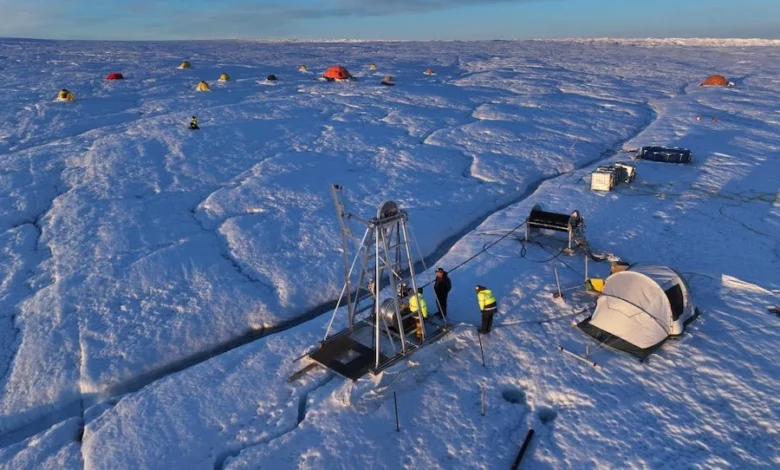
The most concerning feedback loop involves the thawing of Arctic permafrost. These frozen soils contain vast stores of organic carbon—roughly 2.5 times more than is currently in the atmosphere. As the Arctic warms at nearly four times the global average, the thawing of this ground allows microbes to begin decomposing long-frozen matter, releasing methane and CO2. Scientists warn that if this process reaches a "tipping point," it could trigger an irreversible cycle of warming that would be beyond human capacity to halt.
The "Bridge Fuel" Myth and the Role of LNG
For years, natural gas (composed mostly of methane) was marketed as a "bridge fuel" because it emits about half as much CO2 as coal when burned for electricity. This narrative has driven a massive expansion in Liquefied Natural Gas (LNG) infrastructure, particularly in the United States, which became the world’s leading exporter in 2022.
However, recent climate modeling has debunked the bridge fuel theory by incorporating methane leakage. If as little as 0.2 percent of methane leaks during extraction, processing, or transport, the total climate impact of natural gas becomes equal to or worse than that of coal. Some studies now suggest that when full lifecycle emissions are considered, LNG has a 33 percent greater global warming potential than coal over a 20-year period. Consequently, environmental advocates and organizations like the International Energy Agency (IEA) have emphasized that a rapid phase-out of all fossil fuels, including gas, is necessary to meet the 1.5-degree Celsius target established by the Paris Agreement.

Public Health and the Ozone Connection
The impact of methane extends beyond temperature rise; it is a primary precursor to ground-level ozone (smog). When methane reacts with other pollutants in the presence of sunlight, it forms ozone, a toxic gas that damages lung tissue and exacerbates respiratory conditions like asthma. Methane-generated ozone is currently linked to approximately 500,000 premature deaths annually worldwide. Furthermore, ground-level ozone reduces agricultural yields by inhibiting plant growth, causing the loss of millions of tons of staple crops like wheat and rice each year.
Strategic Solutions and Global Policy
Technological and systemic solutions exist that could reduce human-caused methane emissions by 45 percent by 2030. In agriculture, interventions include adding seaweed or chemical inhibitors like 3-NOP to cattle feed, which can reduce enteric emissions by up to 82 percent. Improving rice cultivation through "Alternative Wetting and Drying" techniques can cut emissions by nearly half.
In the energy sector, the IEA estimates that 70 percent of methane emissions from oil and gas operations can be eliminated using existing technology, often at no net cost, by simply fixing leaks and ending the practice of routine venting. In the waste sector, diverting organic matter from landfills to composting facilities or using anaerobic digesters to capture biogas are proven strategies.

On the international stage, the Global Methane Pledge, launched at COP26, represents a significant diplomatic milestone. With over 150 countries committed to a collective 30 percent reduction in methane emissions by 2030, the framework for action is in place. However, as of 2024, global emissions continue to rise, highlighting a critical need for enforceable domestic regulations and transparent monitoring.
Broader Impact and Future Outlook
The trajectory of methane emissions will largely determine the success of global climate efforts in the coming decades. Unlike carbon dioxide, which requires centuries to clear from the atmosphere, the rapid removal of methane offers an immediate "cooling" effect. Reducing methane is widely considered the single fastest way to slow the rate of global warming and avoid the most catastrophic climate tipping points.
The transition away from methane-intensive systems requires a multi-faceted approach involving aggressive industrial regulation, a shift in global dietary patterns toward plant-based foods, and a total transformation of the energy landscape. While the challenge is immense, the dual benefits of stabilizing the climate and improving global public health make methane reduction an indispensable priority for the 21st century. Accomplishing these goals will require not only technological innovation but also the political will to challenge the economic structures that currently profit from methane-intensive production.