The Methane Challenge: Understanding the Potent Greenhouse Gas and the Global Strategy for Rapid Decarbonization

Methane, a colorless and odorless hydrocarbon, has emerged as the most critical focal point in the immediate struggle to stabilize the Earth’s climate. While carbon dioxide (CO2) remains the primary long-term driver of global warming, methane (CH4) is significantly more potent in the short term, acting as a "climate blowtorch" that accelerates atmospheric heating. As of 2024, atmospheric methane levels have reached unprecedented heights, rising 265 percent above pre-industrial levels to approximately 1,934 parts per billion (ppb). This surge is responsible for roughly one-third of the total global warming experienced since the Industrial Revolution. Because methane persists in the atmosphere for only about 12 years—compared to the centuries-long lifespan of CO2—reducing its emissions offers the fastest possible way to slow the rate of warming over the next two decades.
The Chemical Profile and Climate Potency of Methane
Methane is a simple molecule consisting of one carbon atom and four hydrogen atoms. Despite its simplicity, its ability to trap heat is extraordinary. Over a 20-year period, a single unit of methane is 86 times more effective at trapping heat than a unit of CO2. Even when measured over a 100-year horizon, it remains 28 times more potent. This high global warming potential (GWP) means that even relatively small releases of methane can have outsized impacts on the global temperature.

The gas is formed through two primary pathways: geological and biological. Geologically, it is created deep underground through the application of intense heat and pressure on organic matter over millions of years, forming the natural gas deposits that currently provide 25 percent of the world’s electricity. Biologically, it is produced via methanogenesis, a process where microorganisms known as archaea break down organic material in oxygen-poor environments, such as wetlands, the digestive tracts of livestock, and landfills.
Evolution of Measurement: From Ground Estimates to Satellite Surveillance
Historically, measuring methane emissions relied on "bottom-up" methodologies. These involved taking localized measurements—such as the amount of gas released by a single cow or a specific valve at a gas plant—and multiplying those figures by the total number of cows or valves in a region. However, recent scientific advancements have revealed that these estimates are frequently and significantly inaccurate.
A "top-down" revolution, led by high-altitude aircraft and advanced satellite constellations, has transformed the field of methane monitoring. Organizations such as GHGSat and the Environmental Defense Fund (via MethaneSAT) now provide real-time data on methane plumes from space. These technologies have identified "super-emitters"—specific facilities or incidents responsible for massive leaks. For instance, satellite data has shown that the largest 5 percent of leaks in the oil and gas industry often contribute more than 50 percent of total leakage volume.

One landmark study found that direct measurements of U.S. oil and gas methane emissions were 60 percent higher than the estimates provided by the U.S. Environmental Protection Agency (EPA). This discrepancy highlights an "implementation gap" between reported emissions and the actual atmospheric reality, complicating international efforts to meet climate targets.
Primary Anthropogenic Sources: Agriculture, Energy, and Waste
Human activities are responsible for approximately 60 percent of global methane emissions. These emissions are largely concentrated in three sectors, each presenting unique challenges for mitigation.
The Agricultural Footprint
Agriculture is the leading source of human-caused methane, accounting for 40 percent of emissions. The majority of this—about 32 percent—stems from livestock, specifically ruminant animals like cattle, sheep, and goats. Through enteric fermentation, these animals produce methane as a byproduct of digestion, which is then released primarily through burping. Manure management, particularly in large-scale industrial pig and dairy farms where waste is stored in liquid lagoons, further contributes to the sector’s total. Additionally, rice cultivation accounts for 8 percent of human-caused methane, as flooded paddies create the anaerobic conditions perfect for methane-producing microbes.

The Fossil Fuel Industry
The energy sector contributes 35 percent of anthropogenic methane. In the oil and gas industry, methane is released during extraction, transport, and processing through intentional venting, flaring, and accidental leaks. Coal mining is also a significant contributor; methane trapped in coal seams is released during the mining process or seeps from abandoned mines. Despite industry claims of efficiency, recent data suggests that the expansion of liquefied natural gas (LNG) infrastructure may be negating the climate benefits of switching from coal to gas due to high leak rates across the global supply chain.
Waste Management
Landfills and wastewater treatment systems are responsible for 20 percent of emissions. As organic waste—such as food scraps and paper—decomposes in the oxygen-depleted environment of a landfill, it produces "landfill gas," which is roughly half methane. With global solid waste production expected to rise by 73 percent by 2050, the waste sector represents the fastest-growing source of methane emissions in developing nations.
Natural Sources and the Threat of Feedback Loops
While 60 percent of methane is human-caused, the remaining 40 percent comes from natural sources, dominated by wetlands. Tropical and Arctic wetlands provide the ideal environment for methanogenesis. However, scientists are increasingly concerned about "positive climate feedback loops," where human-induced warming triggers natural systems to release even more methane.

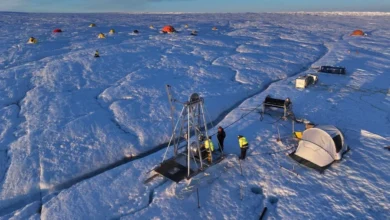
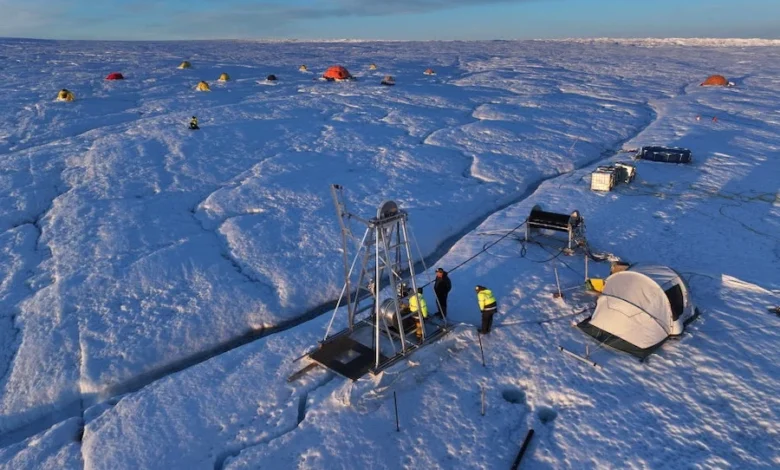
In the Arctic, the thawing of permafrost—soil that has remained frozen for thousands of years—is a major concern. The Arctic contains approximately 2.5 times more carbon underground than is currently in the atmosphere. As temperatures rise, microbes in the newly thawed soil begin to break down ancient organic matter, releasing methane and CO2. Similarly, warmer temperatures and shifting rainfall patterns are causing tropical wetlands to expand and emit methane at rates higher than previously modeled. These feedback loops threaten to create an irreversible cycle of warming that could bypass human efforts to control emissions.
The LNG "Bridge Fuel" Controversy
For years, natural gas was promoted as a "bridge fuel" because it emits about half as much CO2 as coal when burned. This narrative fueled a massive global expansion of LNG infrastructure, particularly in the United States, which became the world’s top exporter in 2022. However, recent analysis has called this "bridge" into question.
Research indicates that if as little as 0.2 percent of methane leaks during the production and transport of natural gas, its climate impact becomes equal to that of coal. Some studies now suggest that when the full lifecycle of LNG is considered—including the energy-intensive process of liquefaction and shipping—its 20-year global warming potential may be 33 percent higher than coal. This has led to intense pressure on policymakers to halt the construction of new LNG terminals, with activists like Bill McKibben warning that the LNG build-out could "overwhelm our efforts to rein in global warming."

Public Health and Economic Co-benefits of Reduction
Reducing methane is not only a climate necessity but also a public health imperative. Methane is a primary precursor to ground-level ozone (smog), which is formed when methane reacts with other pollutants in the presence of sunlight. Ground-level ozone is a toxic air pollutant that damages lung tissue, exacerbates asthma, and reduces crop yields.
Current estimates suggest that methane-generated ozone is responsible for approximately 500,000 premature deaths annually. Experts calculate that for every million metric tons of methane reduced, 1,430 annual deaths related to respiratory and heart disease could be prevented. Furthermore, such reductions would save 145,000 metric tons of essential crops like wheat and soy each year, bolstering global food security.
Global Policy and the Road Ahead
The international community took a significant step forward at COP26 in 2021 with the launch of the Global Methane Pledge. As of early 2025, 159 countries have committed to a collective goal of reducing global methane emissions by at least 30 percent from 2020 levels by 2030. If achieved, this could prevent 0.2 degrees Celsius of warming by 2050—a vital margin in the quest to limit total warming to 1.5 degrees Celsius.

However, the International Energy Agency (IEA) reports that while pledges are increasing, actual emissions remain at record highs. To bridge this gap, technical solutions are being deployed:
- In Agriculture: The use of seaweed supplements (like Asparagopsis) in cattle feed has shown the potential to reduce enteric methane by over 80 percent.
- In Energy: Implementing leak detection and repair (LDAR) programs and phasing out non-emergency flaring could reduce oil and gas methane by 70 percent, often at little to no net cost to companies.
- In Waste: Diverting organic waste from landfills to composting facilities and capturing landfill gas for energy use can significantly lower the waste sector’s footprint.
Conclusion and Implications
The fight against methane emissions represents the most immediate lever available to humanity to alter the trajectory of the climate crisis. While the transition away from carbon dioxide remains the long-term goal, the "methane sprint" is what will determine whether the world hits dangerous tipping points in the next two decades. The shift from theoretical estimates to precise satellite monitoring has removed the veil of anonymity from major emitters, providing a roadmap for targeted regulation and corporate accountability. As the 2030 deadline for the Global Methane Pledge approaches, the focus must shift from political commitment to aggressive, verifiable implementation across the agricultural, energy, and waste sectors. The success of these efforts will be measured not in words, but in the parts-per-billion concentration of the atmosphere.