Naomi Watts Dedicated Her Prestigious Donostia Award to David Lynch at the San Sebastián Film Festival

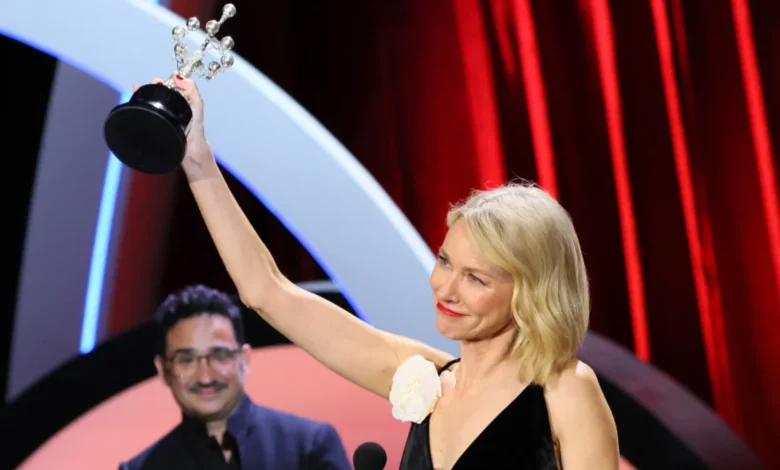
British-Australian actress Naomi Watts delivered an emotional and career-spanning tribute at the San Sebastián International Film Festival on Saturday night, dedicating her prestigious Donostia Award to the late, visionary filmmaker David Lynch. The accolade, which represents the festival’s highest honor recognizing lifetime achievement and extraordinary contributions to the cinematic arts, was presented to Watts prior to a special screening of her latest feature film, The Housewife.
The evening served as a profound celebration of Watts’ enduring career, bridging the struggles of her early decades in the industry with her current status as a celebrated icon who continues to reshape Hollywood’s narratives surrounding women and aging. Introduced by Spanish filmmaker J.A. Bayona—who directed Watts in her critically acclaimed, Oscar-nominated 2012 survival drama The Impossible—the event highlighted the deep professional and personal bonds the actress has forged with some of modern cinema’s most revered directors.
A Triumphant Recognition at San Sebastián
The San Sebastián International Film Festival, a cornerstone of the European cinematic calendar celebrating its current edition through late September, chose to honor Watts for her remarkable ability to seamlessly navigate between ambitious independent cinema and major studio blockbusters across both film and television. Festival organizers noted that her body of work exemplifies artistic versatility and unwavering courage in character selection.
Before taking the stage to receive the Donostia Award, Watts was greeted with a glowing introduction by J.A. Bayona. The director reflected fondly on their grueling yet transformative time shooting The Impossible, a feature based on the harrowing true story of a family caught in the catastrophic 2004 Indian Ocean tsunami.
“Naomi, I want to thank you for having trusted that young director who was scared to death,” Bayona said during his heartfelt speech. Praising her as the ultimate professional and collaborator, he added, “For being the best travel companion I’ve ever had, and for teaching me something that, today, I’m still looking for every time I start working in front of a new actor. I admire you deeply, but above all, I love you. And tonight I can also say that I am fulfilling a dream, a dream come true.”
Visibly moved by the tribute, Watts accepted the award and recalled the intense physical and emotional demands of filming The Impossible, a global box-office smash that grossed in excess of $198 million worldwide and earned Watts her second Academy Award nomination.
“Shooting in Spain with incredible crews, getting to know the Thai community, so many full, brilliant memories, and I loved it all, the whole experience, even the hard stuff,” Watts shared with the audience. Remembering the grueling aquatic sequences, she laughed as she acknowledged her co-star Tom Holland, who made his live-action feature film debut in the project at just 15 years old. “Even doing 30 takes in the water tank, submerged. Tom Holland called it the best water park he ever went to. I called it pure pain!”
Overcoming Rejection: The David Lynch Turning Point
While Watts now commands widespread international acclaim, her journey to stardom was fraught with formidable obstacles. During her acceptance speech, the 57-year-old actress offered a candid assessment of her early years in the industry, underscoring the resilience required to survive a decade of constant setbacks.
“It wasn’t an easy trajectory making a name for herself in Hollywood,” Watts recounted to the attentive audience. “There was so much rejection. A lot of people telling me I wasn’t going to make it.”
For ten consecutive years, Watts faced persistent professional hurdles and doors closed in her face. That trajectory, however, was fundamentally altered when she crossed paths with avant-garde auteur David Lynch. Lynch cast her in the surreal psychological thriller Mulholland Drive (2001), a role that catapulted her into international prominence and earned her unanimous critical praise.
“[He] saw me, and all those wounds from all that rejection now appeared as growth,” Watts said, honoring the late director. “He gave me the role that you couldn’t even dream for. He really just changed my life. He gave me a different understanding of what it meant to act, to trust instinct, to embrace uncertainty, and to not be afraid of the strange or the unexplained.”
Emphasizing the profound impact Lynch had on her artistic identity, Watts added, “More than that, he believed in something in me before I fully believed in myself, and that is a gift that you never forget. So tonight, I do really feel like this award is very much about David.”
Shifting Hollywood’s Narrative on Age and Gender
Beyond celebrating her past collaborations, Watts used her platform to address systemic biases within the entertainment industry, specifically regarding ageism and the longevity of female actors. Reflecting on the pessimistic predictions she encountered at the dawn of her career, Watts offered an empowering perspective on the evolving landscape of cinema.
“As a woman of my age, despite what I was told at 31 when I was launching Mulholland Drive—that it’d be all dried up and finished at the age of 40—I’m grateful beyond words to be part of shifting that narrative,” Watts stated to resounding applause.
Her rallying cry emphasized the vital commercial and cultural necessity of authentic representation. “We need to see ourselves. Women are consumers of films and storytelling too. We want to see ourselves reflected on screen.”
Concluding her remarks with an eye toward the future, Watts promised the audience that her artistic journey is far from over. “I still have lots more in me and I’m still reaching for the stars. So thank you for giving me the privilege of doing what I love to do. And David Lynch, I miss you!” she exclaimed, proudly lifting the Donostia Award into the air.
A Distinguished Filmography and Upcoming Projects
Watts’ career is defined by fearless choices and collaborations with some of the most prominent auteurs in global cinema. Following her breakout performance in Mulholland Drive, she received her first Academy Award nomination for her searing portrayal in Alejandro González Iñárritu’s 21 Grams (2003).
Over the decades, her diverse filmography has expanded to include high-profile blockbusters and challenging indie projects alike, working alongside directors such as Peter Jackson (King Kong), David Cronenberg (Eastern Promises), Clint Eastwood (J. Edgar), Michael Haneke (Funny Games), Audrey Diwan (Emmanuelle), and Noah Baumbach (While We’re Young). Her history with the San Sebastián Film Festival includes closing the official selection out of competition in 2009 with Rodrigo García’s Mother & Child.
At the festival, Watts presented her latest dramatic feature, The Housewife. Directed by Ben Shirinian and featuring a talented ensemble cast that includes Tye Sheridan, Michael Imperioli, and Luke Evans, the film is set against the backdrop of 1964 New York. Based on a true story, the narrative follows a young journalist who uncovers a potential Nazi officer living undercover in Queens, leading him to befriend the suspect’s charming wife—an investigation that quickly spirals into dark, unsettling territory.
Festival Context and Broader Implications
The presentation of the Donostia Award to Naomi Watts forms a central highlight of the 2026 San Sebastián International Film Festival, which runs from September 18 to September 26. The festival commenced on Friday with an inaugural Donostia Award presented to legendary German filmmaker Werner Herzog, followed by a screening of Fatih Akin’s Ghost Song.
Industry analysts view honors like the Donostia Award not merely as retrospectives of past achievements, but as strategic cultural validations that highlight the enduring relevance of veteran artists in a rapidly shifting media landscape. By celebrating figures like Watts—who actively champion complex female-led narratives and challenge historical industry limitations regarding age—festivals like San Sebastián continue to anchor critical discourse on the evolving responsibilities and artistic horizons of contemporary global cinema.