Noise Secures $5.5 Million in Seed Funding to Democratize Influencer Marketing Through Everyday Content Creators

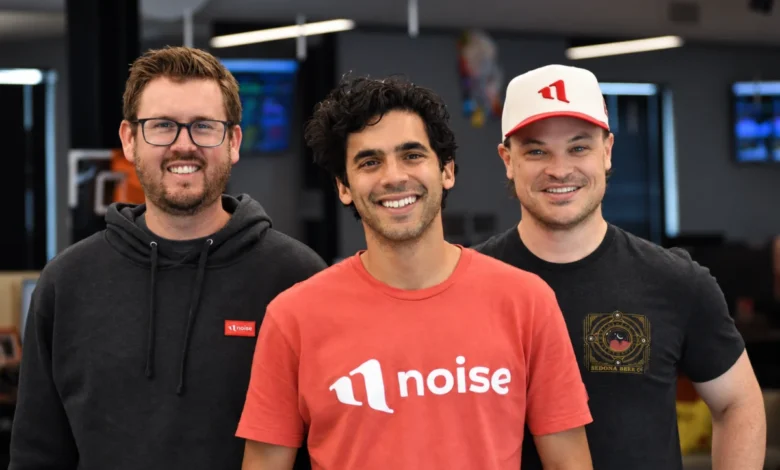
The creator economy is undergoing a structural transformation as platforms emerge to bridge the gap between traditional advertising and grassroots digital marketing. Noise, an innovative marketing platform designed to connect brands with everyday smartphone users rather than high-cost celebrity influencers, has announced a $5.5 million seed funding round. Led by Capital Midwest, M25, and Girshin Robotics, the new capital brings the startup’s total funding to $7.2 million. Additional participants in the financing round include CapitalizeVC and prominent operators from technology giants such as DoorDash.
Launched in 2025 by co-founders Diego Kafie, Stu Feldt, and Nic Weber, Noise addresses a critical inefficiency in modern digital marketing: the prohibitive cost and operational friction of executing large-scale influencer campaigns. By opening the platform to anyone with a mobile device—regardless of their existing follower count—Noise allows brands to deploy thousands of content creators simultaneously across major social media channels including TikTok, Instagram, Facebook, and YouTube. Unlike traditional models that rely on flat-fee sponsorships with established influencers, Noise operates on a performance-based payment structure, compensating creators per view.
The Evolution and Chronology of Noise
The genesis of Noise traces back to the founders’ previous entrepreneurial venture, a mobile gaming app called Playbite, which they developed and scaled over a two-year period. While attempting to grow Playbite within a constrained startup budget, Kafie, Feldt, and Weber experimented with unconventional creative marketing strategies. Initially, they recruited a small cohort of five gamers, instructing them on how to produce engaging social media content that organically promoted the mobile application.
As the experiment expanded to 10, 25, and eventually 100 participants, the founders observed a dramatic surge in app installations. Everyday users were successfully generating authentic daily content about mobile games on platforms like TikTok. Because these individuals were trained from scratch rather than hired as established influencers with high rate cards, the user acquisition model proved to be exceptionally cost-effective.
Recognizing a broader market need for this decentralized marketing approach, the trio transitioned away from Playbite to formally establish Noise in 2025. The platform has since scaled rapidly, currently boasting a community of 1.5 million registered creators. According to the company, top-tier creators on the platform are already earning upwards of six figures annually, while Noise monetizes the ecosystem by taking a percentage fee from the budgets brands allocate for delivered views.
Tapping Into the Booming Creator Economy
Noise enters the market at a time of profound cultural and economic shifts regarding employment and digital media. Recent data highlights that more than half of Generation Z—specifically 57% of young people—aspire to become full-time influencers, while just over 40% of all U.S. adults share a similar ambition. However, the path to traditional influencer success has become increasingly arduous, saturated, and financially burdensome for newcomers.
The startup competes within a growing infrastructure sector dedicated to streamlining content creation, alongside companies such as Billo and JoinBrands. By lowering the barrier to entry, Noise positions itself as a dual-sided solution: it offers cash-strapped brands a scalable alternative to expensive ad agencies while providing everyday internet users an accessible pathway to monetization.
Operational Mechanics and the New Organic-to-Ads Program
For participating brands, the process begins by submitting content briefs and campaign budgets through the Noise platform. The software automates the cumbersome logistics of creator sourcing, individual relationship management, and payment processing. This automation enables companies to execute synchronized marketing campaigns involving thousands of creators effortlessly.
To further maximize return on investment for brands, Noise recently introduced its Organic-to-Ads program. This feature permits companies to take high-performing videos originally generated organically by Noise creators and repurpose them as paid advertisements across platforms like Meta and TikTok, amplifying their reach beyond the creators’ individual organic channels.
Addressing Market Concerns and Quality Control
The rise of automated, low-cost creator platforms has periodically raised questions regarding fair compensation within the digital labor market. When questioned about whether platforms like Noise might undercut the earning potential of independent creators, CEO Diego Kafie defended the model’s structural integrity. He emphasized that brands establish their own rates for campaigns, and creators retain the autonomy to accept or decline offers. Furthermore, Kafie noted that Noise specifically focuses on transforming everyday consumers into novice creators rather than intercepting established talent.
To maintain content quality and guide novices through the digital marketing landscape, newly registered users are required to complete Noise creator training modules. These educational resources instruct beginners on the fundamentals of producing brand-compliant content. As creators successfully complete training and accumulate completed assignments, they unlock access to higher-tier, more lucrative campaigns.
Broader Market Implications and Future Outlook
The infusion of $5.5 million in fresh capital will be deployed primarily toward expanding product capabilities and accelerating corporate hiring. While Noise’s current customer base predominantly consists of mobile applications and early-stage startups operating on lean budgets, the company’s long-term strategic vision involves onboarding enterprises of all sizes.
Industry analysts suggest that decentralized micro-content models reflect a maturing digital advertising ecosystem. As traditional paid acquisition costs rise on major social platforms, brands are actively seeking authentic, user-generated content that resonates with modern consumers who frequently suffer from ad fatigue.
By democratizing the content creation process and extending monetization opportunities to smartphone users worldwide, Noise is attempting to rewrite the playbook for digital marketing. Whether scaling operations to accommodate Fortune 500 enterprises will alter its grassroots ethos remains to be seen, but the platform’s early momentum underscores a strong market appetite for scalable, cost-efficient, and community-driven advertising solutions.