LELO Enters the Holiday Market with Its First-Ever Luxury Couples Advent Calendar Featuring Full-Sized Adult Novelties

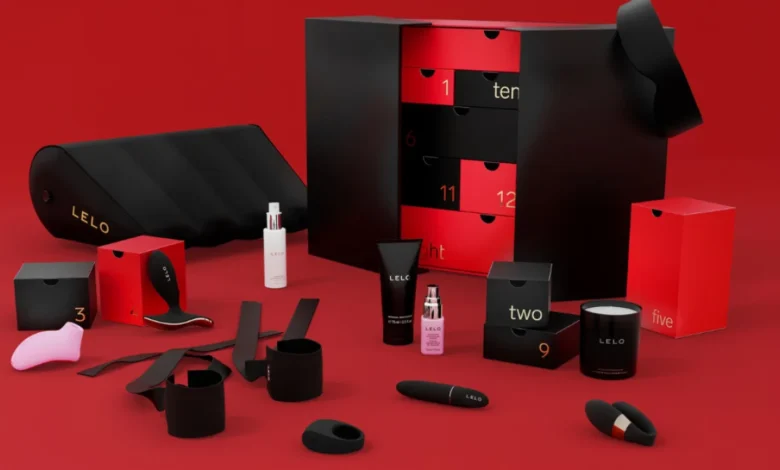
The seasonal luxury gifting market has officially expanded into the realm of high-end wellness and intimacy, as premium adult toy manufacturer LELO announced the launch of its inaugural Couples Advent Calendar. Priced at $399, the curated 12-day collection marks a significant shift in how luxury adult brands approach the lucrative holiday shopping season, moving away from sample-sized product trials and introducing high-value, full-sized flagship items directly to consumers.
For years, the holiday advent calendar phenomenon has dominated the beauty, fashion, and gourmet food industries. Brands ranging from mass-market cosmetics retailers to ultra-luxury fashion houses like Dior have capitalized on the tradition of the 12- or 24-day countdown. However, the adult wellness sector has historically treated holiday gifting as an afterthought, often relying on promotional bundles or discreet stocking stuffers rather than dedicated, high-end seasonal inventory. LELO’s entry into this space signals a broader cultural normalization and market maturation for luxury sexual wellness products, treating intimacy aids with the same aesthetic and economic seriousness as high-end skincare or artisanal fragrance collections.
Anatomy of the $399 Offering: Value Versus Cost
Priced at $399, the LELO Couples Calendar positions itself firmly in the luxury tier of holiday gifting. Market analysts note that while the upfront cost is substantial, the mathematical value proposition is designed to appeal to discerning consumers looking for deep discounts on premium hardware.
According to product disclosures from the manufacturer, the collection eschews the common industry practice of padding holiday boxes with cheap promotional filler, single-use lubricants, or miniature sample sizes. Instead, the 12-day set features a strategic mix of full-sized, award-winning electronic devices alongside complementary accessories. Industry estimates place the retail value of the hardware alone at well over $500 if purchased individually outside the calendar format.
Alongside the primary electronic novelties, the curated box includes intimacy-enhancing accessories designed specifically for shared experiences, such as ergonomic restraints and premium massage candles formulated for sensitive skin. This multi-category approach allows the brand to cater both to established enthusiasts of luxury wellness technology and to couples exploring advanced adult novelties for the first time.
The Evolution and Chronology of the Adult Advent Market
The commercialization of the adult advent calendar has undergone a rapid transformation over the past five years. Initially pioneered by independent boutique retailers and subscription box services, the concept relied on basic cardboard packaging and a mixture of generic imported novelties.
By 2021 and 2022, major mainstream sexual wellness brands began noticing a surge in fourth-quarter sales driven by consumers seeking novel ways to celebrate the holidays or combat seasonal stressors. Companies like Womanizer, Satisfyer, and Lovehoney began releasing branded countdown boxes, though many of these early iterations still relied heavily on travel-sized items, branded merchandise, or lower-tier models to keep price points accessible.
LELO’s 2026 release represents the next phase of this evolution: the premiumization of the holiday countdown. By opting exclusively for full-sized, flagship-tier devices, LELO has elevated the adult advent calendar from a novelty stocking stuffer to a major holiday acquisition. This mirrors trends in the broader beauty and wellness industries, where consumers increasingly view holiday sets as strategic investments to acquire expensive core products at a discounted composite rate.
Broader Industry Implications and Cultural Shifts
The mainstream success of luxury adult advent calendars reflects a broader destigmatization of sexual wellness products within consumer culture. Once confined to specialized brick-and-mortar boutiques or discrete online storefronts, high-end intimacy devices are now routinely featured in mainstream lifestyle publications, department store gift guides, and wellness roundups.
Market researchers point out that the wellness economy has experienced a post-pandemic shift toward holistic self-care and relational health. Products that enhance intimate communication, stress relief, and domestic well-being are seeing sustained demand regardless of traditional economic fluctuations. By packaging these devices into a structured, experiential format like a 12-day calendar, brands are able to frame intimacy not merely as a transactional purchase, but as an interactive ritual for couples or an act of high-end self-care for individuals.
Furthermore, the comparison between luxury adult goods and traditional luxury fashion items highlights shifting consumer values. While traditional luxury houses face increasing public scrutiny—and occasional social media backlash—for charging exorbitant prices for minimal utility items, wellness brands are capitalizing on a perceived higher return on investment. Consumers are increasingly willing to invest hundreds of dollars into products that tangibly improve physical well-being, mental health, and interpersonal relationships over status symbols that offer purely aesthetic utility.
Outlook for the 2026 Holiday Season
As LELO rolls out its inaugural Couples Calendar, retail analysts will be closely monitoring consumer adoption rates to determine if other tier-one luxury intimacy brands follow suit with their own high-end holiday offerings. With production volumes limited to maintain exclusivity, early indicators suggest strong demand among consumers seeking unique, premium gifting experiences.
Whether utilized as a traditional 12-day progressive countdown or opened in a single celebratory evening, the introduction of the LELO Couples Calendar underscores how far the adult wellness industry has advanced in terms of design, marketing, and mainstream acceptance. As the boundaries between traditional wellness, lifestyle, and adult retail continue to blur, high-end seasonal packaging is poised to become a permanent fixture of the luxury holiday retail landscape.