Reagan Institute Summit on Education Explores the Future of K-12 Learning Amid Technological Shifts and School Choice Expansion

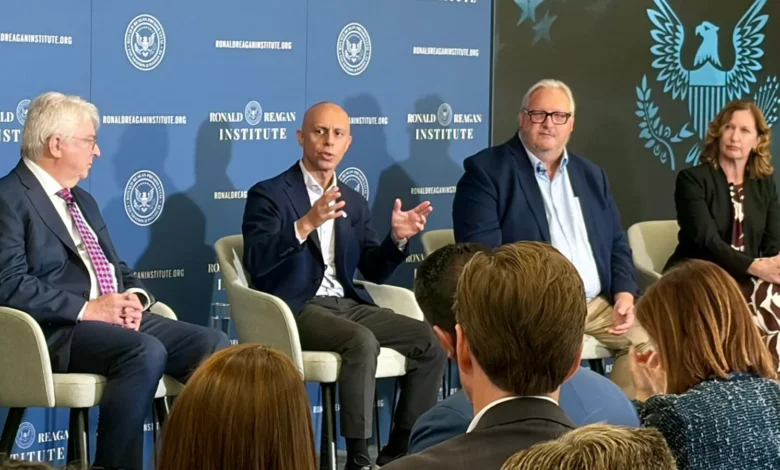
Washington — As the United States approaches its historic 250th anniversary, the nation’s educational infrastructure stands at a critical and transformative crossroads. Policymakers, educators, nonprofit leaders, and education reformers gathered in Washington, D.C., for the annual Reagan Institute Summit on Education to dissect the mounting pressures, unprecedented opportunities, and complex structural changes redefining modern K-12 learning. Over the course of two intensive morning sessions, panels addressed the imperatives of equitable access, the promise and perils of artificial intelligence, the realities of student accountability, and the nationwide expansion of school choice models.
The discussions underscored a dual narrative: while American students display an inspiring civic dedication and readiness to tackle community challenges, institutional models are struggling to keep pace with a rapidly evolving economic and technological landscape. Observers noted that systemic reforms must carefully balance technological innovation with fundamental pedagogical rigor to ensure that all 54 million public school children nationwide are adequately prepared for higher education and future careers.
The State of K-12 Education: Fostering Civic Responsibility and Challenging the Status Quo
Opening the summit, educational leaders focused heavily on the shifting mindset of contemporary students. Kirsten Baesler, assistant secretary of the U.S. Department of Education’s Office of Elementary and Secondary Education, offered an optimistic yet pragmatic assessment of the current generation. Drawing from her observations during nationwide school visits, Baesler highlighted a palpable sense of purpose and civic responsibility among young learners.
"I think we have a generation of young people that I see every day in our K-12 system that are very interested in giving to their community," Baesler stated during the panel. She emphasized that this emerging generation carries a heightened awareness of societal needs and shoulders a profound sense of responsibility.
However, Baesler cautioned that academic success and the pursuit of the American dream cannot be treated as a frictionless endeavor. Insisting that personal accountability remains paramount, she asserted, "Attendance matters. Effort matters. All of those things matter, and it shouldn’t be an easy pathway to achieve the American dream."
To foster environments where students can genuinely thrive, Baesler argued that school systems must move away from rigid, legacy structures. She specifically targeted the traditional "one-size-fits-all" model that has defined American schooling for generations, calling the standard 50-minute class period "horribly narrow" for serving a diverse population of millions of children with vastly different learning needs. She advocated instead for high-caliber instruction, quality teachers, and robust forums for inquiry, debate, and critical discourse.
Economic Realities and Workforce Alignment
Bridging the gap between K-12 classrooms and future career pathways formed another core pillar of the morning dialogues. Stephen Moret, president and CEO of the Strada Education Foundation—a prominent nonprofit dedicated to strengthening the alignment between education and employment—spoke directly to the rising expectations of American families and policymakers.
"I think what our public and our policymakers are increasingly demanding today is that education should deliver more consistently on its commitment to providing pathways to opportunity for all Americans," Moret noted.
As the American economy undergoes profound structural shifts driven by automation and global competition, the pressure on schools to yield tangible economic outcomes has intensified. Moret stressed that educational institutions can no longer operate in isolation from the broader labor market. Public confidence in traditional education models hinges on whether schools can demonstrably equip students with adaptable skills that translate into meaningful economic mobility.
Navigating the Artificial Intelligence Frontier
No discussion of the future of education and employment can bypass the disruptive arrival of artificial intelligence. Both Baesler and Moret addressed how generative AI and advanced automation will reshape classrooms and the future job market, urging a balanced approach that avoids both technophobia and uncritical adoption.
Moret expressed fundamental confidence in human resilience and ingenuity, despite acknowledging the very real public policy dilemmas posed by rapid technological advancement. "I do think AI involves a lot of risk. It involves a lot of important public policy issues and how we sort of manage this technology, but I think human ingenuity is going to win at the end of the day, and I think we’re going to do more good with it," he projected.
Echoing this sentiment, Baesler urged educators and policymakers to approach AI with a measured, proactive mindset rather than viewing it as an existential threat. "I don’t think we should be threatened by it, but I do think we should take it seriously and understand our responsibility as society," she remarked.
Industry analysts suggest that integrating AI literacy into K-12 curricula while safeguarding foundational critical thinking skills will be one of the most formidable administrative challenges of the coming decade.
Expanding the Landscape of School Choice
Shifting focus to structural alternatives, a separate panel at the Reagan Institute summit explored the rapid proliferation and evolution of school choice initiatives over the past three decades. The consensus among the assembled experts was clear: the diversification of educational delivery—encompassing public school choice, magnet schools, charter institutions, private options, and emergent models like microschools—has fundamentally altered the American educational terrain.
According to Robert Enlow, president and CEO of EdChoice, private school choice options have expanded dramatically to encompass 75 distinct programs operating across 34 states, the District of Columbia, and Puerto Rico. This expansion reflects a growing demand from parents for customized learning environments tailored to their children’s specific learning styles, values, and academic needs.
The policy landscape is poised for further evolution with the impending rollout of a new federal school choice program. Scheduled to launch next year, the initiative will allow taxpayers to make charitable contributions to 501(c)(3) scholarship-granting organizations in exchange for a federal tax credit. These organizations will subsequently manage and distribute student scholarships to support public school, private school, and homeschooling options alike.
Balancing Competition, Accountability, and Innovation
Proponents of school choice argue that introducing market dynamics into the traditionally monopolistic public education sector generates invaluable systemic benefits. Jorge Elorza, CEO of Democrats for Education Reform, emphasized that parental empowerment acts as a powerful catalyst for institutional improvement.
"It does introduce a healthy level of competition," Elorza explained. "It creates a system that is more student-centered, creates a system that’s more innovation-serving, creates a system that’s more simple to adapt to the changing needs of society."
Jim Blew, an advisor to the Federal Scholarship Tax Credit Coalition, added that the ultimate measure of a successful school choice ecosystem lies in transparency and accountability. For choice programs to effectively serve families, parents must have access to comprehensive, understandable data regarding school performance, and educational providers must remain genuinely accountable to the communities they serve.
Cautions and the Enduring Role of Traditional Public Schools
Despite the widespread enthusiasm for educational pluralism, summit panelists issued crucial caveats regarding implementation, equity, and educational quality. Merely offering school choices does not automatically guarantee superior academic outcomes. Panelists stressed that rigorous instruction, evidence-based pedagogies, and equitable access remain indispensable, regardless of the institutional framework.
Robin Lake, director of the Center on Reinventing Public Education, offered a nuanced perspective on the balance between market innovation and institutional reality. "The thing about choice is it’s risk and opportunity, and it’s up to us to design to maximize the opportunity and minimize the risk," Lake stated. She urged state and local leaders to actively listen to families regarding their specific needs and educational deficits.
Furthermore, Lake cautioned that the aggressive expansion of alternative schooling models must not overshadow the foundational importance of neighborhood public schools, which will continue to educate the vast majority of American children. "We have to recognize that districts are not going to magically vanish," she emphasized, noting that policymakers must invest concurrently in strengthening traditional public systems while enabling choice.
Broader Implications for American Education Policy
The dialogues at the Reagan Institute Summit on Education reflect a broader national reckoning over the purpose, delivery, and governance of schooling in the United States. As federal, state, and local policymakers grapple with shifting demographics, technological revolutions like artificial intelligence, and heightened public demands for workforce readiness, the policy choices made today will profoundly influence the trajectory of American society.
Ultimately, the consensus emerging from Washington is that America’s educational system must evolve from a rigid, industrial-era template into a dynamic, flexible ecosystem. Whether through reimagining classroom structures, leveraging emerging educational technologies responsibly, or expanding equitable access to diverse school options, the overarching goal remains resolute: equipping the nation’s youth with the knowledge, critical thinking skills, and civic responsibility necessary to navigate an increasingly complex world.