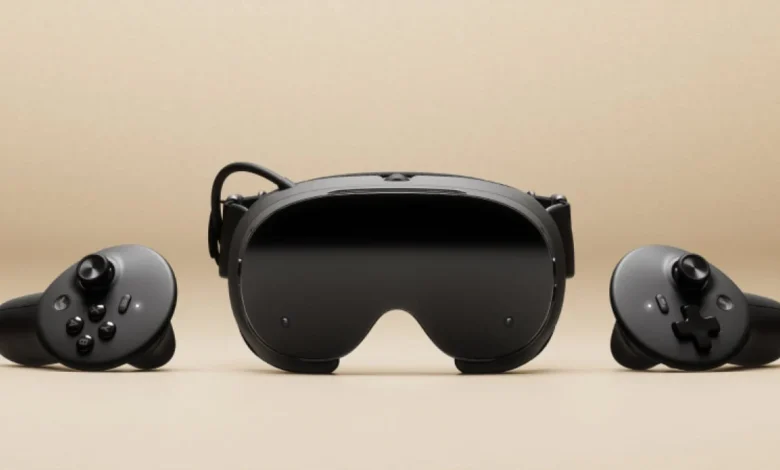
Years of intense industry speculation, patent filings, and whispered rumors within the gaming community have finally materialized as Valve Corporation officially releases its latest hardware innovation: the Steam Frame. Following its initial announcement in November 2025 by the parent company of the ubiquitous digital distribution platform Steam, the virtual reality headset became available to consumers on September 18, 2026. Billed by early critics as a logical evolution of the hugely successful Steam Deck handheld console infused with mixed-reality capabilities, the device arrives at a fascinating and precarious juncture for the virtual reality hardware market.
Industry analysts, hardware reviewers, and long-time technology enthusiasts have spent the weeks following the launch dissecting the device’s performance. While the consensus points to exceptional engineering, seamless wireless PC integration, and innovative cross-platform flexibility, significant hurdles regarding pricing, battery optimization, and a cooling enthusiast market for virtual reality software threaten to complicate Valve’s hardware ambitions.
A Chronology of Anticipation: From Rumors to Reality
The path to the Steam Frame’s September 2026 launch was paved by a protracted development cycle that kept the gaming industry guessing. For nearly half a decade, dataminers, hardware sleuths, and industry insiders tracked Valve’s movements, uncovering references to standalone headsets, advanced pancake lenses, and custom-tailored operating systems within Steam client updates.
- November 2025: Valve officially pulls back the curtain on the Steam Frame, confirming years of industry rumors and positioning the hardware as an open-platform answer to walled-garden ecosystems like Meta’s Quest lineup.
- Early 2026: Selected media outlets and developers receive preview access, teasing the device’s capability to act simultaneously as a standalone VR unit, a wireless PCVR headset, and a massive virtual monitor for traditional desktop games.
- September 18, 2026: The Steam Frame officially hits the market, carrying a starting price of $1,059 for the 256GB iteration and scaling up to $1,299 for the 1TB high-capacity model.
Hardware Design and the User Experience
At the heart of the positive reception lies the Steam Frame’s hardware architecture and ergonomic refinement. Valve has long prided itself on user-centric design, a philosophy clearly carried over from the Steam Deck into its heavier, more complex head-mounted display.
Reviewers across major technology publications have universally praised the physical comfort and operational simplicity of the device. Jacob Ridley of PC Gamer highlighted this immediate accessibility, noting that the device successfully eliminates the friction points that historically plagued virtual reality setups. According to Ridley, the friction of calibration, tether management, and software configuration is largely gone, allowing users to simply don the headset and dive straight into their digital libraries.
Furthermore, the headset’s versatility extends beyond traditional virtual reality titles. A standout feature lauded by critics is the Steam Frame’s ability to act as a colossal, portable virtual monitor for non-VR games. Jacqueline Thomas of IGN pointed out that a significant portion of her evaluation time was spent playing standard desktop games within a simulated spatial environment, effectively transforming the headset into a portable workstation and entertainment center that can be used anywhere in the home.
Wireless Excellence and Open-Platform Philosophy
One of the engineering triumphs frequently highlighted by reviewers is the Steam Frame’s wireless streaming performance. Zack Zwiezen of Kotaku commended the headset’s execution as a wireless PC gaming peripheral, noting that its low-latency streaming capabilities rivaled or exceeded tethered configurations. Zwiezen described the wireless experience as revelatory, eliminating the cumbersome physical cables traditionally associated with high-end PC virtual reality without introducing perceptible input lag or compression artifacts.
This seamless performance underscores Valve’s broader hardware philosophy: an emphasis on open architecture. Chis Person of Aftermath described the Steam Frame as one of the most exciting hardware developments in years precisely because it attempts to unify fragmented use cases—standalone mobile VR, tethered PC horsepower, and flat-screen virtual theater modes—into a single, cohesive, open ecosystem. Unlike competitors who lock users into proprietary storefronts, Valve maintains its tradition of consumer-friendly interoperability, allowing players to leverage their existing Steam libraries right out of the box.
Significant Criticisms: Performance, Battery Life, and Software Gaps
Despite the widespread praise for Valve’s engineering prowess, the Steam Frame is not without notable drawbacks. Reviewers have highlighted several friction points that temper the initial enthusiasm, ranging from hardware limitations to software ecosystem challenges.
Scott Stein of CNET offered a tempered assessment, drawing attention to persistent battery life constraints, occasional performance bugs, and a thin catalog of dedicated software available at launch. Stein suggested that while Valve’s iterative approach to hardware development remains fascinating to observe, the current iteration is best suited for early adopters willing to weather an experimental phase rather than mainstream consumers.
Compounding these technical and software hurdles is the economic barrier to entry. James Archer of Rock Paper Shotgun underscored the pricing dilemma, noting that the Steam Frame’s retail cost—starting at $1,059 for the 256GB model and reaching $1,299 for the 1TB version—places it firmly in the enthusiast tier. This steep financial investment forces potential buyers to weigh the utility of the device against the broader health of the virtual reality software market.
Market Timing and the State of Virtual Reality in 2026
Perhaps the most formidable challenge facing the Steam Frame is not an engineering flaw, but rather a macroeconomic and industry-wide phenomenon: timing.
The gaming industry has largely consolidated around the realization that the aggressive, venture-capital-driven push for virtual reality adoption in the late 2010s and early 2020s failed to achieve permanent, mainstream market saturation. Consequently, the pipeline for original, high-budget virtual reality game development has slowed significantly. Reviewers have questioned the commercial viability of launching a premium headset during a period when triple-A VR software development has plateaued.
Devindra Hardawar of Engadget captured this sentiment in his review, arguing that while the Steam Frame is a remarkably capable standalone device, its exorbitant price tag and late arrival make it an uphill battle. Rather than single-handedly revitalizing a cooling virtual reality market, the headset arrives at a time when consumer appetite for dedicated VR hardware is increasingly niche.
Implications and Future Outlook
The launch of the Steam Frame marks a critical milestone for Valve Corporation and the broader PC gaming landscape. By prioritizing ergonomic comfort, flawless wireless PC streaming, and dual-purpose functionality as a virtual monitor, Valve has demonstrated that the technology underpinning spatial computing can be refined and made intuitive.
However, the high cost of entry and the sluggish state of the broader virtual reality games market present undeniable headwinds. As Valve continues to issue software updates, patch performance bugs, and refine the Steam Frame’s operating system, the device will serve as a bellwether for the viability of high-end, open-ecosystem immersive hardware. Whether the Steam Frame remains an expensive playground for dedicated enthusiasts or evolves into a foundational blueprint for future spatial computing will depend heavily on Valve’s long-term software support and how the broader developer community responds to this latest hardware frontier.