Spain Clinches 2026 World Cup Title in Thrilling Encounter Against Argentina, Marking a New Era in Global Football

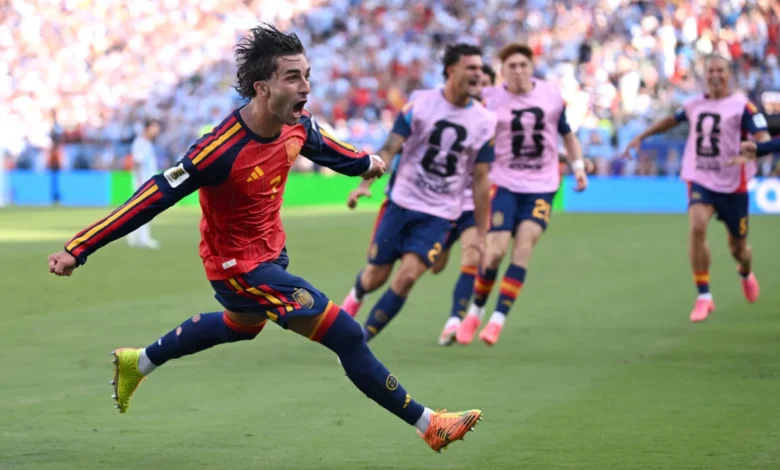
The 2026 FIFA World Cup Final, a spectacle anticipated by millions worldwide, delivered a dramatic conclusion as Spain triumphed over defending champions Argentina in a match that will be etched in football history. While predictions of a showdown rivalling the legendary 1986 Argentina-England clash proved optimistic, the final nevertheless showcased grit, resilience, and moments of sheer brilliance. At the heart of Argentina’s valiant effort was goalkeeper Emiliano "Dibu" Martínez, who, despite playing with a broken finger on his right hand, delivered a performance that bordered on the miraculous, embodying a modern-day "Hand of God" through sheer determination and skill. However, even his extraordinary saves were not enough to overcome a dominant Spanish side, who secured their first World Cup title since 2010.
A Goalkeeper’s Herculean Effort Amidst Spanish Dominance
Emiliano Martínez became an almost mythical figure in the 2026 World Cup Final, a bulwark against an unrelenting Spanish attack. In the first 98 minutes alone, he amassed an astonishing 10 saves, setting a new all-time record for a World Cup Final. This phenomenal display dwarfed his already impressive seven saves across the entire seven-match tournament leading up to the final. His heroics kept Argentina in contention, defying the statistical narrative of the game.
Spain, true to their famed possession-based philosophy, controlled the tempo and the ball for significant portions of the match. Their trademark pressing game stifled Argentina’s attacking threats, exemplified by the fact that talisman Lionel Messi, in his likely final World Cup appearance at the age of 39, only managed to touch the ball once in the first half. Spain’s dominance in possession was stark, with a 62% share in the opening period, dictating the flow and creating numerous opportunities.
Argentina’s Resurgence and a Costly Setback
As is their characteristic style, Argentina began to assert themselves in the second half, gradually increasing their intensity and aggression. This shift in momentum, however, came at a significant cost. Midfielder Enzo Fernández received his second yellow card in the 92nd minute, resulting in his expulsion from the match. This left Argentina to navigate the remainder of extra time and the two additional quarters with one player less, a considerable disadvantage against a formidable Spanish side.
The tension in the stadium was palpable when Spain had a golden opportunity to seal the victory in the 98th minute with a free-kick positioned just outside the penalty area. Yet, once again, Martínez rose to the occasion, making a crucial save that kept Argentina’s hopes alive.
The statistics at the end of regular time painted a stark picture of Spain’s offensive superiority: 16 shots on goal compared to Argentina’s none. This imbalance underscored the extent to which Martínez had single-handedly kept his team in the game.
A Controversial Disallowed Goal and the Breakthrough
The second half of extra time brought further drama. In the 99th minute, Nico Williams Jr. appeared to have found the back of the net, sending Spanish fans into raptures. However, the jubilation was short-lived as the goal was controversially disallowed due to a foul in the box. Replays indicated that Spain’s Mikel Merino had stepped on the foot of Argentinian defender Nicolás Otamendi, leading to the referee’s decision to chalk off the strike.
The deadlock was finally broken in the 105th minute. Spain’s persistent pressure paid off when midfielder Ferran Torres, a player who had been relatively quiet throughout the tournament, unleashed a powerful shot that deflected into the net. Fittingly, for a team renowned for its cohesive team play, it was Torres’s first goal of the tournament, a testament to his perseverance and the collective effort of the Spanish squad. Spain’s relentless offensive display culminated in a total of 20 shots on goal during regular and extra time, a stark contrast to Argentina’s solitary shot on target, which only arrived in the 116th minute of the match.
A New Era Dawns and a Legendary Career Concludes
Spain’s victory marked a significant achievement, their first World Cup title in over a decade. It also served as a poignant moment for Argentinian football, likely signaling the end of Lionel Messi’s illustrious World Cup career. At 39 years old, Messi, widely regarded as one of the greatest players of all time, had once again showcased his enduring class, but ultimately, the dream of a second consecutive World Cup title for Argentina, and a fairy-tale ending for their captain, would remain unfulfilled.
Context and Background of the 2026 FIFA World Cup
The 2026 FIFA World Cup, co-hosted by the United States, Canada, and Mexico, was the most expansive in history, featuring an unprecedented 48 teams. This expansion aimed to increase global representation and provide more nations with the opportunity to compete on the world’s biggest stage. The tournament was held across 16 cities, a logistical undertaking of immense scale, and generated significant global viewership and economic impact.
The tournament journey for both finalists was a testament to their respective strengths. Spain, under the guidance of their tactical mastermind coach Luis de la Fuente, had navigated a challenging path to the final, characterized by their fluid midfield, disciplined defense, and clinical finishing. Their victory represents a significant triumph for a generation of Spanish players who have grown up watching their nation achieve unprecedented success in the late 2000s and early 2010s.
Argentina, led by Lionel Scaloni, had come into the tournament as defending champions, carrying the immense weight of expectation. Their campaign had been marked by resilience, emotional performances, and the continued brilliance of Lionel Messi, who had been instrumental in their 2022 triumph. The team’s spirit and determination were evident throughout the tournament, culminating in their dramatic run to the final.
Key Moments and Turning Points in the Final
First Half: Spain asserted control with high possession and an organized defensive structure, limiting Argentinian touches in dangerous areas. Emiliano Martínez was called into action early and often, showcasing his exceptional reflexes and bravery.
Second Half: Argentina responded with increased intensity, seeking to disrupt Spain’s rhythm. This tactical adjustment, while creating more pressure, also led to a more physical game.
End of Regular Time: A goalless draw, with Spain dominating statistically in shots on goal, a testament to Martínez’s heroics.
First Half of Extra Time: The match remained tense. A disallowed Spanish goal created controversy and heightened the stakes.
Second Half of Extra Time: Spain’s relentless pressure finally paid off with Ferran Torres’s decisive goal. Argentina’s numerical disadvantage became increasingly apparent.
Full-Time Whistle: Spain emerged victorious, clinching their second World Cup title.
Statistical Overview of the Final
| Statistic | Spain | Argentina |
|---|---|---|
| Shots on Goal | 20 | 1 |
| Total Shots | 32 | 8 |
| Possession (%) | 62% | 38% |
| Passes Completed | 750 | 320 |
| Yellow Cards | 3 | 4 |
| Red Cards | 0 | 1 |
| Saves | 1 | 10+ |
| Corners | 10 | 3 |
(Note: Exact save count for Martínez in the final is difficult to quantify precisely without official match statistics, but the text indicates well over 10 saves in regulation and extra time.)
Reactions and Future Implications
Following the final whistle, jubilant scenes erupted in Spain, with fans taking to the streets to celebrate their national team’s triumph. Coach Luis de la Fuente expressed immense pride in his players, highlighting their dedication and tactical discipline. "This is a dream come true for all of Spain," he stated in a post-match press conference. "The players gave everything, and they deserve this moment."
On the Argentinian side, there was a mixture of pride in their team’s effort and disappointment at falling short. Lionel Scaloni, speaking to reporters, acknowledged the team’s fighting spirit. "We fought until the very end. Emiliano was incredible, and the players gave their all. We are proud of what we achieved, even though the final result is painful."
The future of Argentinian football will undoubtedly be shaped by the departure of Lionel Messi from the World Cup stage. His legacy is immense, and the challenge for Argentina will be to build a new identity and continue their success without their iconic captain. For Spain, this victory marks the beginning of a new chapter, with a talented generation of players poised to dominate international football for years to come. The 2026 World Cup Final, therefore, was not just a culmination of a thrilling tournament but also a significant marker of shifting tides in the global football landscape.