Inside the Chaotic Debut of the AI Music Awards: A Night of Digital Dreams, Technical Glitches, and Counterculture Ambition

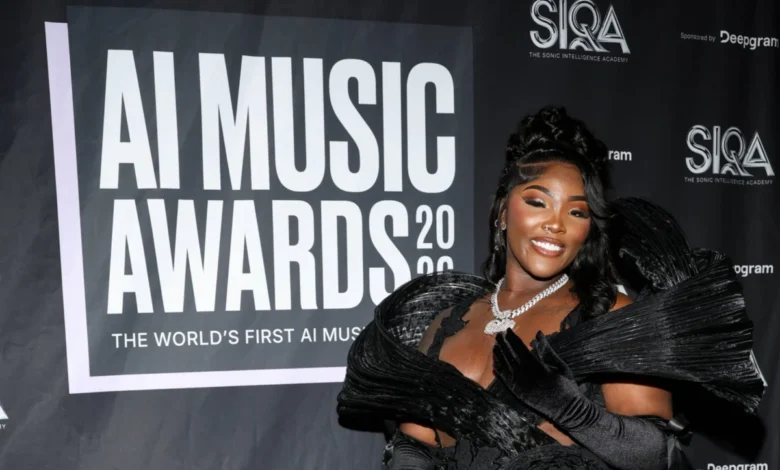
The intersection of artificial intelligence and the commercial music industry reached a surreal, highly public milestone on Friday afternoon at the historic Mayan Theater in Downtown Los Angeles. Situated just blocks away from the Crypto.com Arena—the long-standing home of the traditional Grammy Awards—the inaugural AI Music Awards sought to establish a parallel universe of prestige for creators who utilize machine learning, synthetic vocals, and automated composition tools. Powered by the Sonic Intelligence Academy (SIQA), an organization founded earlier in the year by software engineer Timirah “TJ” James and her sister Mia James, the ceremony was designed to act as an unapologetic counterweight to a mainstream recording industry that has largely met AI-driven audio with legal hostility, copyright lawsuits, and institutional exclusion.
However, as the red carpet unrolled and the doors finally swung open following a flurry of logistical stumbles, the event proved to be a microcosm of the broader technological movement it represented: fiercely ambitious, deeply emotional for its human participants, and persistently plagued by the growing pains of a completely unproven infrastructure.
Establishing a Counterculture Ecosystem
To understand the necessity of the AI Music Awards, one must examine the hostile landscape confronting synthetic and assisted music creators. Over the past two years, major record labels and prominent artists have launched aggressive legal challenges against prominent AI music generators such as Suno and Udio, alleging massive copyright infringement. Simultaneously, industry standard-bearers like Billboard and the Recording Academy have established strict guardrails, largely sidelining machine-generated compositions from major charts and traditional accolades.
Enter the Sonic Intelligence Academy. Founded in January, SIQA established its own dedicated "Verified Registry" to categorize tracks based on their level of artificial intelligence integration—ranging from fully autonomous, AI-generated compositions to human-and-AI hybrids featuring cloned human voices. In an aggressive counterprogramming move designed to mimic the legacy music industry, SIQA launched an exclusive AI music chart during Grammy week in January.
Friday’s awards ceremony was the logical next step: a physical manifestation of an ecosystem attempting to validate itself. Nominees across 25 categories—spanning everything from AI Song of the Year to Best AI Comedic Song—were nominated and voted upon by their peers within the SIQA registry. Yet, despite the lofty goal of creating a legitimate institutional framework, the day began with the raw, unfiltered friction of a startup operating without a safety net.
Red Carpet Realities and the Human Face of Digital Art
Arriving 30 minutes before the scheduled red carpet, attendees and media representatives encountered locked venue doors and an apparent absence of formal security. Once inside, roughly a dozen independent media outlets crowded a compact, seven-foot-long red carpet flanked by step-and-repeat backdrops. While 29 media organizations had initially registered to cover the event, several were forced to cancel due to a sudden Federal Aviation Administration (FAA) ground-stop issued across regional airspace at midday—proving that mechanical and systemic disruptions remain universal, regardless of whether an artist works in the traditional studio or codes via a text prompt.
A common assumption among outsiders is that AI music events might feature virtual avatars or disembodied screens. Instead, the red carpet was heavily populated by the flesh-and-blood human creators behind the digital personas. Sequined dresses, vibrant blazers, and eccentric personal styles dominated the room. Among the attendees was rap veteran Fredro Starr, one half of the seminal hip-hop group Onyx, who used the platform to debut a new moniker, “Mad AI.” Starr championed his recent record, It All Started in Brooklyn, which he touted as the first AI-backed album released on vinyl.
“You can’t replace humans,” Starr remarked on the carpet, emphasizing that while AI workflows took his music to a new level, the intrinsic spirit and vocal delivery of hip-hop remain fundamentally human.
Other international figures made significant journeys to witness the validation of their digital alter egos. Ramona Höffel, a 56-year-old social worker from Switzerland, flew to Los Angeles to represent her AI musical persona, “Vireya.” Visibly nervous as she navigated her first-ever press line, Höffel explained that the technology provided a vital psychological outlet. “I have a lot of ideas and wishes, and for a long time I paint, then I write, and that’s not enough,” she shared. “The music gives me room to bring all this outside of my brain.”
Technological Glitches and Ceremonial Chaos
Inside the Mayan Theater, SIQA attempted to curate an energetic atmosphere, complete with a flowing bar and sponsored editions of the publication Rolling Out detailing the nominees. However, the evening’s production values quickly unraveled under a cascade of technical malfunctions and scheduling delays.
The ceremony commenced roughly 30 minutes behind its 6:15 p.m. schedule. Organizers skipped a planned opening video montage in favor of an impromptu dance break choreographed by actor Giovanni Wilson alongside eight dancers, soundtracked by an explicitly self-referential, AI-produced song announcing the commencement of the awards.
Co-hosted by Wilson and podcast host Lana Hout—collectively known as the “AI Chicks”—the show struggled with basic operational execution. Relying on a Claude-generated run-of-show displayed via a malfunctioning teleprompter, the hosts frequently appeared lost regarding upcoming categories, presenters, or commercial transitions. At one point, Hout and Wilson awkwardly brought out presenters for the Best AI Country Artist category, only for Hout to interrupt the sequence mid-introduction and announce an impromptu commercial break. The award was ultimately deferred by nearly 15 minutes.
Sponsors also became entangled in the operational friction. Deepgram, an AI text-to-speech startup and the event’s primary sponsor, deployed an automated voice system meant to introduce presenters and nominees. The system frequently misfired, talking over live speakers or broadcasting advertisements randomly outside designated commercial intervals. Meanwhile, promotional advertisements for a new social network called “Trinity Social” featured AI-generated imagery prominently displaying unauthorized intellectual property, including a logo closely resembling that of Rockstar Games—drawing immediate scrutiny regarding copyright compliance at an event explicitly built around navigating creative ownership.
Performances and the Triumph of Xania Monet
Despite the constant administrative hiccups, the evening’s nearly ten live musical performances proceeded with remarkable resilience. A three-piece house band comprising real human musicians—providing guitar, bass, keys, and drums—backed the performances, a resource generously provided free of charge by SIQA to artists who might otherwise lack the capital to hire studio instrumentalists.
The staging of AI music presented unique theatrical challenges. Acts utilized a mixture of lip-syncing, performance art, and human proxies. For the project “Chaisen Hale,” which features an AI-generated child persona and synthetic vocals, a 14-year-old human lookalike named John Victor was deployed to perform the track live on stage. Select artists, such as Grammy-winning singers Eric Bellinger and Candace Wakefield alongside rapper GodFellow, delivered genuinely live vocals. Wakefield openly acknowledged the evening’s technical "hiccups" while performing a track by AI artist “Aria Blue.”
The night belonged overwhelmingly to Telisha “Nikki” Jones and her AI persona, Xania Monet. Having secured the AI Album of the Year category during SIQA’s daytime industry summit, Monet swept the evening’s major accolades, winning both Artist of the Year and Song of the Year. (The fourth major category, Producer of the Year, was awarded to DJ Shawn Q.)
Jones’s victory crowns a polarizing trajectory that previously sparked industry-wide debate when her AI-generated tracks breached select Billboard genre charts, leading to mainstream television interviews and sharp critiques from established artists regarding the commercial viability and ethics of synthetic distribution. Speaking near the venue’s bar prior to the ceremony, Jones maintained a pragmatic outlook on the medium. “AI is just a tool,” she stated. “It just emphasizes what we do. I just feel like we should all be one.”
Broader Implications for the Future of Music
As the ceremony drew to a close near its 9:45 p.m. hard stop, founder Timirah James addressed the shrinking audience, explicitly validating the evening’s rough edges. “Because there will be a next year, because this is the new music industry,” James declared from the stage. “SIQA has created the infrastructure for that industry and for all the artists coming up in that industry.”
The implications of the inaugural AI Music Awards extend far beyond a single chaotic evening in Downtown Los Angeles. While legacy institutions continue to litigate and erect barriers against machine-assisted creation, a dedicated counterculture is rapidly building parallel institutions complete with registries, charts, and award shows. Whether this movement will permanently fracture the monoculture or ultimately force a structural integration with the mainstream remains an open question.
As attendees stepped out of the Mayan Theater and into the late-night downtown rain, patrons for a subsequent 2010s-themed club night were already forming a delayed queue outside the doors. The contrast underscored the uncertainty facing the medium: it is unclear whether synthetic pop culture will achieve the generational endurance of past decades. Yet, for independent creators, marginalized visionaries, and hobbyists finally finding a public voice through code, the night offered an undeniable validation—proving that behind every synthetic track, there remains a very human desire to be heard.