Porsche Boxster EV Spotted Charging at Tesla Supercharger in California Offers Clues to Future Sports Car Lineup

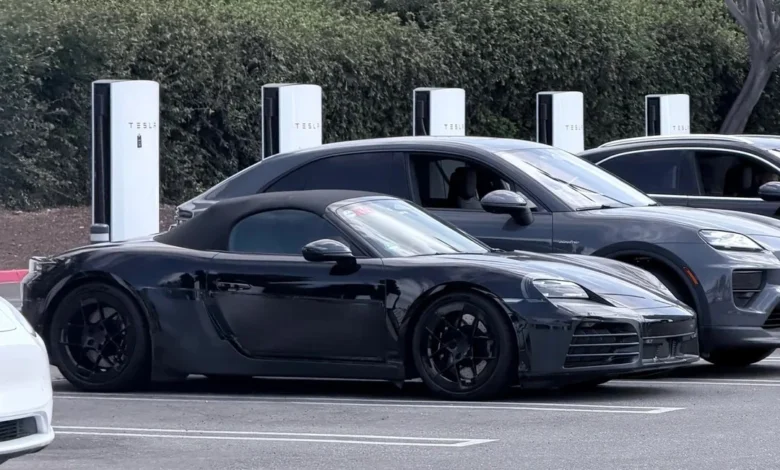
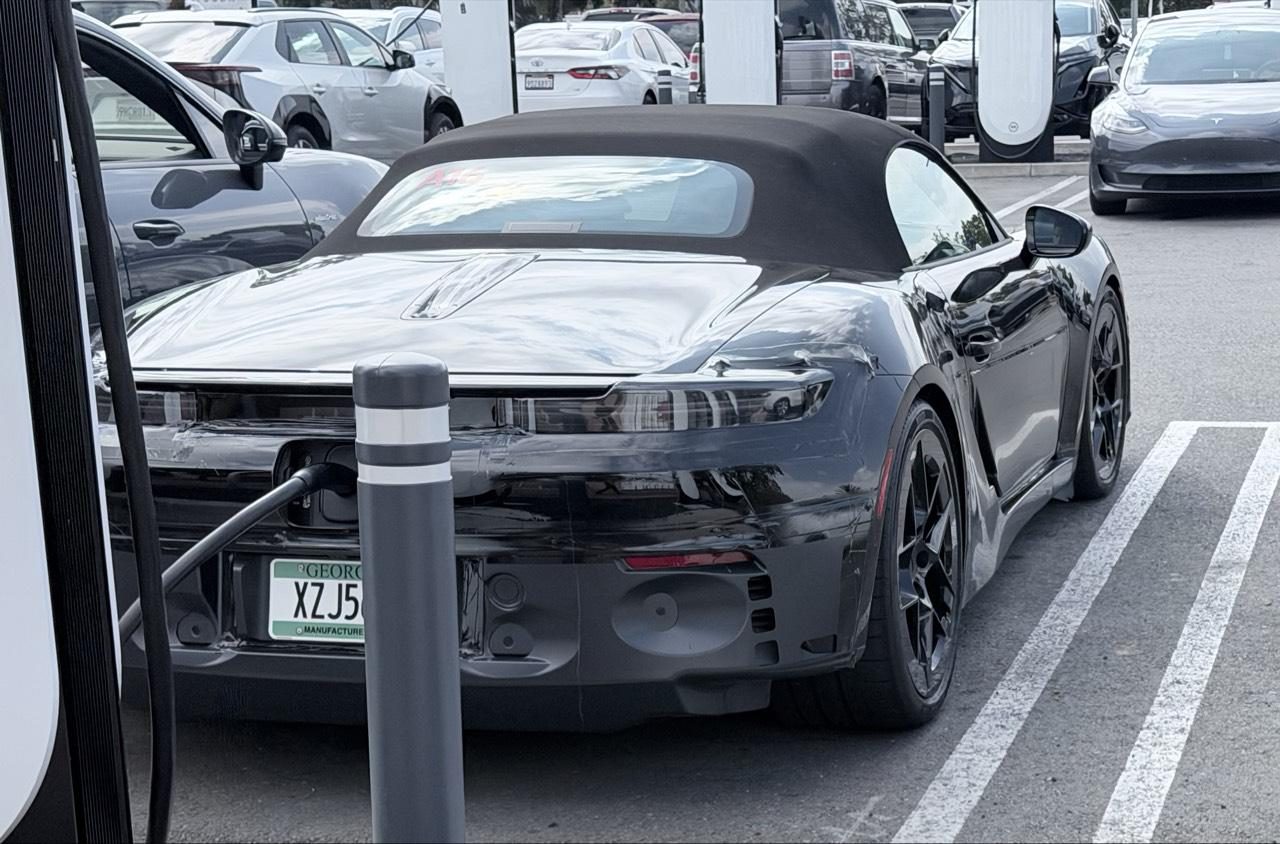
The ongoing evolution of Porsche’s electrification strategy reached a notable milestone recently when a prototype of the highly anticipated all-electric 718 Boxster was photographed utilizing a Tesla Supercharger in Carson, California. Captured by an observant motorist at a local hotel parking lot and subsequently shared online, the sighting provides automotive analysts and enthusiasts with fresh clues regarding the development timeline, physical design elements, and charging architecture of Porsche’s upcoming battery-powered roadster.
The appearance of the unreleased sports car on U.S. soil highlights the rigorous real-world testing phase currently underway for the vehicle. Although the German manufacturer has systematically expanded its electric vehicle footprint with models like the Taycan sedan and electrified iterations of the Macan and Cayenne SUVs, its classic lightweight sports car range has remained reliant on internal combustion engines until now. The latest sighting not only reaffirms Porsche’s commitment to electrifying its iconic roadster format but also sheds light on how the brand plans to integrate its upcoming vehicles with standard North American charging infrastructure.
Background and Context of Porsche’s Electrification Journey
Porsche’s journey into the electric vehicle market began in earnest with the introduction of the Taycan, a high-performance luxury sedan that successfully demonstrated the viability of battery-electric powertrains in a sporting application. Building upon that foundation, the manufacturer subsequently introduced high-voltage variants of its top-selling utility vehicles, including the Macan EV and an ultra-powerful Cayenne EV variant. Despite these commercial rollouts, the brand’s traditional two-door sports cars—specifically the 718 Boxster convertible and its fixed-roof sibling, the 718 Cayman—continued production with traditional internal combustion engines.
Strategic plans shifted significantly when Porsche announced that the traditional fossil-fueled iterations of the 718 line would conclude production cycles. This decision triggered widespread speculation throughout the automotive industry regarding the immediate future of the brand’s entry-level sports cars. Compounding these doubts, broader automotive market trends saw several Western manufacturers recalibrating their electric vehicle timelines amid fluctuating global demand and aggressive competition from foreign manufacturers, particularly in China.
However, leadership intervention steadied the project. In August, Porsche Chief Executive Officer Michael Leiters publicly reaffirmed the company’s dedication to the platform, noting in an interview that bringing the electric 718 to market remains the most economically sound and compelling engineering solution for the brand. Furthermore, the development benefits from a strategic platform-sharing initiative alongside Volkswagen Group affiliate Audi, ensuring shared technological resources and development efficiencies.
Chronology of Recent Sightings and Public Development
The path from concept confirmation to road-ready prototype has played out increasingly in the public eye over recent months. In September, automotive photographers captured the electric 718 Boxster completing high-speed evaluations with minimal camouflage during test sessions at Germany’s renowned Nürburgring circuit. That appearance offered a definitive look at the vehicle’s overall proportions, aerodynamic silhouette, and distinct roadster stance.
The recent discovery in Carson, California, represents a different phase of testing: real-world infrastructure compatibility in North America. Located merely blocks away from the Porsche Experience Center Los Angeles—a facility equipped with both alternating current (AC) and direct current (DC) fast chargers—the testing crew specifically opted to utilize a public Tesla Supercharger site instead. According to observers at the scene, the vehicle was occupied by two Porsche personnel, pointing toward a deliberate evaluation of public charging hardware interoperability, communication protocols, and charging speeds.
Design Observations and Charging Infrastructure Implications
Detailed examination of the photographs captured at the California Supercharger reveals several intriguing engineering choices regarding the vehicle’s exterior design and power replenishment systems. While the prototype featured modest black cladding across the front and rear fascia—ostensibly designed to obscure aerodynamic elements such as the rear diffuser and conceal lighting signatures with adhesive tape—the core architecture of the vehicle came clearly into focus.

Most notably, the vehicle was plugged directly into a Tesla Supercharger stall using a North American Charging Standard (NACS) connector, operating without the need for an external adapter. While Porsche previously announced broad integration of NACS compatibility across its broader portfolio beginning in late 2025, current production vehicles typically feature a dual-port configuration, housing a DC fast-charging NACS inlet on one side and an AC J1772 connector on the opposite flank.
The presence of what appears to be a single centralized charge port located at the rear center of the 718 Boxster EV suggests a departure from this dual-port convention. This design choice may indicate that Porsche’s upcoming compact sports car architecture has been engineered exclusively around the NACS standard for both residential and public charging applications, streamlining vehicle packaging and reducing weight—a critical consideration for a lightweight electric roadster.
Official Stances and Industry Implications
When contacted for comment regarding the Carson sighting and the vehicle’s specific operational parameters, representatives from Porsche North America maintained an official corporate stance, reiterating that specific technical specifications, production locations, and global market release dates remain under evaluation and have not yet been formally announced.

Nevertheless, industry analysts suggest that conducting high-profile compatibility testing on public networks in key regional markets strongly implies an advanced stage of development. For sports car enthusiasts, the transition of the 718 platform to an electric powertrain represents a pivotal test of whether battery-electric technology can successfully replicate the dynamic agility, weight distribution, and emotional engagement traditionally associated with mid-engine roadsters.
As automotive manufacturers navigate shifting consumer demands, regulatory pressures, and supply chain transformations, the impending arrival of the Porsche 718 Boxster EV will likely serve as a benchmark for electric performance sports cars. Further announcements regarding pricing, battery capacities, motor outputs, and official launch dates are anticipated as prototype testing concludes ahead of an expected production rollout.