Congressional Democrats Threaten SpaceX Funding Over Starshield Operational Disruptions in Ukraine

The political fallout regarding the operational integrity of Starshield assets in Ukraine has reached a critical juncture, with House and Senate leadership signaling an aggressive pivot from passive oversight to active legislative intervention. At the heart of the controversy is a series of service disruptions that occurred in October 2026, which effectively limited the utility of satellite-based communications and reconnaissance data for Ukrainian forces. As Congressional Democrats prepare to assume control of both chambers of Congress following their midterm electoral victories, they are demanding definitive transparency from Elon Musk and SpaceX regarding the decision-making chain of command behind these service limitations.
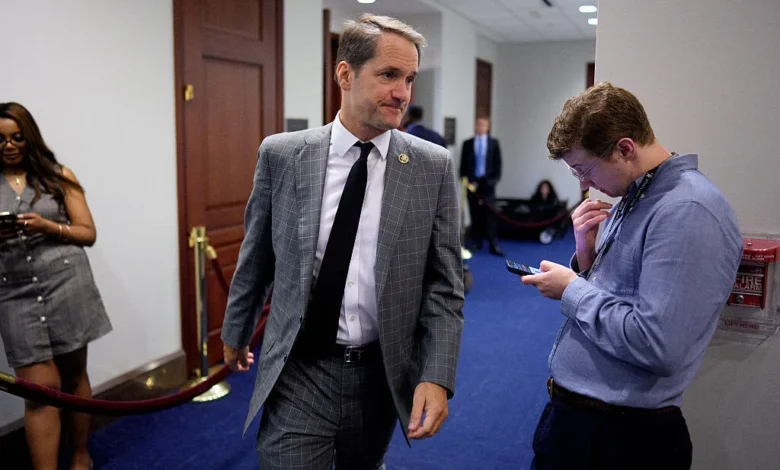
The inquiry, led by prominent legislators such as Representative Himes, seeks to pierce the veil of ambiguity that has surrounded the deployment of Starshield—a specialized, military-grade iteration of the commercial Starlink satellite network. The central question remains whether the degradation of these assets was a unilateral corporate decision, a calculated geopolitical maneuver by SpaceX leadership, or the result of direct intervention by officials within the United States government or the Department of Defense.
A Chronology of Escalating Tension
The relationship between SpaceX and the U.S. government regarding Ukrainian battlefield operations has been fraught with tension since the early days of the conflict. In the spring of 2022, SpaceX rapidly deployed thousands of Starlink terminals to Ukraine, providing a vital lifeline for military and civilian communications. However, as the conflict evolved, the distinction between civilian support and military application became increasingly blurred.
By late 2022, reports emerged that SpaceX had begun to restrict the "geofencing" of terminals, preventing their use in active combat zones or for the control of long-range aerial drones. Musk defended these measures at the time, arguing that the technology was intended for humanitarian and civilian connectivity, not for offensive military operations. The transition to the "Starshield" program was intended to formalize the government’s relationship with SpaceX for classified, national security-focused satellite services.
The October 2026 disruptions represent a significant escalation in this ongoing friction. According to legislative correspondence, the changes in service levels during that period hampered the situational awareness of Ukrainian command units. Representative Himes’ formal letter to Musk serves as a turning point, moving the discourse from private briefings to public, high-stakes accountability. The letter explicitly demands an accounting of why the service was curtailed and whether the decision-making process was insulated from executive oversight or dictated by federal policy.
Financial Leverage and Congressional Oversight
The potential for legislative retaliation is significant, as Congress holds the primary mechanism of control: the federal budget. With the upcoming session, Democratic leadership has explicitly tied their support for future SpaceX-related appropriations to the company’s transparency regarding the Ukraine disruptions.
The U.S. government is deeply entrenched with SpaceX, relying on the company for launch services, intelligence gathering, and the development of the Space Data Network Backbone. Earlier this year, the U.S. Space Force awarded SpaceX a landmark $2.29 billion contract. This initiative is designed to support the Golden Dome missile defense system—a cornerstone of modern U.S. deterrence strategy. Furthermore, SpaceX’s ongoing collaboration with the National Reconnaissance Office (NRO) on a vast constellation of intelligence-gathering satellites makes the company an indispensable, yet increasingly controversial, pillar of national security.
Legislators are now evaluating whether these critical contracts should be conditioned on strict service-level agreements (SLAs) that prevent the unilateral termination of service by the provider. The legislative options under consideration include:
- Mandatory Reporting Requirements: Requiring SpaceX to report any degradation of service for military-contracted assets within 24 hours to the relevant congressional committees.
- Contractual Clauses: Inserting "non-disruption" clauses into future NRO and Space Force contracts that define service as a government-controlled utility rather than a corporate product.
- Appropriations Blocking: Delaying or restricting funding for specific SpaceX-led initiatives, such as the Space Data Network Backbone, until the requested information is provided in a transparent, non-classified format.
The Corporate-State Dichotomy
The situation highlights a broader, systemic challenge facing the U.S. military-industrial complex: the reliance on commercial entities that possess the autonomy to operate in ways that may contradict or complicate official foreign policy. Historically, government contractors operated under strict, well-defined parameters. SpaceX, however, operates as a global telecommunications provider with a massive infrastructure that spans the globe, often operating in legal gray areas where international law and corporate governance overlap.
Musk has frequently defended SpaceX’s right to curate how its services are utilized, maintaining that the company must exercise caution to avoid being drawn into an escalation that could lead to broader conflict. However, critics in Congress argue that when a private corporation enters into multi-billion dollar contracts with the Department of Defense, it effectively assumes the mantle of a national security partner. This partnership, they argue, necessitates a subordination of private corporate preference to the strategic directives of the U.S. state.
Analysis of Implications for National Security
The reliance on a single provider for space-based connectivity presents an asymmetric risk profile. While no other domestic launch provider or satellite operator can currently match the scale, cost-effectiveness, and technical sophistication of SpaceX, this lack of redundancy is precisely what concerns many lawmakers.
If the government were to sever ties with SpaceX, it would face a catastrophic loss of capability, potentially setting back space-based intelligence and communication goals by years. Consequently, a total divorce from SpaceX remains highly improbable. Instead, the current legislative push is focused on "reining in" the influence that Musk exerts over the interpretation of geopolitical events.
Analysts note that the Democratic strategy is not necessarily to eliminate SpaceX as a vendor, but to force a structural change in how the company communicates its operational constraints. By making the threat of funding restrictions a public issue, lawmakers are forcing the administration to choose between its current, pragmatic reliance on Musk and the legislative pressure to re-assert executive control over military communications infrastructure.
Official Responses and Future Outlook
While SpaceX has yet to provide a formal, public rebuttal to the specific demands made by Representative Himes, previous statements from the company emphasize that its Starshield infrastructure is built to provide maximum uptime within the scope of its government-defined requirements. The company maintains that its engineering decisions are dictated by the technical capabilities of the constellation and the security protocols required to protect the network from electronic warfare threats.
The Pentagon, for its part, remains in a delicate position. Defense officials have consistently praised SpaceX for its responsiveness and technological innovation. However, they are also sensitive to the congressional outcry. A spokesperson for the Department of Defense stated that the Pentagon is "committed to ensuring that all contractors adhere to the terms of their agreements while maintaining the agility necessary to support the warfighter in evolving threat environments."
As January approaches and the new Congress convenes, the scrutiny on SpaceX is expected to intensify. The upcoming hearings are likely to feature testimony from senior Space Force officials and potentially internal SpaceX representatives. The outcome of these proceedings will likely set a new precedent for how the U.S. government manages its relationship with the modern generation of "Big Tech" defense contractors.
Ultimately, the dispute over Starshield in Ukraine is a litmus test for the future of warfare in the digital age. It poses a fundamental question for the U.S. legislature: In an era where the tools of war are increasingly developed and owned by private entities, where does the authority of the corporation end and the authority of the state begin? The answer to that question will be written in the upcoming appropriations bills and the subsequent contractual amendments that emerge from this high-stakes standoff. As the technological landscape continues to favor those who control the orbital domain, the ability of the U.S. government to ensure its commercial partners remain aligned with national interests will become a defining feature of its global security strategy for the remainder of the decade.