Breakthrough in Neural Engineering: The mAxialtrode Implant Promises a New Era for Brain Research and Epilepsy Treatment

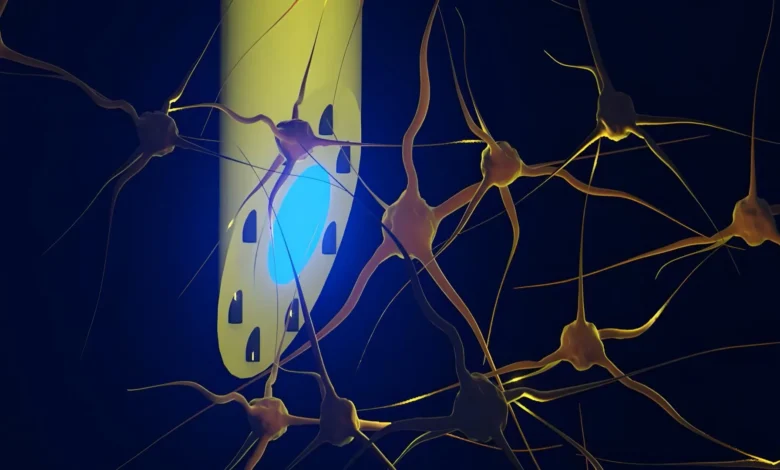
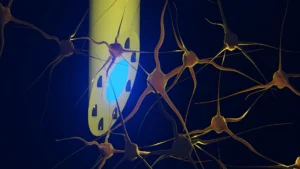
A sophisticated new class of brain implants, characterized by its needle-thin profile and multi-functional capabilities, has emerged as a significant milestone in neurotechnology. Developed through a cross-institutional collaboration involving the Technical University of Denmark (DTU), the University of Copenhagen, and University College London, this device—known as the microfluidic Axialtrode or mAxialtrode—represents a departure from the rigid, single-point monitoring tools that have dominated neuroscientific research for decades. By integrating optical, electrical, and fluidic pathways into a single, flexible, sub-millimeter fiber, researchers have gained the ability to monitor and manipulate neural activity across multiple brain layers simultaneously.
The findings, published in the peer-reviewed journal Advanced Science, describe a technology capable of recording neural signatures, delivering targeted pharmacological treatments, and applying optogenetic stimulation. While the device is currently positioned as a research instrument, the potential for its evolution into a clinical tool for managing conditions such as epilepsy and Parkinson’s disease has captured the attention of the broader neurological community.
The Evolution of Neural Interfacing
For over thirty years, the standard for intracranial research has been the flat-ended optical fiber. These devices, often composed of rigid glass or silica, have been instrumental in the rise of optogenetics—the use of light to control genetically modified neurons. However, the inherent limitation of these fibers is their "point-source" nature. Light is emitted, and measurements are taken, exclusively at the distal tip of the fiber.
This spatial limitation has long hindered our understanding of the brain as a volumetric network. Brain functions, such as memory formation, executive decision-making, and the propagation of seizure activity, are not confined to a single point in space; they are distributed, multi-layered phenomena. The conventional approach of using multiple, rigid probes to monitor these layers often results in significant tissue displacement and chronic inflammation. As the brain shifts slightly within the skull, rigid silicon or glass implants can cause micro-trauma, leading to glial scarring—a process where the brain walls off the "foreign" object, eventually insulating the electrodes and degrading signal quality.
The mAxialtrode addresses these limitations by utilizing a polymer-based, flexible architecture. Drawing from the fabrication techniques used in high-precision telecommunications fiber optics, the researchers heat and draw the polymer to a diameter of less than 0.5 millimeters. This allows for a "mechanical impedance match" between the implant and the brain tissue, significantly reducing the inflammatory response and allowing for longer-term, more stable recording sessions.
Chronology and Development Timeline
The development of the mAxialtrode follows a multi-year trajectory of refinement in soft-matter engineering.
- 2020-2021: Initial conceptualization at DTU focused on the integration of microfluidic channels within drawn optical fibers. The primary challenge was maintaining the structural integrity of the microscopic channels during the thermal drawing process.
- 2022: The team achieved the first successful iteration of a fiber containing a central light-conducting core surrounded by eight peripheral channels.
- 2023: Laboratory validation confirmed the fiber’s ability to conduct light and electrical signals simultaneously while providing a conduit for fluid delivery.
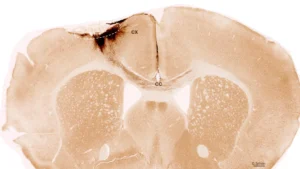
- 2024: The "in vivo" testing phase commenced, with the device implanted into living mouse models. Researchers validated the device’s efficacy in the cerebral cortex and the hippocampus, demonstrating that drugs could be delivered precisely at distinct depths spaced nearly three millimeters apart.
This rapid development cycle was accelerated by the integration of multidisciplinary expertise. Postdoc Kunyang Sui, the lead developer, worked alongside Associate Professor Christos Markos to optimize the materials science, while neurophysiological validation was provided by Associate Professors Rune W. Berg and Rob C. Wykes, whose research centers on the circuit-level dynamics of epilepsy.
Technical Specifications and Multi-Functionality
The mAxialtrode’s efficacy lies in its density of information. Within a diameter thinner than a standard human hair, the device manages three distinct physiological modalities:
- Optogenetic Control: The central optical core delivers high-precision light pulses to activate or inhibit specific neuronal populations.
- Electrophysiological Monitoring: The peripheral channels accommodate ultra-thin metallic microwires, which act as high-fidelity recording electrodes. By placing these wires along the length of the fiber, the researchers can record signals from both shallow and deep structures without moving the probe.
- Microfluidic Drug Delivery: The remaining channels act as microscopic pipelines. This allows for the precise, localized administration of neurotransmitters or therapeutic agents directly into the area of interest, minimizing systemic side effects—a major advantage for potential future epilepsy treatments where drug delivery is often restricted by the blood-brain barrier.
By combining these functions, the device reduces the need for "probe crowding." In traditional experiments, researchers often insert several needles to record and stimulate different brain regions. Each insertion increases the risk of vascular damage and localized tissue death. The mAxialtrode replaces this cluttered approach with a "single-path" solution.
Clinical Implications and Future Outlook
The transition from a research tool to a clinical application is the next, and arguably most difficult, frontier for the team. Epilepsy, which affects approximately 50 million people worldwide, is a primary target for this technology. In many cases, epilepsy originates in specific, deep-seated regions of the brain that are difficult to reach with standard, non-invasive therapies.
If the mAxialtrode can eventually be adapted for human use, it could serve as a "closed-loop" system. In such a system, the electrode would record the onset of an abnormal electrical discharge (a seizure precursor) and immediately release a targeted dose of an anti-epileptic drug or trigger a precise light-based stimulation to terminate the seizure before it spreads.
However, the team—led by Sui and Markos—is transparent about the hurdles ahead. "We are in the early stages of a very long process," notes the team in their recent communications. "Clinical use requires stringent biocompatibility testing, long-term stability studies in larger animal models, and navigating the complex regulatory frameworks set by bodies like the FDA and the EMA."
Analysis of Scientific Impact
The implications of the mAxialtrode extend beyond neurology into the field of bioelectronics. The success of this device underscores a broader shift in neural engineering toward "soft" devices. For decades, the industry relied on rigid silicon arrays, modeled after computer chips. The realization that the brain is a soft, dynamic, and fragile organ has led to a pivot toward polymer-based, flexible electronics.
The mAxialtrode’s capability to perform volumetric analysis—collecting data from a 3D coordinate system within the brain rather than a 2D surface—provides a higher "data yield" per implant. This is crucial for neuroscientists mapping the complex connectivity of the human brain, where thousands of neurons may be involved in a single cognitive task.
Furthermore, the economic impact of such technology cannot be overlooked. By reducing the number of implants required per subject, researchers can significantly lower the costs associated with animal husbandry, surgical procedures, and post-operative care in clinical research.
Conclusion and Next Steps
The research team is currently in the process of patenting the design and manufacturing methodology of the mAxialtrode. They are also seeking strategic partnerships with pharmaceutical and medical device companies to explore the feasibility of a human-grade version of the implant.
As the scientific community continues to grapple with the complexities of the human brain, the mAxialtrode stands as a testament to the power of interdisciplinary collaboration. By marrying the precision of telecommunications engineering with the nuance of neuroscience, the researchers have provided a new lens through which to view the brain—one that is thinner, gentler, and significantly more capable than the tools of the past. While widespread clinical adoption remains years away, the successful "in vivo" validation represents a vital step toward a future where neurological disorders are managed with the precision of a scalpel and the sophistication of modern data science.