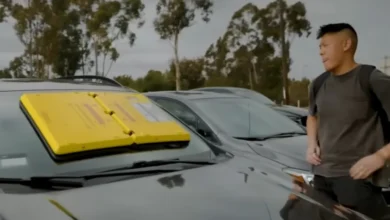
An F-150 Lightning Owner Resold His Truck And Nearly Got His Money Back: ‘A Little Less Than We Paid New’

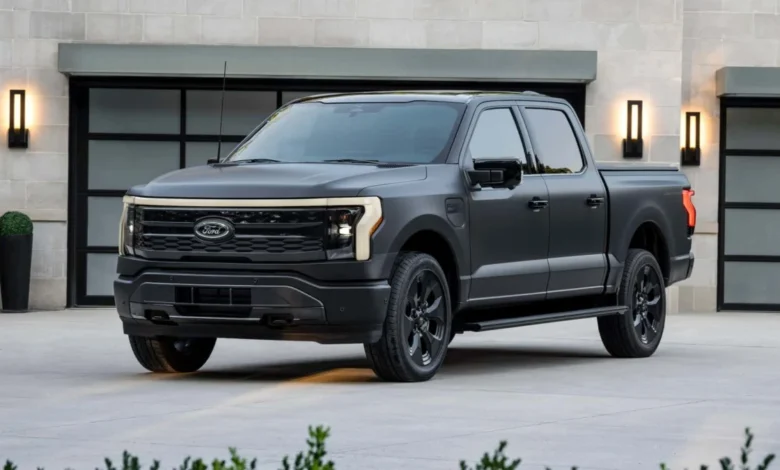
The Dynamics of a Shifting Market
Recent activity within the Ford F-150 Lightning Owners Group on Facebook highlights this trend, where a user identified as JF shared a notable experience with a major online vehicle retailer. According to the owner, Carvana offered a purchase price for his Lightning that was only marginally lower than his original purchase cost. In subsequent discussions, the owner noted that while he held a positive view of the truck’s performance and engineering, his personal utility requirements had changed.
The owner, who admitted to rarely utilizing the truck’s cargo bed, found the timing of the high resale value ideal for transitioning into a smaller, more practical vehicle. His sentiment underscores a broader realization among current owners: the Lightning is a high-performance, technologically advanced machine that, despite its capabilities, may not align with the specific lifestyle needs of every early adopter. As market values for used EVs stabilize, the Lightning has found a new audience—one that values the utility of a pickup truck at a significantly lower price point than the original MSRP.
A Chronology of the F-150 Lightning
The trajectory of the Ford F-150 Lightning has been anything but conventional since its inception. Launched in 2022, the vehicle was heralded as a flagship for Ford’s electrification strategy. However, the transition from internal combustion engines to battery-electric propulsion was met with skepticism from the core F-150 demographic, who prioritize range, towing consistency, and ease of refueling.
The following timeline tracks the critical milestones of the F-150 Lightning’s production lifecycle:
- 2022: Ford officially launches the F-150 Lightning, generating significant initial buzz and a massive backlog of pre-orders.
- 2023: As production ramps up, the economic realities of the EV market begin to surface. Interest rates climb, and the initial excitement surrounding high-trim-level electric pickups begins to taper off.
- Late 2024: Ford announces a strategic pause in production for the F-150 Lightning, citing a softening in demand and a need to align inventory with market appetite.
- December 2025: Ford confirms the conclusion of the F-150 Lightning’s production run, marking the end of its specific iteration in the lineup.
The primary hurdle for the Lightning was its pricing strategy. Initially promised with an entry-level "Pro" trim priced around $40,000, market forces, supply chain constraints, and battery costs forced that starting figure upward, quickly pushing the truck into the $50,000 to $80,000 range. For many consumers, this price point was difficult to justify against a traditional, highly refined, and versatile gasoline-powered F-150.
The "Sweet Spot" of Used Depreciation
Jimmy Douglas, CEO of the wholesale electric vehicle platform Plug, recently provided insight into the changing economics of the F-150 Lightning during an interview with Bloomberg. Douglas noted that the primary barrier to adoption for the Lightning was the initial barrier to entry. When the vehicle is priced at or near its original sticker price, consumers often compare it to the total utility of a traditional combustion truck, frequently finding the EV lacking in range-anxiety-free convenience.
However, once the vehicle enters the used market at a 50 to 60 percent discount, the value proposition changes entirely. At this price point, the F-150 Lightning becomes an "incredible truck for the money," according to Douglas. The high-end tech, massive torque, and innovative features like the "Mega Power Frunk" become accessible to a wider demographic that may have been priced out of the new vehicle market. This price correction is effectively clearing out inventory and finding the "sweet spot" for consumers who want the benefits of an electric truck without the premium cost of new hardware.

Strategic Pivots: The Era of the EREV
As Ford moves to close the chapter on the pure-electric F-150 Lightning, the company is preparing for a new iteration: the Extended-Range Electric Vehicle (EREV). This technology represents a strategic pivot for the Dearborn-based automaker, acknowledging that while pure battery-electric power is the future, the current infrastructure and consumer demands require a bridge technology.
The upcoming F-150 Lightning EREV will retain a battery pack and electric motors to drive the wheels, ensuring the driving experience remains consistent with the current EV model. The fundamental difference, however, will be the integration of an onboard gasoline-powered generator. This unit is not designed to power the wheels directly—unlike a traditional hybrid—but rather to act as a mobile power plant, charging the battery while in motion.
This configuration aims to address the two primary complaints regarding the current Lightning: range limitations and towing inefficiency. Ford estimates that with a full battery and a full tank of gas, the EREV will be capable of achieving more than 700 miles of total range. This range is expected to alleviate the anxiety that currently prevents many long-haul truck owners from making the switch to an electric platform.
Broader Implications for the Auto Industry
The situation with the F-150 Lightning serves as a case study for the entire automotive industry’s transition to electrification. It demonstrates that technological superiority alone is insufficient to guarantee market dominance; the product must also meet the specific utility and economic expectations of the target demographic.
For Ford, the lessons learned from the Lightning will likely influence the development of the next-generation F-150, which is currently slated for release by the end of the decade. The shift toward EREV technology suggests that automakers are beginning to prioritize "customer-centric electrification" over "ideological electrification."
Furthermore, the robust resale demand for used Lightnings indicates that the secondary market is a critical, often overlooked component of the EV ecosystem. As battery health diagnostics improve and become more transparent, the used EV market is poised to become the primary entry point for millions of Americans who are currently priced out of the new vehicle market.
Conclusion: The Future of the F-150
The Ford F-150 Lightning will likely be remembered not as a failure, but as a transitional pioneer. It pushed the boundaries of what a truck could be—incorporating advanced digital interfaces, massive storage capabilities, and high-performance torque—while simultaneously revealing the limitations of the current EV landscape.
As the first generation of the Lightning fades into the secondary market, it is finding a home with owners who appreciate its capabilities at a price point that makes sense. Simultaneously, the lessons gleaned from its production run are already being synthesized into the next generation of Ford trucks. Whether it is the upcoming EREV or the future fully electric platforms, the evolution of the F-150 demonstrates that the path to electrification is rarely a straight line, but rather a series of adaptations, market corrections, and technological breakthroughs. For now, the used F-150 Lightning remains a high-value asset, proving that even when a vehicle isn’t a blockbuster at launch, it can still leave a significant mark on the automotive landscape.