The legal controversy surrounding the use of windshield-mounted vehicle immobilization devices in California

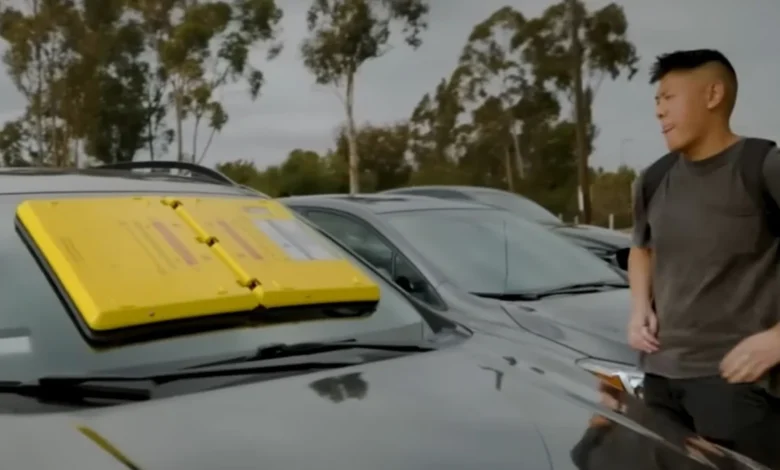
Parking enforcement has long been a source of friction between private property owners and motorists, evolving from the traditional practice of towing to the deployment of mechanical "boots" attached to wheels. In recent years, a new technology known as the Barnacle has entered the market. Unlike traditional metal clamps, the Barnacle is a large, yellow, plastic-based device that utilizes high-powered suction cups to adhere to a vehicle’s windshield with approximately 1,000 pounds of force, effectively obscuring the driver’s view and rendering the vehicle immovable. While the device is marketed as a non-destructive alternative to towing, its use by private entities in California has triggered significant legal questions regarding property rights, the California Vehicle Code, and the limits of private enforcement.
The Mechanism and Market Context
The Barnacle device was designed to address the logistical challenges of traditional parking enforcement. Towing vehicles is often a lengthy process that can lead to vehicle damage, storage disputes, and high recovery costs for the owner. By contrast, the Barnacle allows for rapid immobilization. Once a vehicle is identified for a parking violation, the enforcement officer attaches the device, which includes a wireless communication module. The motorist is then instructed to pay a fine via a mobile app or telephone line, after which they receive a code to release the device. The owner must then return the device to a designated drop-off location to avoid further penalties.
Proponents of the technology argue that it is a "consumer-friendly" alternative to towing. However, the legal landscape surrounding this technology is complex. While municipal authorities often have specific statutes that empower them to immobilize vehicles for public safety or traffic management, the authority of private businesses to employ similar measures is far more constrained, particularly in jurisdictions with rigid vehicle codes like California.
Legal Foundations and the California Vehicle Code
The legality of using the Barnacle hinges on specific sections of the California Vehicle Code (CVC). James Rubinowitz, a civil litigator and founder of the legal tech firm Execute.law, notes that the CVC acts as the primary regulatory framework for all vehicle-related conduct within the state.
Central to this issue is CVC section 22651.7, which explicitly outlines the authority to immobilize vehicles. Under this section, the power to attach an immobilization device is restricted to law enforcement and salaried municipal parking employees, and even then, only under specific circumstances on public streets. Subsection (b) of the same code implies a prohibition for any other party, suggesting that private entities lack the statutory authority to immobilize a vehicle, regardless of whether the vehicle is parked on private property.
Furthermore, CVC section 10852 complicates the matter for private businesses. This section classifies the tampering with a vehicle without the owner’s consent as a misdemeanor. When a private parking enforcement company attaches a Barnacle to a car, they are arguably interfering with the owner’s possession and control of the vehicle. Legal experts suggest that if a business applies such a device, the vehicle owner may technically have the right to remove it. However, this course of action carries its own risks; if the removal process results in damage to the device, the owner could potentially face charges of vandalism.
Financial and Operational Implications
The lack of legislative oversight for private immobilization in California creates a vacuum regarding fee structures. In the towing industry, the California Vehicle Code establishes strict caps on what towing companies can charge, mandates transparency in billing, and provides legal avenues for owners to sue for quadruple damages in the event of overcharging. No such protections currently exist for the use of the Barnacle by private companies.
Because the state legislature has never explicitly authorized private entities to use these devices, there is no standardized fee schedule. This allows private enforcement companies to set their own prices, which critics argue can be arbitrary and excessive. From a liability perspective, if a court determines that the immobilization was unlawful, the business that deployed the device could be held responsible for the removal fees, any damage caused to the windshield, and potentially the cost of any secondary repairs.
Given the high cost of modern automotive windshields—many of which now house sophisticated sensors and cameras for Advanced Driver Assistance Systems (ADAS)—the potential financial liability for an enforcement company is significant. A simple act of "barnacling" a vehicle could lead to thousands of dollars in repair costs if the suction mechanism causes a crack in the glass or damages the integrated sensor array.
The Perils of Attempted Self-Help
Motorists who find themselves immobilized by a Barnacle are often tempted to attempt removal or, in more extreme scenarios, drive with the device partially obscured or circumvented, reminiscent of cinematic tropes involving driving with one’s head out of the window. Legal counsel strongly advises against this.
CVC section 26708 prohibits the operation of a vehicle with any object affixed to the windshield that obstructs or reduces the driver’s clear view. This statute does not provide exceptions for immobilization devices. Attempting to drive with a Barnacle attached—or even just driving with a compromised field of vision—would almost certainly result in a moving violation, compounding the initial parking dispute with potential citations, insurance premium hikes, and safety hazards. The legal consensus is that while the immobilization itself might be an unlawful act by the business, the motorist is not shielded from the consequences of operating an unsafe vehicle.
Broader Impact and Future Outlook
The emergence of the Barnacle highlights a broader trend in "privatized enforcement," where businesses seek technological solutions to manage parking demand without relying on local law enforcement. While these companies promise efficiency, they often do so in a way that pushes the boundaries of property law.
In jurisdictions like Atlanta, the public and local governments have already begun to push back against the use of traditional wheel boots, citing them as predatory and unnecessary. The Barnacle represents a shift in strategy, but it faces the same fundamental challenge: the legal right to enforce parking regulations is historically and statutorily reserved for the state.
The tension between property owners’ rights to control their lots and the rights of vehicle owners to be free from unauthorized interference will likely be settled in the courtroom. As of now, the California legal framework appears to be heavily weighted against the practice of private immobilization. For businesses, the risk of litigation and the potential for being held liable for vehicle damage may eventually outweigh the perceived benefits of the technology. For motorists, the best defense remains a thorough understanding of the distinction between municipal enforcement and private overreach.
Summary of Legal Risks
- Lack of Statutory Authority: Private companies have no clear legal standing under CVC 22651.7 to immobilize vehicles, rendering the act a potential trespass or interference with property.
- Criminal Exposure: Under CVC 10852, unauthorized interaction with a vehicle can be classified as a misdemeanor, placing the enforcement company at risk of legal action.
- Liability for Damages: If a device is applied unlawfully, the business assumes financial responsibility for the removal of the device and any damage caused to the vehicle, including expensive windshield and sensor repairs.
- No Fee Regulation: Without legislative oversight, private entities may engage in price gouging, a practice that remains largely unchecked due to the lack of specific, state-mandated fee caps.
- Safety Violations: Motorists are legally barred by CVC 26708 from operating vehicles with obstructed windshields, meaning that attempting to bypass an unauthorized device is a violation in its own right.
As the deployment of these devices continues, the need for legislative clarity becomes increasingly apparent. Until the California state legislature addresses the role of private parking enforcement and the use of immobilization technologies, the practice will likely remain in a state of legal volatility, posing risks to both the entities deploying the devices and the motorists who encounter them.