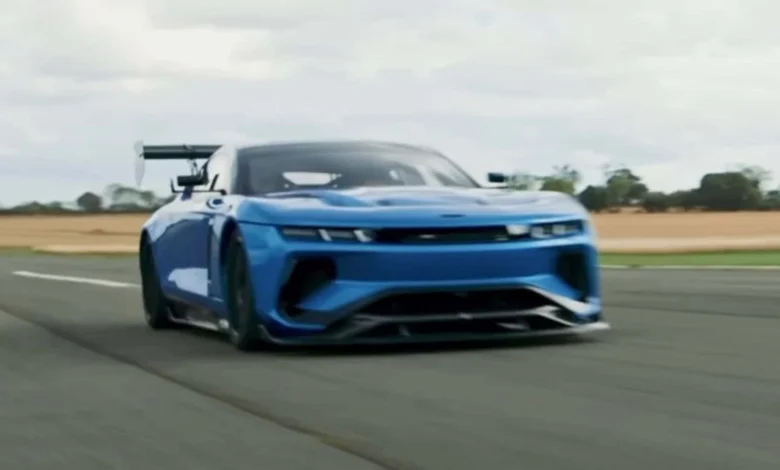
The automotive world is currently witnessing the resurrection of one of Britain’s most iconic nameplates, as the Jensen Interceptor GTX has officially emerged from the shadows as a dedicated track-only prototype. This revival marks a significant milestone for the brand, blending the nostalgic silhouette of a 1970s grand tourer with the modern, high-output mechanical prowess of a contemporary hypercar. While currently confined to the circuit, the vehicle serves as a sophisticated testbed for a planned production model that aims to bridge the gap between vintage charm and modern engineering intensity.
The Evolution of the Interceptor Nameplate
To understand the weight of the Jensen Interceptor GTX, one must look at the history of the original Jensen Motors. Founded in 1934 by brothers Alan and Richard Jensen, the firm gained international acclaim for the Interceptor, a grand tourer produced between 1966 and 1976. Renowned for its Chrysler V8 engines and Italian-designed bodywork, the original Interceptor became a symbol of mid-century luxury and brute force.
The modern reincarnation of the brand, spearheaded by a new group of automotive enthusiasts, has spent years navigating the challenges of reviving a dormant legacy. The development timeline began with initial corporate restructuring, followed by the announcement of a "reborn" performance car that would adhere to the ethos of the original while utilizing cutting-edge propulsion technology. The debut of the GTX prototype represents the culmination of this multi-year effort, shifting the brand from the realm of press releases and renders into tangible, functional hardware.
Mechanical Architecture and Performance Specifications
At the core of the Jensen Interceptor GTX is a philosophy that marries British chassis development with the reliability and power density of American engine architecture. Jensen has opted for a 6.8-liter V8 engine sourced from General Motors, which serves as the foundational block for the vehicle’s powertrain. However, the engine undergoes an extensive transformation process at the hands of the specialists at Late Model Engines (LME) in Houston, Texas.
The modification process is comprehensive rather than superficial. The engineers at LME perform a full internal overhaul, replacing stock components with high-specification hardware. Key upgrades include CNC-machined cylinder heads, the integration of lightweight titanium valves, and a reinforced rotating assembly capable of handling the extreme thermal and mechanical stresses associated with high-boost supercharging.
The engine management is handled by a Motec ECU, allowing for precise control over the power delivery. In its current configuration, the prototype outputs approximately 973 horsepower. However, company representatives have indicated that the platform is capable of producing up to 1,200 horsepower with a refined tune. This immense power is managed through a manual transmission, a design choice that signals a commitment to analog driver engagement in an increasingly automated industry. The result is a vehicle that, while track-focused, serves as an engineering statement regarding the viability of high-displacement internal combustion in the modern era.
Engineering for the Track: The Prototype Phase
The decision to launch the GTX as a track-only prototype is a calculated strategic move. By focusing initially on circuit performance, the development team can stress-test the vehicle’s cooling, chassis rigidity, and aerodynamic stability without the immediate burden of road-legal compliance regulations—such as emissions standards, pedestrian safety requirements, and noise ordinances.
The current prototype is designed to gather telemetry data that will directly inform the production version. During recent track sessions, the vehicle demonstrated a distinct, aggressive acoustic signature, a byproduct of its heavily tuned V8 and race-spec exhaust system. For enthusiasts and prospective buyers, this sound has become the primary indicator of the vehicle’s character: a synthesis of classic muscle-car rumble and precision-engineered performance.
Future Outlook: Toward a Road-Legal Reality
Jensen has publicly outlined its roadmap for the future, which centers on the development of two distinct road-going variants: the Grand Touring (GT) model and the sporting GTR model. The GT is expected to prioritize long-distance comfort and luxury, maintaining the Interceptor’s heritage as a vehicle for cross-continental travel, whereas the GTR will likely lean into the track-focused DNA of the current prototype.
The challenge for the manufacturer will be the transition from the prototype phase to series production. While the engineering team has proven the powertrain’s capability, the homologation process for road use is historically expensive and time-consuming for boutique manufacturers. The industry anticipates that the road-going version will carry a significant price tag, reflecting both the scarcity of the vehicle and the bespoke nature of the engineering involved.
Broader Implications for Boutique Automakers
The resurgence of the Jensen Interceptor is part of a wider trend in the automotive industry known as "restomodding" or "continuation engineering." Companies such as Singer Vehicle Design and Radford have demonstrated that there is a robust market for vehicles that blend the aesthetic appeal of classic design with the performance capabilities of modern technology.
By reviving the Interceptor, Jensen is tapping into a specific demographic of collectors who value historical provenance but demand contemporary reliability and speed. The success of this project will likely depend on the company’s ability to maintain the "soul" of the original Interceptor while delivering a driving experience that can compete with established supercar manufacturers.
Industry Analysis and Market Positioning
From a market perspective, the Jensen Interceptor GTX sits in a unique, albeit challenging, niche. It does not compete directly with high-volume luxury vehicles; instead, it targets a segment of the market that prioritizes exclusivity and mechanical character.
The reliance on a manual transmission is particularly notable. As major manufacturers shift almost exclusively to dual-clutch and automatic gearboxes for efficiency and lap-time optimization, the inclusion of a manual in a 1,000-horsepower platform is a clear nod to driving purists. This positioning may insulate the brand from direct comparison with electric hypercars, which often prioritize acceleration figures over tactile mechanical engagement.
However, the firm faces significant hurdles. The global automotive landscape is shifting toward electrification, and the regulatory environment for high-displacement, supercharged V8s is becoming increasingly restrictive. Jensen’s ability to bring this car to market in the coming years will serve as a bellwether for the survival of low-volume, high-performance internal combustion engines.
Conclusion
The Jensen Interceptor GTX represents more than just a new model; it is a bridge between the automotive past and an uncertain future. By focusing on the fundamentals of power, sound, and driver involvement, the project has successfully captured the attention of the global automotive press and enthusiast community.
While the road to a production-ready vehicle is long and fraught with engineering and regulatory complexities, the progress made with the current prototype suggests that the brand is committed to a high standard of execution. Whether the eventual road-car version can successfully capture the magic of the prototype while meeting the stringent requirements of public roads remains to be seen. For now, the automotive world waits to see if this British beast can deliver on its promise of bringing the spirit of the Interceptor into the next generation. As development continues, the primary focus will remain on the transition from the circuit to the street—a journey that will define the legacy of the new Jensen.