Four years ago, humanity executed its first-ever attempt to alter the trajectory of a celestial body in a desperate, yet controlled, dress rehearsal for planetary defense. In September 2022, NASA’s Double Asteroid Redirection Test (DART) spacecraft concluded its multi-year journey by slamming into Dimorphos, a small moonlet orbiting the larger asteroid Didymos. The kinetic impact was a resounding success, demonstrating that humanity possesses the technological capability to nudge a potentially hazardous object off a collision course with Earth. Now, the European Space Agency (ESA) has dispatched the Hera spacecraft to the scene of the crime, providing the first close-up, high-resolution look at the aftermath of that violent collision and confirming that the impact was far more transformative than initial remote observations suggested.
The arrival of Hera at the binary asteroid system marks a significant milestone in planetary science. Having completed a two-year transit from a Florida launch pad, the spacecraft is now positioned to conduct a detailed post-mortem of the DART mission. The initial findings, released by the ESA this week, reveal a landscape radically altered by the 13,700-mph impact. The collision did not merely graze the surface; it carved out a massive crater and unleashed a swarm of debris that has left the asteroid system in a state of chaotic transition.
Chronology of a Kinetic Collision
To understand the gravity of these new findings, one must look back at the timeline of this unprecedented experiment. The DART mission was launched in November 2021, targeting the Didymos binary system, which was located roughly 6.8 million miles from Earth at the time of the impact in September 2022. The primary objective was to determine if a kinetic impactor could effectively change an asteroid’s orbital period.
Upon impact, DART released approximately 10 billion joules of energy. The results were instantaneous and statistically significant: the 12-hour orbital period of Dimorphos around its parent body, Didymos, was shortened by approximately 33 minutes. This shift was 25 times greater than the most conservative estimates provided by mission planners. While telescopes on Earth confirmed the orbital change, the actual physical state of the moonlet remained a mystery until Hera’s recent arrival.
Hera’s primary mission is to answer the questions that were physically impossible to resolve from millions of miles away. While DART captured images during its final, fatal descent, the view was fleeting. A small CubeSat, LICIACube, managed to capture the impact flash, but the dust and debris cloud obscured the true nature of the impact site. With Hera’s arrival, researchers can now map the surface morphology in granular detail, characterizing the size, depth, and structural impact of the cratering process.
Physical Transformation and the Debris Swarm
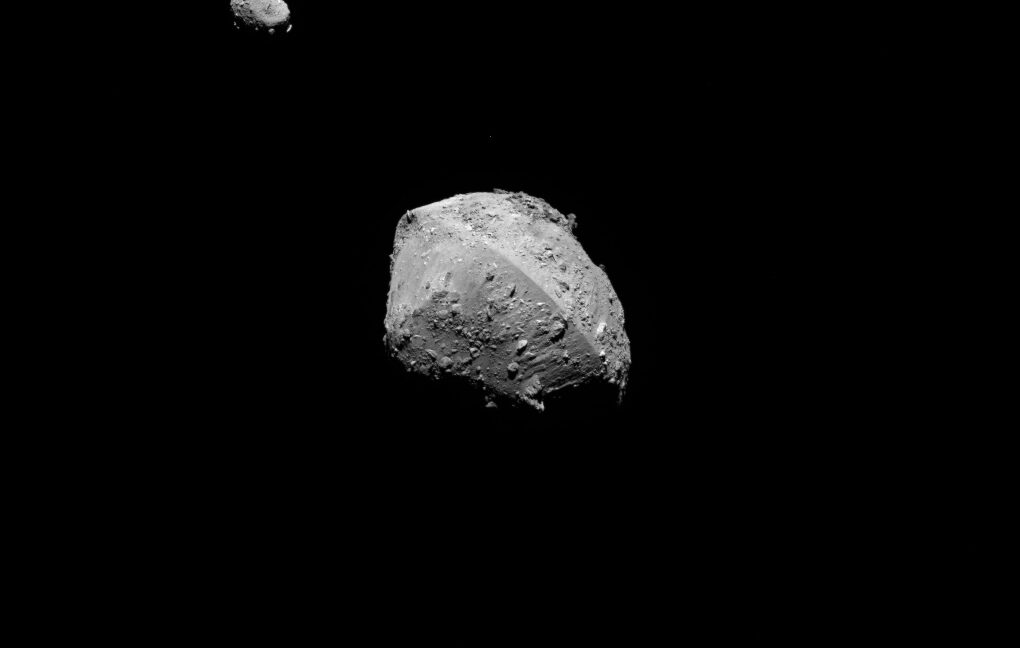
The imagery returned by Hera has shocked the scientific community. The impact did not simply produce a localized dent; it fundamentally reshaped the asteroid. Scientists at the Côte d’Azur Observatory, led by principal investigator Patrick Michel, have observed that the impact created a crater so immense that it spans a significant portion of the 500-foot-wide moonlet. "We had two main predictions: either we made a crater, or we reshaped the asteroid," Michel noted. "In fact, we did both."
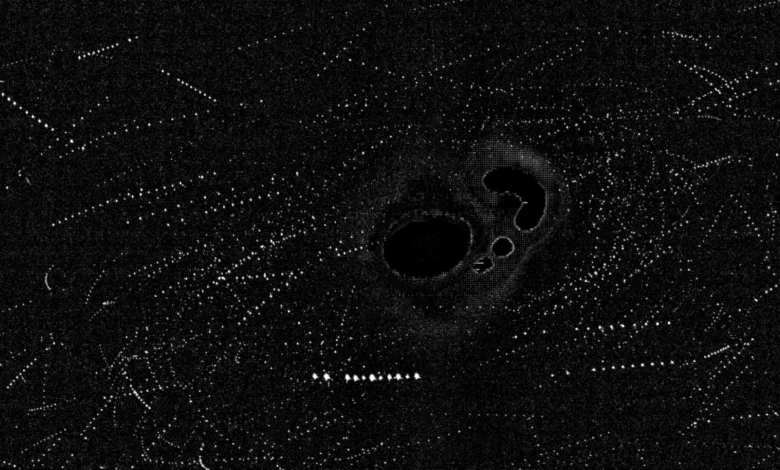
Perhaps most surprising is the discovery of an extensive debris field. Long-exposure images captured by Hera’s Hyperscout-H instrument reveal hundreds of boulders and fragments, ranging from the size of a football to that of a washing machine, currently orbiting the binary system. While the Hubble Space Telescope had previously detected a cloud of material trailing the asteroids, the sheer volume and density of the debris swarm identified by Hera suggest that the impact was a more "messy" event than computer models had anticipated.
Planetary scientist Naomi Murdoch of the Institut Supérieur de l’Aéronautique et de l’Espace noted that while some of this debris is undoubtedly the result of the DART impact, the mission is currently working to differentiate between post-impact ejecta and ancient remnants from the moonlet’s formation. Because Dimorphos is a "rubble pile"—a loosely bound collection of rocks rather than a solid monolith—the impact may have caused a level of structural failure that has yet to be fully understood.
The Role of Hera’s CubeSats
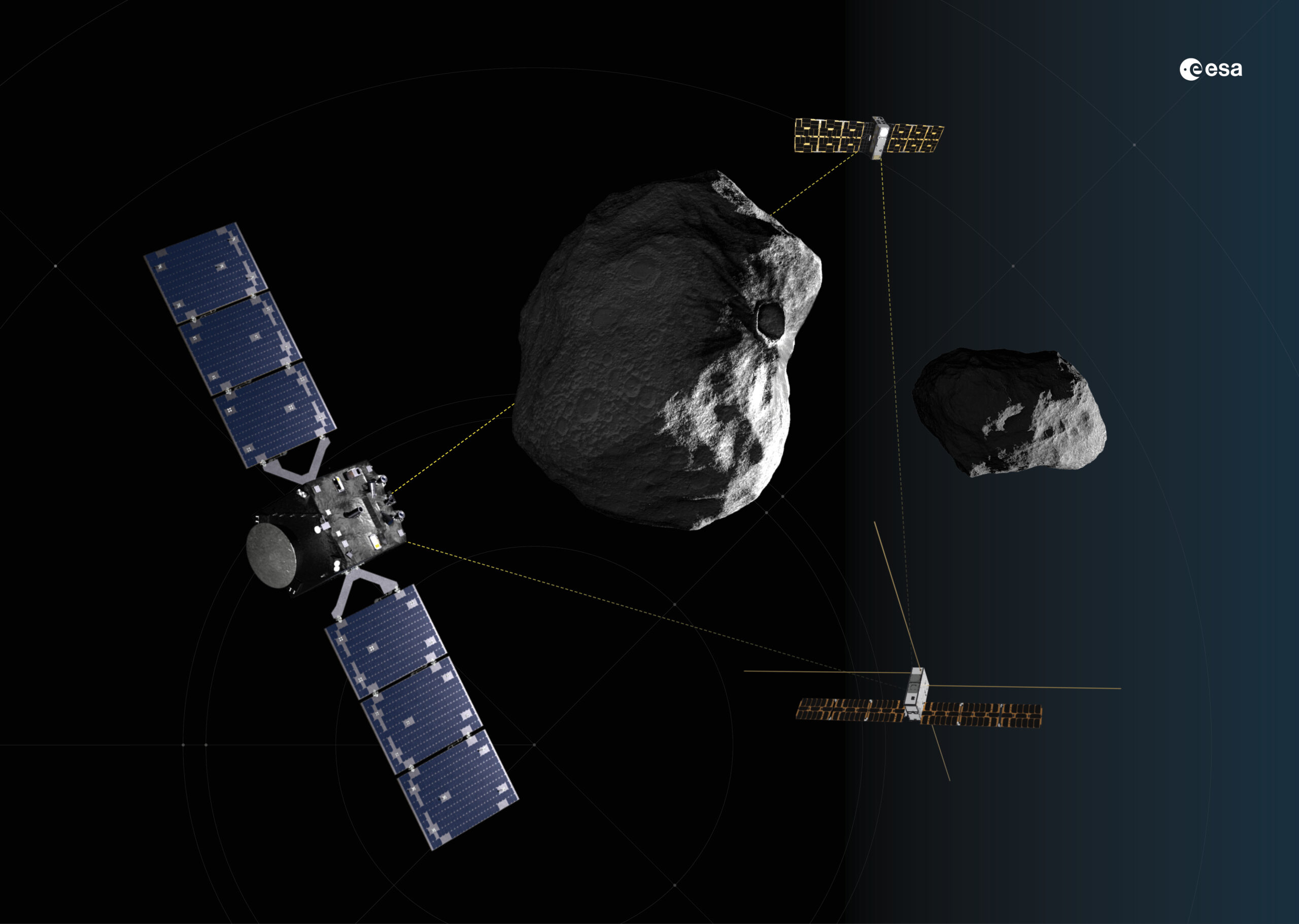
Over the coming six months, Hera will undertake a series of close-proximity flybys. A critical phase of the mission involves the deployment of two sub-satellites, Juventas and Milani. These CubeSats are designed to perform high-risk maneuvers, including potential landings on the surface of Dimorphos.
These small satellites will carry specialized instrumentation intended to measure the asteroid’s internal structure, mass, and composition. By deploying seismic sensors and performing gravity field mapping, the team hopes to determine if the internal structure of the asteroid acted as a shock absorber for the DART impact, which would explain why the orbit was altered so significantly. This data is vital for "ground-truthing" existing computer models, which until now, have relied on assumptions about asteroid density and porosity.
Implications for Planetary Defense
The broader implications of the Hera mission cannot be overstated. Near-Earth objects (NEOs) come in a vast array of sizes, densities, and compositions. A strategy that works effectively against a solid, metallic asteroid might prove ineffective against a porous, "rubble-pile" object like Dimorphos. By analyzing the physical properties of Dimorphos post-impact, scientists can build a robust predictive library of how different types of asteroids respond to external forces.
"Once we understand, we have a breakthrough, which really solves planetary defense," Dr. Michel stated. The goal is to move beyond a singular successful experiment and toward a standardized protocol for threat mitigation. If a future, genuine threat is identified, mission planners will need to know precisely how much energy is required to deviate an object of a specific mass and material makeup to ensure it misses Earth.
Official responses from the European Space Agency and NASA have highlighted the collaborative nature of this international effort. By combining the data from DART’s kinetic impact with Hera’s detailed forensic analysis, the international space community is creating a template for future missions. This transition from "blind" impact to "observed" impact represents a maturation of planetary defense as a scientific discipline.
The Challenge of Uncertainty
Despite the successes, significant challenges remain. The current state of Dimorphos—tumbling wildly in its orbit—presents a complex dynamic environment for Hera to navigate. The stability of the binary system has been compromised, and the presence of the boulder field adds a layer of operational complexity for the deployment of the CubeSats.
Moreover, the scientific community must contend with the "transition" state described by mission investigators. We are witnessing an asteroid in a state of fundamental change, where the laws of geophysics on a micro-gravity scale are playing out in real-time. The fact that the asteroid was nudged significantly further than expected is a "good" problem to have for planetary defense, but it highlights the limitations of current predictive modeling.
Looking Forward
As Hera continues its six-month observation window, the focus will remain on high-resolution mapping and the deployment of its secondary probes. The data harvested during this time will be shared globally, serving as the foundation for the next generation of planetary defense systems.
For now, the images of the scar on Dimorphos serve as a testament to human ingenuity and the capacity for technological intervention in space. What was once the domain of science fiction—deflecting an extinction-level threat—has become a rigorous, data-driven reality. The mission is not merely about studying a rock; it is about ensuring the long-term viability of life on Earth by mastering the mechanics of the cosmos. As the debris continues to drift and the orbit remains settled in its new, altered state, the legacy of DART and the findings of Hera will ensure that when the time comes to protect the planet, we will not be acting on intuition, but on the firm foundation of proven science.