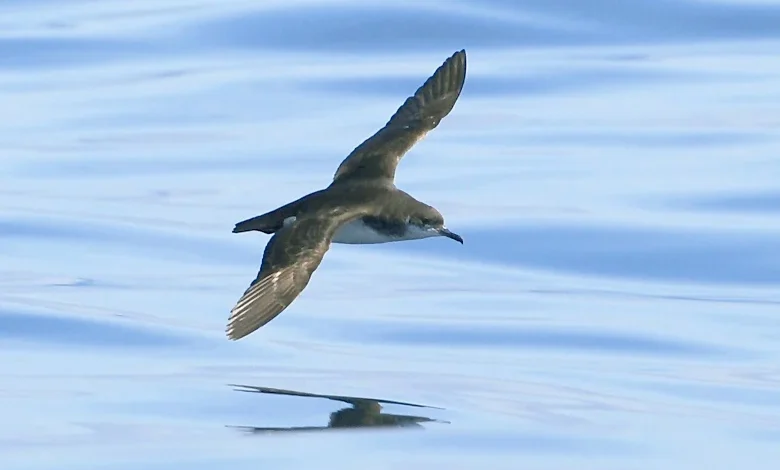
Flying across multiple time zones is a quintessential human grievance, often accompanied by the grogginess of desynchronized circadian rhythms. For decades, scientists assumed this physiological mismatch was primarily a human burden or a byproduct of globalized air travel. However, a groundbreaking study published in the journal Science reveals that Manx shearwaters, resilient seabirds that navigate the vast reaches of the North Atlantic, endure a natural form of jet lag during their daily foraging excursions. This internal clock misalignment not only affects their rest cycles but physically skews their navigation, forcing them to compensate for an inaccurate Sun-based compass.
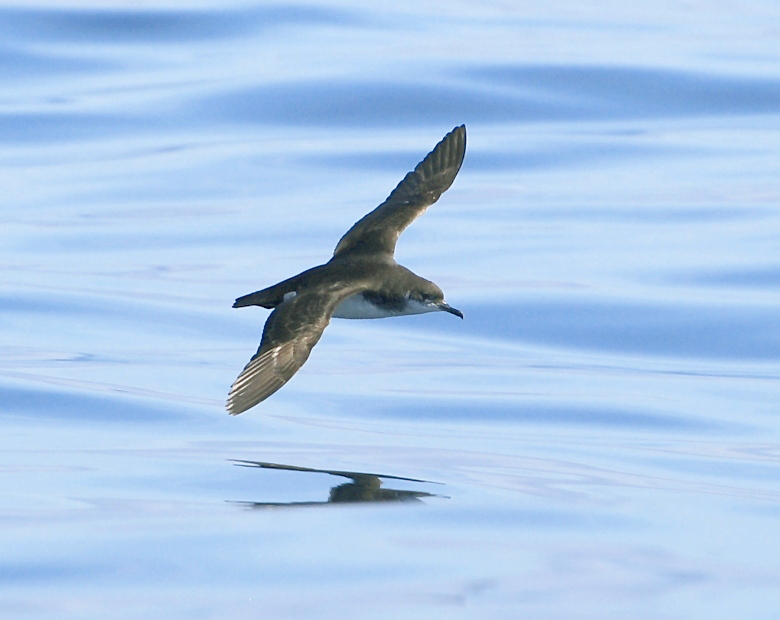
The Manx shearwater, a medium-sized seabird possessing the sharp, elegant silhouette of an albatross, is a master of endurance. While they spend much of their lives on the wing, they rely on subterranean burrows for nesting, primarily clustered along the coastal islands of the United Kingdom and Ireland, with a significant population inhabiting the shores of Wales. Their foraging behavior is equally impressive; they travel hundreds, sometimes over a thousand, kilometers into the open Atlantic to hunt, navigating by a combination of sophisticated sensory maps—potentially olfactory in nature—and a reliance on the Sun’s position to maintain their heading.
The Mechanism of a Biological Compass
The core of the issue lies in the birds’ reliance on a solar compass, a navigation system that requires an incredibly precise internal clock. As the Sun traverses the sky, its position relative to the horizon changes constantly throughout the day. To maintain a constant bearing, a bird must adjust its angle relative to the Sun. At dawn, a bird traveling south might maintain a 90-degree angle to the Sun, but by noon, it must fly directly toward it. This requires the bird to know exactly what time it is.
Like most vertebrates, Manx shearwaters possess a biological clock that they recalibrate at every sunrise and sunset. However, as the bird moves across lines of longitude, the local time shifts. Because the bird’s internal clock is only updated at these specific intervals, its internal sense of time begins to lag behind the actual solar time of its new location. For every degree of longitude a bird traverses, its internal clock falls approximately four minutes out of sync with the local environment.
The result is a subtle but measurable navigational drift. If a bird is flying east, its clock tells it that the Sun should be in a position it occupied minutes ago; consequently, the bird veers off course in a clockwise direction. Conversely, westward travel causes an anticlockwise deviation. While these errors appear minute—often resulting in only a 10 to 15-minute discrepancy—they provide a rare window into the limitations of biological navigation systems.
Two Decades of Tracking Data
The discovery was made possible by an extraordinary dataset curated by researchers at the University of Oxford. Lead author Patrick Lewin, alongside senior researchers Tim Guilford and Chris Perrins, utilized 20 years of GPS tracking data to map the flight paths of these birds. The project, which began in 2004 when GPS technology first reached the miniaturization levels required for such a bird, represents one of the most comprehensive long-term studies of avian movement.
The study analyzed 3,688 foraging trips undertaken by 1,045 individual birds. By isolating the "homing" portion of these flights—the phase where birds transition from erratic foraging patterns to high-speed, direct paths back to their colonies—the team was able to pinpoint exactly when the navigational bias occurred. By calculating the bird’s position relative to its last sunrise, the researchers could predict the expected deviation in the bird’s flight path. The findings were striking: across 335 flights conducted entirely over open water, the observed deviations mirrored the theoretical errors predicted by the Sun-compass model.
Comparative Analysis and Scientific Implications
While scientists had previously observed similar phenomena in captive penguins and migratory birds transported across time zones by researchers, this study is the first to demonstrate that wild animals naturally impose this state upon themselves through routine foraging. The researchers carefully controlled for other environmental variables, including crosswinds, the Coriolis effect, and potential magnetic sensory input. None of these factors explained the observed deviations with the same consistency as the Sun-compass theory.
The navigational cost of this "jet lag" is surprisingly low, thanks to the birds’ adaptive nature. The researchers calculated that on a 1,000-kilometer flight, the cumulative error caused by the clock-shift typically adds only about 5 kilometers to the total distance. The birds possess a robust "map sense" that allows them to periodically check their orientation and correct their course. Furthermore, the study suggests that these birds may rely on a dual-navigation strategy: one system governed by the solar compass and another by the recognition of familiar landmarks, such as coastlines.
When flying along a coast, the birds exhibited a curious behavior: their distance from the shore fluctuated in alignment with their predicted compass errors. This suggests that the birds are constantly negotiating between their internal solar clock and the external reality of the landscape.
Broader Biological and Technological Perspectives
The implications of this study extend well beyond ornithology. The research poses significant questions regarding how other migratory species—particularly those that travel across vast longitudinal ranges—handle the physiological stress of constant circadian desynchronization. If Manx shearwaters are susceptible to this, it is highly probable that many other avian species, and potentially marine mammals, experience similar internal clock shifts.

From an engineering perspective, these findings offer a blueprint for bio-inspired autonomous navigation. As researchers attempt to build drones and autonomous vessels capable of navigating vast, featureless environments, understanding how biological systems compensate for sensor drift and clock inaccuracies is invaluable. The "jet lag" of the shearwater is not a fatal flaw, but an optimized trade-off in a complex biological system.
Furthermore, this study provides a new avenue for human health research. By examining how shearwaters mitigate the long-term effects of persistent, routine jet lag—a state that has known negative health impacts in humans—scientists hope to uncover potential biological adaptations that could inform future treatments for sleep disorders and circadian rhythm disruptions in our own species.
Future Research Directions
Despite the clarity of the navigation data, many questions remain regarding the holistic impact of this phenomenon. Does this time-zone shift affect the birds’ sleep quality, metabolic efficiency, or their ability to hunt successfully? The research team intends to focus future efforts on whether these "time shifts" correlate with changes in foraging success or overall reproductive fitness.
The study also underscores the importance of long-term ecological monitoring. Without the 20-year span of data provided by the Oxford team, the subtle, incremental nature of these navigational errors would likely have been dismissed as statistical noise. As environmental changes continue to influence migratory patterns and bird behavior, the ability to discern these fine-grained navigational adjustments becomes critical for conservation efforts.
The Manx shearwater, in its tireless journey between the open sea and the safety of its burrow, serves as a testament to the sophistication of natural navigation. While we are only beginning to quantify the toll that time-zone shifts take on these creatures, the evidence suggests that the natural world has evolved to handle the pressures of a shifting internal clock with a grace that human travelers can only envy. As scientists continue to pull back the curtain on these avian travelers, the humble shearwater offers a masterclass in resilience, proving that even when the clock is out of sync, the drive to return home remains constant.