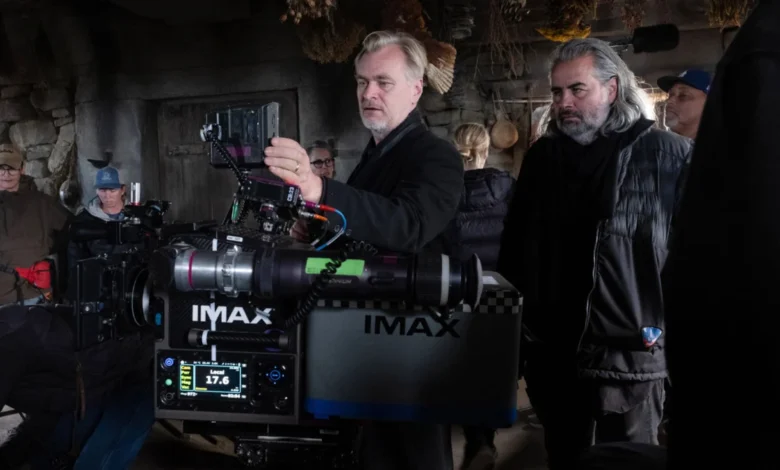
Christopher Nolan’s ambitious cinematic adaptation of Homer’s epic poem, "The Odyssey," is currently making significant waves at the global box office, a testament to the filmmaker’s enduring appeal and innovative approach to storytelling. However, in a recent candid interview, Nolan tempered immediate expectations for his next project, indicating that audiences will likely need to exercise patience, with a minimum of three years expected before his next directorial effort graces the silver screen. This deliberate pacing aligns with Nolan’s established career trajectory, a pattern that has consistently delivered critically acclaimed and commercially successful films approximately every three years.
A Deliberate Pace for a Visionary Director
Nolan’s revelation, made during an interview with Today, underscores his meticulous approach to filmmaking. The director, known for his complex narratives and groundbreaking visual techniques, typically allows ample time for the gestation and execution of his projects. His recent filmography illustrates this rhythm: Oppenheimer premiered in 2023, followed by Tenet in 2020, Dunkirk in 2017, and Interstellar in 2014. This three-year interval has become a reliable benchmark for his audience, a period that allows for the development of original concepts or the intricate realization of existing source material. Nolan’s confirmation that this timeframe would be "at least" the duration for his next endeavor suggests a commitment to ensuring each film receives the dedicated attention it warrants.
The sheer scale and creative demands of bringing "The Odyssey" to life appear to have been a particularly taxing, yet ultimately rewarding, undertaking for the filmmaker. Nolan shared with the NBC morning show that the production pushed him and his entire team to their absolute limits. "I definitely hit the limits of my own stamina and everybody’s stamina, I think," he admitted. "I mean, it’s The Odyssey, of course it should be difficult. We’re not doing the job right making a film of The Odyssey if it doesn’t seem difficult." This statement reflects a deep respect for the source material and a commitment to portraying its inherent challenges and epic scope with authenticity. The arduous nature of the production, therefore, is not viewed as a detractor but as an intrinsic element of fulfilling the narrative’s demands.
Pioneering IMAX 70mm for an Ancient Epic
A significant aspect of "The Odyssey’s" production, and a key contributor to its immersive cinematic experience, is Nolan’s decision to shoot the entire film using IMAX 70mm film. This technological choice represents a bold commitment to a format that offers unparalleled visual fidelity and scale, a decision Nolan articulated with clear conviction. "I went to IMAX, and I said, ‘Look, if ever we are going to fulfill this dream of shooting the entire movie that way, this is the one. This is The Odyssey,’" he explained. This statement highlights his belief that the grandeur and timelessness of Homer’s epic were ideally suited to the immersive capabilities of IMAX 70mm. The format, known for its sharp resolution, vibrant colors, and expansive aspect ratio, is designed to envelop the viewer, a quality that Nolan clearly felt was essential to transporting audiences to the mythical world of Odysseus.
The choice of IMAX 70mm is not merely an aesthetic preference; it’s a strategic decision rooted in Nolan’s long-standing advocacy for film as a medium. He has consistently championed the use of celluloid over digital formats, arguing for its superior image quality, dynamic range, and tactile presence. For a story as monumental as "The Odyssey," with its vast seascapes, mythical creatures, and intense emotional journeys, the choice of IMAX 70mm amplifies the visual storytelling, allowing for breathtaking vistas and intimate character moments to be rendered with extraordinary detail and impact. This commitment to a demanding and costly format underscores Nolan’s dedication to providing audiences with a truly cinematic event, pushing the boundaries of what is possible on screen.
Box Office Triumphs and Historic Openings
The commercial success of "The Odyssey" has been nothing short of spectacular, reinforcing Nolan’s status as a box office titan. The film is projected to achieve an opening weekend of over $257 million worldwide, a figure that places it among his most successful releases and marks his best global opening since The Dark Knight Rises in 2012, which debuted with an impressive $249 million. This remarkable performance is a strong indicator of audience enthusiasm for Nolan’s cinematic interpretations and his ability to translate complex narratives into universally appealing blockbusters.
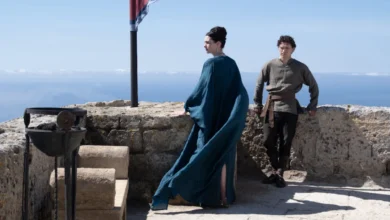
The impressive box office figures are not only a testament to Nolan’s directorial prowess but also to the star-studded ensemble cast he has assembled. "The Odyssey" features a veritable constellation of talent, including Matt Damon, Anne Hathaway, Lupita Nyong’o, Robert Pattinson, Tom Holland, Zendaya, and Charlize Theron, among many others. This caliber of casting undoubtedly contributes to the film’s broad appeal, drawing in diverse fan bases and generating significant buzz. The collective draw of these acclaimed actors, coupled with Nolan’s directorial vision, creates a potent formula for box office success.
The Enduring Allure of Homer’s Epic
The decision to adapt Homer’s "The Odyssey" itself speaks volumes about the enduring power and relevance of the ancient Greek epic. Penned approximately in the 8th century BCE, the poem chronicles the arduous ten-year journey of the Greek hero Odysseus as he strives to return to his island kingdom of Ithaca after the Trojan War. His voyage is fraught with peril, marked by encounters with mythical beings such as the Cyclops Polyphemus, the sorceress Circe, and the Sirens, as well as divine intervention from the gods. Beyond the thrilling adventure, "The Odyssey" delves into profound themes of loyalty, perseverance, identity, and the human condition, resonating with audiences across millennia.
Nolan’s contemporary interpretation, therefore, taps into a timeless narrative that continues to captivate imaginations. The story of a hero facing overwhelming odds, battling external forces and internal demons, and ultimately striving for home and family, is a universal human experience. By bringing this ancient tale to the modern cinematic landscape with his signature stylistic flair and technical innovation, Nolan has managed to make it accessible and thrilling for a new generation of viewers, while simultaneously honoring the spirit of the original work. The film’s critical and commercial success suggests that audiences are eager for epic storytelling that engages both the intellect and the senses, and that Nolan is uniquely positioned to deliver such experiences.
The Impact of Nolan’s Approach on the Industry
Christopher Nolan’s consistent success with large-scale, original, or adaptation-driven projects has a significant impact on the film industry. In an era often dominated by sequels and established franchises, Nolan’s ability to command massive budgets and audience attention for his auteur-driven films is a powerful statement. His commitment to theatrical releases, particularly his advocacy for IMAX and film formats, also influences exhibition practices and encourages studios to prioritize the big-screen experience.
The protracted three-year gap between Nolan’s films, while potentially frustrating for eager fans, is a testament to his dedication to quality over quantity. This approach sets a high bar for the meticulous craft involved in filmmaking, from script development and pre-production to principal photography and post-production. It also allows him the time to explore new creative avenues and push the boundaries of cinematic technology.
The financial success of "The Odyssey" further emboldens studios to invest in director-driven projects with ambitious scope. It demonstrates that audiences are willing to support films that offer unique visions and exceptional craftsmanship, even when they are not part of a pre-existing intellectual property. This can inspire a more diverse range of filmmaking and provide opportunities for other visionary directors to pursue their own ambitious projects.
Future Outlook and Fan Anticipation
While the exact nature of Nolan’s next project remains a closely guarded secret, his established pattern and recent comments suggest a period of careful consideration and development. The immense effort involved in "The Odyssey" likely means he will be taking his time to recharge and conceptualize his next cinematic endeavor. Fans, however, can take solace in the knowledge that when Nolan does return to the director’s chair, it will be with the same dedication to excellence and innovation that has defined his career.
The "at least three years" timeframe implies that production is unlikely to commence immediately, with significant pre-production work likely underway or planned. This period allows for the meticulous planning that is characteristic of Nolan’s films, ensuring that every element, from the script and casting to the visual effects and sound design, is executed to his exacting standards. The anticipation for his next film is already palpable, a testament to his ability to consistently deliver thought-provoking and visually stunning cinematic experiences that leave a lasting impact on audiences and the industry alike. His commitment to the art of filmmaking, coupled with his undeniable commercial success, solidifies his position as one of contemporary cinema’s most influential and revered directors.