
Tomas Cihlar And Wesley Sundquist
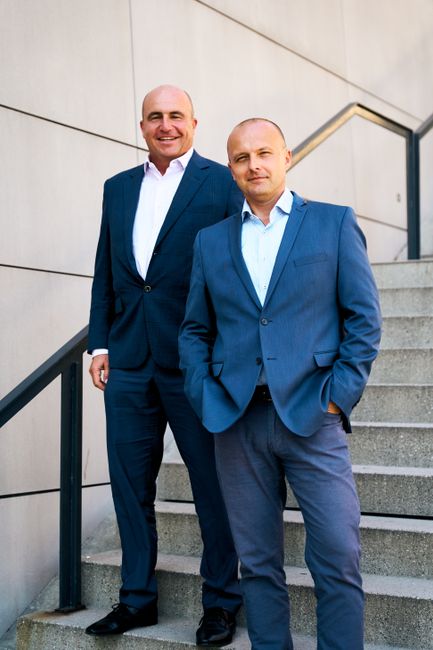
Tomas Cihlar and Wesley Sundquist: Navigating the Frontiers of AI and Human Augmentation
The convergence of artificial intelligence and human augmentation represents a monumental shift in technological progression, with individuals like Tomas Cihlar and Wesley Sundquist at the forefront of this transformative wave. Their work, though potentially spanning different but often intersecting disciplines, embodies the ambitious pursuit of enhancing human capabilities through intelligent systems and advanced technological integration. Understanding their contributions requires delving into the core principles of AI, the ethical considerations of human augmentation, and the specific areas where these two fields are making their most profound impacts.
Tomas Cihlar, a prominent figure in the realm of artificial intelligence, has dedicated a significant portion of his career to advancing the capabilities and applications of AI. His expertise likely lies in areas such as machine learning, deep learning, natural language processing, or computer vision. Cihlar’s research and development efforts are crucial in pushing the boundaries of what AI can achieve, moving beyond theoretical constructs to practical, real-world solutions. In the context of human augmentation, Cihlar’s contributions could manifest in several ways. For instance, his work on developing more sophisticated AI algorithms could directly lead to the creation of advanced prosthetic limbs that offer unprecedented dexterity and responsiveness, controlled by brain-computer interfaces. Alternatively, his expertise in natural language processing might be instrumental in developing AI-powered communication aids for individuals with speech impairments, allowing for more fluid and natural interaction. The ethical implications of such advanced AI are paramount, and Cihlar’s responsible approach to development, likely emphasizing transparency, fairness, and robustness, is essential for building trust and ensuring that these technologies benefit humanity broadly. His work may also involve the development of AI-driven diagnostic tools that can identify diseases at earlier stages or personalize treatment plans, effectively augmenting a physician’s diagnostic capabilities and improving patient outcomes. The ability of AI to process vast amounts of data and identify subtle patterns invisible to the human eye offers a powerful avenue for augmentation in fields like medicine, research, and even creative endeavors.
Wesley Sundquist, on the other hand, often operates within the sphere of human augmentation, exploring how technology can be integrated with the human body and mind to enhance performance, restore function, or even transcend biological limitations. His focus might be on bioengineering, neuroscience, wearable technology, or the design of human-computer interfaces. Sundquist’s contributions are critical in translating the theoretical possibilities of augmentation into tangible systems that individuals can interact with and benefit from. When considering the synergy with Cihlar’s AI expertise, Sundquist’s work could involve the development of neuroprosthetics that are not only physically controlled but also learn and adapt to the user’s intentions through AI. This could involve sophisticated sensor arrays embedded in or on the body, feeding data into AI models developed by individuals like Cihlar, which then interpret neural signals to command the prosthetic. Furthermore, Sundquist might be involved in designing advanced exoskeletons that augment physical strength and endurance, with AI playing a role in optimizing movement patterns and predicting user needs. The ethical landscape of human augmentation is complex, raising questions about equity, accessibility, and the very definition of what it means to be human. Sundquist’s thoughtful consideration of these issues, alongside the technical challenges, is vital for steering the field towards beneficial and inclusive outcomes. His work might also encompass sensory augmentation, such as developing advanced visual or auditory prosthetics that offer enhanced perception, potentially even enabling individuals to perceive spectrums beyond normal human range, driven by AI processing of the incoming sensory data.
The intersection of Tomas Cihlar’s AI advancements and Wesley Sundquist’s human augmentation initiatives creates a fertile ground for innovation. Imagine AI algorithms, perfected by Cihlar, that can accurately interpret a user’s thoughts and intentions from brainwave data. Sundquist’s work on brain-computer interfaces (BCIs) would then be the conduit, translating these AI-driven interpretations into actionable commands for an advanced prosthetic arm or a sophisticated robotic system. This symbiotic relationship is where the true potential of human-AI augmentation lies. For example, consider the field of prosthetics. Traditional prosthetics are often limited in their functionality and intuitive control. However, with Cihlar’s advancements in machine learning, AI models can be trained to recognize subtle neural patterns associated with desired movements, even those not consciously intended. Sundquist’s expertise in bio-mechatronics and interface design would then ensure that these AI-driven commands are translated seamlessly into fluid and natural movements of a prosthetic limb, offering a level of dexterity and responsiveness previously unattainable. This moves beyond simple substitution to genuine augmentation, restoring and even enhancing lost function.
Another significant area of overlap is in cognitive augmentation. Cihlar’s work in natural language processing and AI-powered information retrieval could be integrated with Sundquist’s development of neuro-enhancement technologies. Picture AI systems that can rapidly process and synthesize vast amounts of information, presenting it to the user in a highly digestible and intuitive format, perhaps through direct neural interfaces. This could revolutionize learning, problem-solving, and decision-making. For instance, an AI assistant, developed with Cihlar’s algorithms, could proactively monitor a researcher’s focus and provide relevant data or insights at precisely the right moment, seamlessly integrated into their workflow via a BCI designed by Sundquist. This isn’t just about accessing information; it’s about augmenting the very capacity of the human mind to process and utilize that information effectively.
The development of AI-driven diagnostic and therapeutic tools also falls squarely within this synergistic space. Cihlar’s expertise in medical imaging analysis and predictive modeling could lead to AI systems that can detect diseases with unprecedented accuracy and speed. Sundquist’s contributions might involve the creation of AI-powered medical implants or wearable devices that continuously monitor physiological parameters, feeding data to Cihlar’s AI for early detection and personalized interventions. This could involve AI algorithms that analyze subtle changes in biomarkers detected by sensors designed by Sundquist, alerting medical professionals to potential issues before symptoms even manifest. The augmentation here is in the realm of proactive healthcare, shifting from reactive treatment to preventative optimization of well-being.
The ethical considerations surrounding human augmentation are a critical aspect of both Cihlar’s and Sundquist’s work. As technologies become more sophisticated, questions arise about equitable access, the potential for societal stratification based on augmentation levels, and the very definition of human identity. Cihlar’s commitment to developing AI that is transparent, fair, and unbiased is paramount. This ensures that augmentation technologies are not inadvertently perpetuating existing societal inequalities. Similarly, Sundquist’s focus on ethical design in human augmentation is vital. This involves considering the psychological impact of augmentation, ensuring user autonomy, and preventing unintended consequences. For instance, an AI-powered cognitive enhancer developed by Cihlar, when integrated into a BCI by Sundquist, must be designed with safeguards to prevent over-reliance or the erosion of natural cognitive processes.
Furthermore, the concept of "human-AI teaming" is a direct outcome of their combined efforts. Instead of viewing AI as a replacement for human capabilities, the focus shifts to creating collaborative partnerships. Cihlar’s AI can handle complex computational tasks, identify patterns, and provide insights, while Sundquist’s augmented humans can leverage these AI capabilities with enhanced physical and cognitive abilities, bringing creativity, intuition, and ethical judgment to the equation. This collaborative model has profound implications for industries ranging from exploration and scientific research to creative arts and disaster response. An AI might analyze geological data for potential resource deposits, and then, augmented individuals could be deployed with enhanced mobility and sensory perception, guided by the AI, to conduct on-site investigations.
The future of human-AI augmentation, as shaped by the work of individuals like Tomas Cihlar and Wesley Sundquist, promises a radical redefinition of human potential. Their contributions are not merely about technological advancement; they are about empowering humanity to achieve new heights of capability, understanding, and well-being. The ongoing research and development in AI, coupled with innovative approaches to integrating technology with the human form, are paving the way for a future where the lines between human and machine blur, leading to unprecedented opportunities for progress and a deeper understanding of ourselves. The challenges are significant, demanding careful consideration of ethical frameworks, societal impact, and the long-term consequences of our technological trajectory. However, with dedicated minds like Cihlar and Sundquist leading the charge, the prospect of a future where human augmentation, powered by intelligent AI, unlocks a new era of human flourishing remains a compelling and achievable goal. Their work underscores the imperative for continued investment in interdisciplinary research, fostering collaboration between AI scientists, bioengineers, ethicists, and policymakers to ensure that this transformative era is guided by wisdom and foresight. The ongoing dialogue about the responsible development and deployment of these powerful technologies will be as critical as the technological breakthroughs themselves, shaping a future that is not only advanced but also equitable and beneficial for all.
