Unlocking Growth Through Play: How Structured Exploration in Early Childhood Physical Education Builds Confidence, Social Skills, and Academic Success

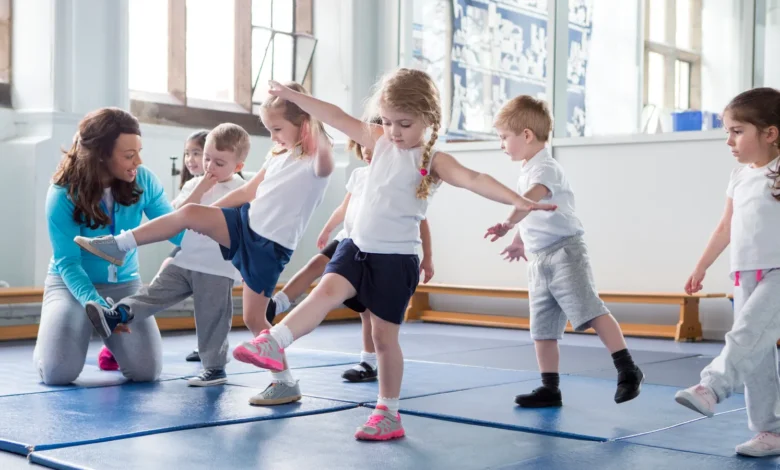
Early childhood education has long debated the most effective methods for fostering holistic development in young learners, particularly as classrooms increasingly grapple with balancing rigorous academic standards with essential play-based activities. Recent insights from physical education experts highlight a critical methodology for preschool and early elementary students: guided exploration within well-defined parameters. According to Michelle Lugo, director of educational content and programs for the Society of Health and Physical Educators (SHAPE) America, allowing young children to take calculated physical risks, use their imaginations, and make autonomous choices during physical education (P.E.) classes lays a foundational groundwork that extends far beyond the gymnasium.
This educational approach shifts away from rigid, authoritarian drill-based instruction toward a model of structured freedom. By providing clear routines paired with opportunities for student choice—such as selecting equipment or determining the physical path of a movement—educators can effectively engage young children in physical activity while simultaneously cultivating vital social, emotional, and cognitive competencies. As schools nationwide continually seek innovative ways to address post-pandemic developmental lags in socialization and motor skills, experts argue that reimagining early elementary P.E. may serve as an invaluable catalyst for overall student achievement.
The Pedagogical Framework of Guided Exploration
The core philosophy championed by SHAPE America relies on striking a delicate balance between structure and autonomy. In a typical early childhood P.E. setting, unstructured free play can sometimes lead to disengagement, behavioral challenges, or feelings of inadequacy among less athletically inclined students. Conversely, hyper-structured environments that demand uniform, synchronized movements can stifle creativity and diminish intrinsic motivation.
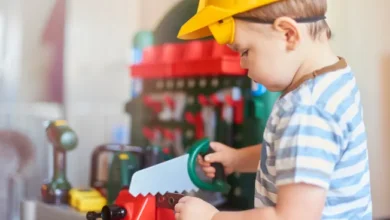
Guided exploration resolves this tension by establishing firm operational boundaries while leaving the precise execution open to individual interpretation and creativity. For instance, rather than instructing students to perform a standard, teacher-demonstrated balancing exercise, an instructor might challenge the class to discover multiple ways to balance on three specific body parts or to navigate an imaginary obstacle course along a zigzag path.
This methodology frequently incorporates segmented instructional pacing. Teachers deliver directions in concise, digestible chunks—often lasting only a couple of minutes—allowing students immediate time to explore a concept independently before bringing the cohort back together for the next phase of the lesson. Such pacing aligns with the developmental attention spans of preschool and early elementary students, preventing cognitive overload and maintaining high levels of physical engagement.
Furthermore, this strategy accommodates diverse skill levels without drawing unfavorable attention to individual athletic disparities. By offering tiered engagement options—such as an easier task, a more challenging task, and a middle-ground alternative—educators create an inclusive environment where mistakes are reframed as natural stepping stones in the learning process. This pedagogical design ensures that students can scale activities up or down according to their personal comfort and ability levels, fostering resilience and a growth mindset from an early age.
Historical Evolution of Physical Education in Early Childhood
To fully understand the significance of modern guided exploration frameworks, one must examine the historical trajectory of physical education within American schooling. For much of the 20th century, early elementary P.E. was heavily influenced by military calisthenics, team sports training, and competitive athletics. The primary objective was physical conditioning and the mastery of specific sport-related motor skills, such as throwing, catching, and running in prescribed formations.
During the late 20th and early 21st centuries, educational researchers began recognizing that this traditional paradigm frequently alienated young children who lacked advanced gross motor coordination. The introduction of standardized educational targets shifted the focus toward developmental appropriateness, recognizing that preschool and kindergarten children require foundational body awareness—known as spatial and kinesthetic awareness—before transitioning into complex, rule-based team sports.
In recent decades, organizations like SHAPE America have heavily promoted national standards that explicitly integrate social-emotional learning (SEL) into physical education curricula. The modern consensus views the gymnasium not merely as a space for physical fitness, but as a dynamic laboratory where children learn cooperation, conflict resolution, leadership, and emotional regulation. The contemporary emphasis on guided exploration represents the culmination of this evolutionary shift, merging motor skill acquisition with holistic child development.
Statistical Insights and Academic Implications
While physical education has historically been viewed as a peripheral subject relative to core academic disciplines like mathematics and literacy, a growing body of empirical research underscores its profound impact on cognitive function and academic readiness.
Data from the Centers for Disease Control and Prevention (CDC) indicate that regular physical activity among school-aged children is directly correlated with improved cognitive performance, enhanced memory retention, and better on-task behavior in the traditional classroom. Furthermore, longitudinal studies in educational psychology demonstrate that preschool and early elementary students who participate in structured movement programs exhibit superior executive function—the mental processes that enable planning, focusing attention, remembering instructions, and multitasking successfully.
Lugo emphasizes that the social skills cultivated in P.E. are entirely transferable to academic settings. Concepts such as cooperation, respectful communication, and empathetic listening do not operate in a vacuum; a child who learns to negotiate space and share equipment respectfully in the gymnasium is better equipped to collaborate during a group science project or navigate playground dynamics at recess.
Moreover, physical education provides a unique, real-time environment for emotional management. Because movement inherently evokes physical and emotional responses—such as frustration when failing to balance or excitement when mastering a new skill—educators have a natural opening to guide children through identifying and regulating their feelings. These teachable moments build emotional intelligence, reducing behavioral disruptions and fostering a more cohesive, supportive school culture.
Perspectives from Educational Stakeholders and Practitioners
The integration of guided exploration into early childhood education resonates strongly with front-line educators, child psychologists, and school administrators, many of whom have observed a marked increase in anxiety and a deficit in social-emotional readiness among young students entering school in recent years.
Early childhood specialists note that the post-pandemic cohort of students often exhibits delayed peer-to-peer interaction skills, having missed critical socialization windows during their formative toddler years. Consequently, unstructured environments like traditional recess can occasionally lead to heightened conflict or social withdrawal for children who lack the tools to navigate ambiguous social situations.
By utilizing P.E. as a controlled rehearsal space, schools bridge the gap between solitary play and complex social engagement. As Lugo points out, structured P.E. provides safe learning conditions characterized by guided trial and error under the watchful eye of an instructor. Recess, by contrast, serves as an open-ended application phase where students can independently deploy the emotional and social strategies practiced during structured movement classes.
School administrators are also taking note of the cross-curricular benefits. Forward-thinking districts are increasingly viewing physical education teachers not merely as instructors of athletic drills, but as vital partners in implementing school-wide positive behavioral interventions and supports (PBIS). By embedding SEL standards directly into movement curricula, schools create a unified language of behavior and emotional regulation that resonates from the gymnasium to the cafeteria, the academic classroom, and ultimately the home environment.
Broader Socio-Cultural Impact and Future Outlook
The implications of modernizing early childhood physical education extend far beyond immediate classroom management or standardized test scores. In an era marked by sedentary lifestyles, increased screen time, and rising rates of childhood obesity, establishing positive associations with physical activity during the formative preschool and early elementary years is a critical public health imperative.
When children experience P.E. as a space of joyful exploration, autonomy, and personal success rather than a source of competitive stress or public embarrassment, they are significantly more likely to maintain active lifestyles into adolescence and adulthood. Programs that emphasize personal goal-setting, self-selected challenges, and imaginative movement help cultivate intrinsic motivation for lifelong fitness.
Furthermore, as educational policy debates continue to prioritize holistic child development, the demand for teacher training focused on guided exploration and social-emotional integration is projected to rise. Teacher preparation programs are increasingly modifying their curricula to ensure that future physical educators possess the psychological and pedagogical tools necessary to facilitate inclusive, choice-driven learning environments.
Ultimately, the evolving philosophy of early childhood P.E. redefines the gymnasium as a cornerstone of comprehensive child development. By deliberately weaving together physical vitality, cognitive enhancement, and social-emotional learning through structured exploration, schools are equipping the youngest generation of learners with the multifaceted toolkit they need to thrive both inside and outside the classroom.