Utah Rewrites the Equation: How the State is Empowering Parents to Conquer Math Anxiety and Boost Early Childhood Learning


The modern educational landscape in the United States has long wrestled with a pervasive, self-defeating cultural narrative: the widespread admission, often spoken with an ironic shrug, that "I am just not a math person." This psychological barrier has traditionally sidelined parents from actively participating in their children’s early mathematical development, leaving the heavy lifting entirely to formal schooling systems. However, a groundbreaking initiative in Utah is actively dismantling this paradigm. By targeting early childhood development, engaging parents directly through playful interventions, and establishing new pre-K standards, Utah is radically reshaping how families approach mathematics from the living room to the classroom.
At the heart of this strategy is a concerted effort by the Utah STEM Action Center—a division operating under the Utah Department of Cultural and Community Engagement—to demystify mathematics and transform it into an accessible, everyday family activity. Rather than waiting for children to enter formal kindergarten classrooms where math anxiety can already take root, the state is taking proactive measures to reach children between the ages of zero and five, empowering parents to become confident, capable co-educators in their children’s foundational learning years.
Uncovering the Roots of Math Anxiety and the Power of Early Language
The impetus for Utah’s targeted family math initiatives stemmed from a deep dive into educational research conducted by Clarence Ames, research and implementation manager at the STEM Action Center. Ames examined extensive meta-analyses on early childhood academic success, which revealed a striking and actionable conclusion: the single most accurate predictor of a child’s kindergarten math entry scores—a metric known to heavily influence long-term academic trajectories—is not flashcards or expensive software, but rather the natural, casual way parents weave math language into everyday play with their toddlers.
This finding shifted the strategic focus of the state’s educational outreach. Instead of treating math as a rigorous, abstract subject reserved for textbooks and specialized classrooms, the state looked for ways to normalize mathematical dialogue in domestic environments.
This realization was further galvanized by a sobering look at broader achievement data. While reviewing the state’s eighth-grade scores on the 2022 National Assessment of Educational Progress (NAEP), Ames experienced what he described as a transition from excitement to profound concern. Although Utah tied for first place in the nation for eighth-grade math achievement overall, a closer examination revealed that only 35% of the state’s students actually scored at or above the proficient level. This paradox—ranking near the top nationally while still leaving nearly two-thirds of students below proficiency—underscored an urgent need to build a stronger, more resilient foundation much earlier in the educational pipeline.
Ames’s subsequent research into intervention strategies highlighted a clear hierarchy of effectiveness. While one-to-one or small-group tutoring sessions administered by trained teachers or paraprofessionals yield the highest academic impact, such intensive interventions remain notoriously difficult to scale across an entire state. Intriguingly, the second most effective intervention method involves similar individualized attention, but delivered not by a certified educator, but by an untrained adult who simply shows up consistently and offers steady encouragement. This revelation provided the empirical backing for Utah’s heavier reliance on parents, family members, and community volunteers.
MILO and Friends: Gamifying Early Numeracy
To bridge the gap between educational research and practical application at home, the Utah STEM Action Center launched an innovative family math game in 2022 known as "MILO and Friends." The acronym MILO stands for Math Introduction and Learning Opportunities, and the program is personified by an approachable cartoon moose designed to make the subject welcoming and non-threatening to young children and apprehensive adults alike.
The state department has rolled out MILO through a series of collaborative community events hosted in partnership with local schools, public libraries, community organizations, and various non-profit entities. During these gatherings, families are invited to play the game together, guided by facilitators who demonstrate how simple household items and everyday routines can be converted into rich mathematical learning opportunities.
The impact of these targeted interventions has been swift and measurable. According to internal program evaluations cited by Ames, approximately 94% of parents who attended these community events reported a marked increase in confidence regarding their own math abilities. More importantly, these parents left with a renewed conviction that their personal involvement genuinely matters to their children’s academic success.
When parents participate in these interactive workshops, their psychological posture toward the subject undergoes a fundamental transformation. According to program administrators, adults frequently transition from declaring, "I’m not a math person," to recognizing, "Oh, that’s fine, I can actually do that." This shift in parental mindset removes the invisible ceiling of math anxiety that is so frequently passed down unconsciously from parent to child.
Expanding the Outreach: Pediatricians, Libraries, and Everyday Literacy
Recognizing that community events alone cannot reach every household, the Utah STEM Action Center has aggressively expanded the footprint of its family math initiatives through strategic cross-sector partnerships.
In one notable collaboration, the STEM center teamed up with pediatric clinics at The University of Utah to distribute math board games directly to families during routine three-year-old well-child visits. By embedding mathematical tools into healthcare settings, the state reaches parents during a critical developmental window, framing early math as a fundamental component of a child’s overall health and well-being.
Furthermore, the center has successfully piloted a program designed to integrate mathematics guides into Dolly Parton’s Imagination Library, a widely celebrated international effort dedicated to mailing free, high-quality books to children from birth until age five. By pairing specially designed math prompts and activity guides with standard reading materials, the state is capitalizing on the natural intersection between literacy and numeracy.
As Clarence Ames aptly notes, "Every kids’ book ever written has math in it." Simple observations—such as counting the points on a star, comparing the relative sizes of illustrated animals, or identifying geometric shapes hidden within a picture book’s background—turn a standard bedtime story into a dynamic, cross-curricular learning experience.
Establishing New Standards for Pre-K Through Grade 2
While voluntary community programs and at-home resources form a crucial pillar of Utah’s strategy, the state has simultaneously reinforced its formal educational framework by adopting new core mathematics standards spanning pre-kindergarten through second grade.
Katrina Herd, preschool specialist at the Utah State Board of Education, emphasizes that the state’s newly established preschool standards are specifically tailored for children aged three and four. These guidelines are designed for implementation across diverse learning environments, including licensed childcare centers, private facilities, and public preschool classrooms.
Crucially, these standards are not strictly confined to institutional settings; they are deliberately crafted to be easily utilized by parents within the home. Herd underscores the philosophical alignment of the state’s educational agencies: "There’s a very clear understanding from our agency that parents and families are a child’s first and best teachers."
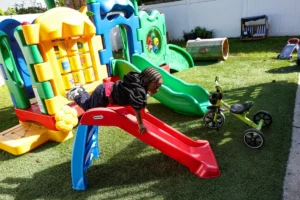
By providing accessible guidelines, the state removes the intimidation factor for parents who may feel unequipped to handle formal teaching. As Herd points out, if a parent feels uncertain about how to introduce mathematical concepts to a four-year-old, the newly published strategies and activities offer concrete, actionable ways to practice math organically—whether during a family dinner, while sorting laundry, or while playing on a neighborhood playground.
National Perspectives and Real-World Connections
Utah’s proactive, parent-centric approach to early mathematics has also drawn positive attention from national educational authorities. Latrenda Knighten, executive director of the National Council of Teachers of Mathematics and a veteran elementary school teacher of nine years, views Utah’s emphasis on early grades and real-world connections as exceptionally promising.
Drawing from her extensive classroom experience, Knighten identifies two primary archetypes of hesitant parents: those who outright declare they are not "math people," and highly educated professionals—such as engineers and software developers—who struggle to break down complex concepts to a child-friendly level.
"You’d be surprised how many parents say, ‘That’s not my thing,’" Knighten observes, reflecting on her years in public education. Her standard response to reluctant parents is designed to ground the subject in lived reality: "I would say, ‘Ma’am, you can help your kid with first-grade math. You pay bills. You buy groceries. I know you can do this.’"
Knighten praises initiatives that strip away the intimidating formal context of mathematics and tie numerical concepts directly to daily life. By taking math out of the isolated realm of worksheets and placing it squarely into the domain of cooking, shopping, and play, states like Utah are laying a robust psychological and cognitive foundation for the future STEM workforce.
Broader Implications and Future Outlook
The comprehensive strategy unfolding in Utah serves as an instructive case study for education policy makers across the United States. As school districts nationwide grapple with post-pandemic learning recovery and persistent achievement gaps in STEM fields, the impulse is often to pour resources exclusively into remedial high school programs or expensive classroom technology.
Utah’s model suggests an alternative, upstream approach: investing heavily in the domestic ecosystem of the child before formal schooling even begins. By addressing parental math anxiety, embedding numeracy into pediatric care and early literacy initiatives, and establishing cohesive pre-K standards that seamlessly bridge the gap between home and school, Utah is demonstrating that systemic academic improvement begins long before a child ever sits at a school desk.
As these programs continue to scale, the ultimate measure of their success will not merely be standardized test scores or national rankings, but a fundamental cultural shift. If initiatives like MILO and Friends and statewide parent outreach can successfully redefine how a generation of children and parents views their own capabilities, the old refrain of "I’m not a math person" may finally become a relic of the past, replaced by a confident, universally embraced mindset of mathematical inquiry and everyday problem-solving.