WHO and King Salman Humanitarian Aid and Relief Centre Sign Landmark Pledges to Combat Global Health Crises at Riyadh Forum

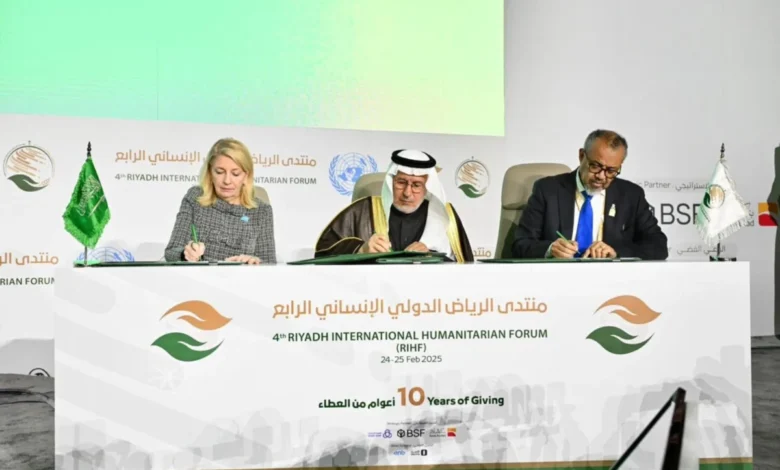
The international humanitarian community gathered in the capital of Saudi Arabia for a high-level summit addressing the escalating convergence of global health emergencies, regional conflicts, and systemic vulnerabilities among displaced populations. The Riyadh International Humanitarian Forum, held from February 24 to 25, 2025, served as a critical nexus for policymakers, health diplomats, and international agency leaders. Commemorating the tenth anniversary of the King Salman Humanitarian Aid and Relief Centre (KSRelief), the two-day convening prioritized urgent advocacy for crisis-affected populations, focusing on health diplomacy, human dignity, survival outcomes, and the physical security of aid workers operating in high-threat zones across the Middle East and globally.
Amid persistent geopolitical instability, constrained supply chains, and the compounding effects of climate-induced shocks, the forum transitioned from high-level dialogue to concrete financial action. High-ranking officials, including World Health Organization (WHO) Director-General Dr. Tedros Adhanom Ghebreyesus and KSRelief Supervisor-General Dr. Abdullah Al Rabeeah, formalized a series of multilateral funding agreements. These pacts target acute disease outbreaks, essential health service delivery for refugees, and the final stages of global disease eradication, underscoring an expanding cooperative framework between Saudi humanitarian institutions and United Nations agencies.
Chronology and Evolution of the Riyadh International Humanitarian Forum
The Riyadh International Humanitarian Forum has steadily evolved over the past decade into one of the Middle East’s most influential platforms for humanitarian policy and resource mobilization. Established in tandem with the founding of KSRelief in 2015 under the directives of King Salman bin Abdulaziz Al Saud, the forum was conceived to bridge the gap between donor nations, operational United Nations bodies, and grassroots nongovernmental organizations. Over its ten-year operational history, KSRelief has funneled billions of dollars into international aid architecture, responding to crises spanning Yemen, Syria, the Horn of Africa, and South Asia.
The 2025 iteration of the forum carried heightened significance against the backdrop of a volatile global humanitarian landscape. Marked by unprecedented levels of forced displacement, the recurrence of vaccine-preventable diseases in conflict zones, and severe funding gaps across multilateral appeals, the event was structured around rigorous thematic panels. Discussions centered on the weaponization of infrastructure, international humanitarian law, digital innovation in aid delivery, and the institutionalization of health diplomacy as an instrument of peacebuilding. The alignment of the forum’s anniversary with major strategic financial commitments signaled a deliberate effort by regional donors to institutionalize long-term resilience rather than relying solely on reactive emergency responses.
Targeted Health Interventions: Combating Malaria, Cholera, and Cross-Border Displacement
A core component of the agreements finalized during the February summit involved direct operational partnerships between the WHO and KSRelief to mitigate catastrophic health outcomes in Yemen and Egypt. Yemen continues to endure one of the world’s most protracted humanitarian emergencies, characterized by fractured health infrastructure, widespread food insecurity, and recurring epidemics.

To combat these systemic vulnerabilities, WHO and KSRelief signed targeted funding packages designed to reinforce disease surveillance and clinical management. A US$ 12 million allocation was dedicated specifically to comprehensive malaria prevention and control programs across high-risk Yemeni districts. Concurrently, a US$ 2.1 million agreement was established to expand cholera treatment capacities. Cholera remains an existential threat in regions lacking potable water and functional sanitation systems; the newly mobilized resources will scale up oral rehydration points, secure essential pharmaceuticals, and train frontline medical personnel to manage rapid outbreaks.
Further expanding the geographic scope of the bilateral partnership, the WHO Egypt Country Office secured a US$ 3.6 million agreement with KSRelief. This funding directly addresses the acute medical needs of Sudanese refugees who have fled across the southern border into Egypt to escape the devastating internal conflict that erupted in Sudan in April 2023. The influx of displaced populations has placed immense strain on Egypt’s public health infrastructure. The earmarked funds will finance specialized, life-saving dialysis treatments for Sudanese refugees suffering from chronic renal failure, ensuring continuity of care for vulnerable individuals who lost access to medical facilities amid the destruction of urban centers in Khartoum and surrounding regions.
Institutionalizing the Global Campaign for Polio Eradication
Beyond regional interventions in the Middle East and North Africa, the 2025 forum served as the formal venue to reaffirm and operationalize a monumental financial pledge toward the Global Polio Eradication Initiative (GPEI). The Kingdom of Saudi Arabia formally confirmed its comprehensive US$ 500 million commitment, a pledge initially announced in April 2024. This capital mobilization was formally partitioned through two major binding agreements signed on the sidelines of the forum: US$ 300 million allocated to the WHO and US$ 200 million allocated to the United Nations Children’s Fund (UNICEF).
The signing ceremony, attended by UNICEF Executive Director Catherine Russell alongside Dr. Tedros and Dr. Al Rabeeah, highlights a unified multilateral strategy to eradicate the poliovirus globally. The infusion of capital is slated to power immunization campaigns designed to reach approximately 370 million children annually.
The urgency of this funding cannot be overstated. In recent years, wild poliovirus and vaccine-derived strains have demonstrated a concerning resurgence, particularly in fragile, conflict-affected, and inaccessible territories. Protracted warfare, the destruction of cold-chain storage facilities, and mass population displacement in regions such as Afghanistan, Pakistan, and the Gaza Strip have created immunity gaps. These gaps have allowed the virus to re-emerge in environments where it was previously suppressed. The GPEI funding stream will be deployed to negotiate humanitarian pauses, secure community-level access, procure high-potency vaccines, and deploy decentralized vaccination teams capable of navigating active conflict zones.
Official Responses and Strategic Implications
The convergence of leadership figures at the Riyadh forum elicited strong institutional endorsements regarding the practical impact of the newly signed accords. Representatives from the participating international bodies emphasized that the partnership between KSRelief and UN agencies provides a vital operational lifeline in environments where traditional state health systems have collapsed.
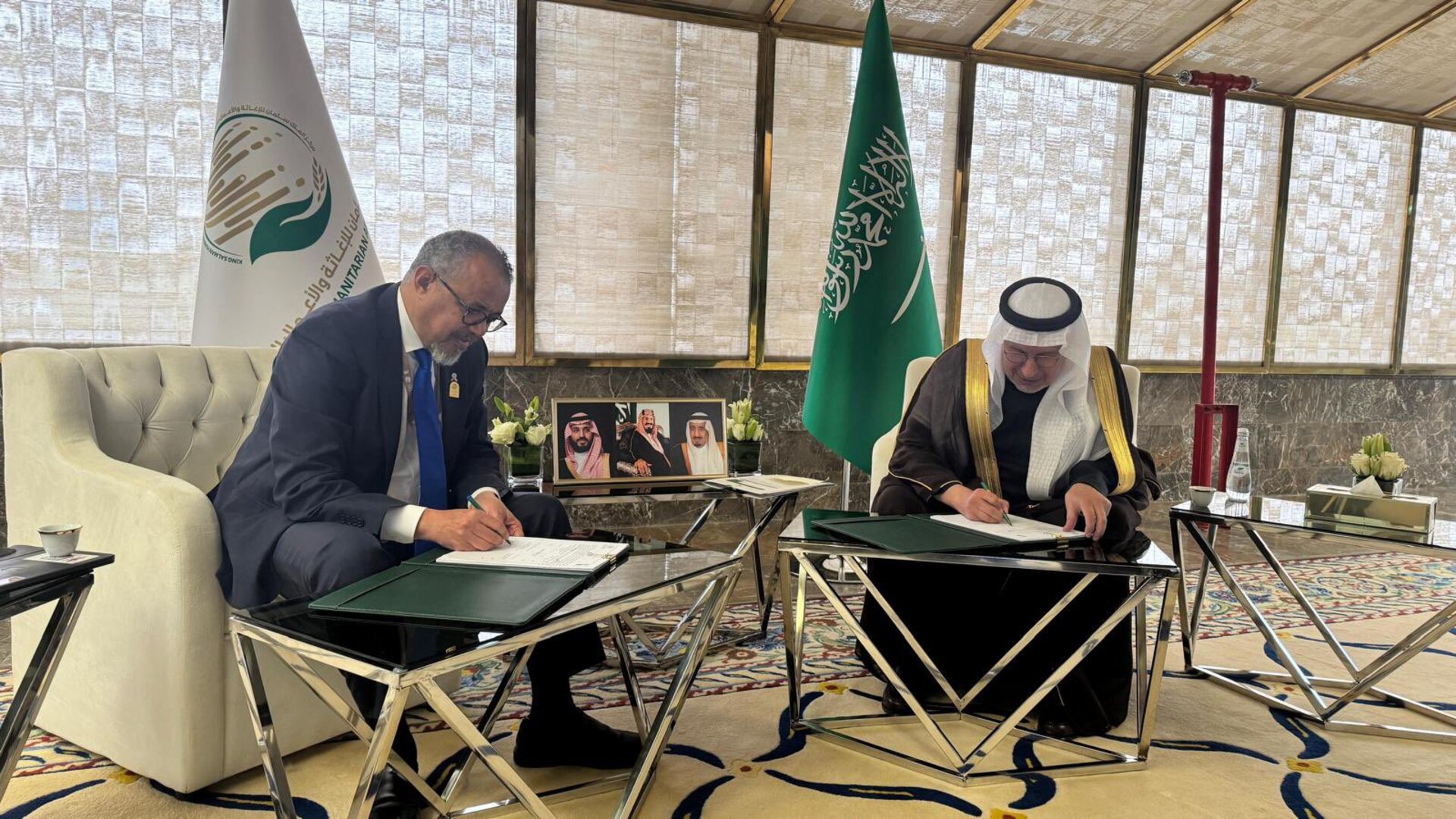
Dr. Tedros Adhanom Ghebreyesus underscored the importance of sustained, predictable financing in navigating modern protracted crises. He noted that health diplomacy must transcend political divides to ensure that vulnerable populations—regardless of geography or conflict dynamics—retain access to fundamental healthcare rights, safe water, and preventative immunizations. Similarly, executive leadership from UNICEF and KSRelief pointed to the polio eradication initiative as a benchmark for what can be achieved through coordinated multilateral resource pooling and rigorous local execution.
From a strategic perspective, the 2025 Riyadh International Humanitarian Forum and its associated funding agreements signal a shifting paradigm in global health governance. Traditional donor-recipient models are increasingly giving way to strategic partnerships wherein regional financial powerhouses assume a more prominent, proactive leadership role in global public goods provisioning. By tying substantial financial capital directly to operational UN mandates, stakeholders aim to streamline the transition from emergency humanitarian relief to sustainable health security.
Broader Impact on Global Health Security and Future Outlook
The implications of the agreements signed in Riyadh extend far beyond immediate symptom management or localized outbreak containment. As infectious diseases demonstrate an increasing capacity to exploit systemic instability, global health security remains inextricably linked to the resilience of localized health systems in fragile states.
The targeted allocation of funds toward vector-borne diseases like malaria, waterborne pathogens like cholera, chronic disease support for refugees, and systemic immunization against polio addresses the entire spectrum of epidemiological vulnerability. By reinforcing these pillars, the international partners seek to mitigate the risk of cross-border contagion and prevent the compounding effects of health emergencies on regional stability.
As the international community reflects on the outcomes of the Riyadh forum, attention will inevitably shift toward the implementation phase of these multi-million-dollar agreements. The measure of success will depend upon unhindered humanitarian access on the ground, transparent resource tracking, and the sustained commitment of both state and non-state actors to protect health workers and medical infrastructure. Through these concerted efforts, the 2025 forum has established a robust baseline for humanitarian cooperation, setting a precedent for addressing the complex, overlapping health crises defining the contemporary geopolitical era.