WHO Director-General visits Jordan to recognize strong collaboration on health system delivery, emergency relief and advancing mental health

World Health Organization (WHO) Director-General Dr. Tedros Adhanom Ghebreyesus successfully wrapped up the first day of a critical two-day State visit to the Hashemite Kingdom of Jordan. The diplomatic mission served to spotlight the robust, longstanding partnership between the international health body and the Jordanian government, placing a sharp focus on universal health coverage (UHC), holistic mental health frameworks, and coordinated humanitarian health actions in a volatile geopolitical landscape.
The high-stakes visit commenced with a high-profile audience with His Majesty King Abdullah II, a meeting that underscored Jordan’s prominent role as a regional leader in advancing public health as both a national security imperative and a global humanitarian priority. Discussions at the royal palace centered on fortifying fragile health systems, expanding equitable access to specialized medical services, and maintaining steady, unbroken pipelines of support for ongoing regional emergency responses. Particular attention was devoted to the plight of the Palestinian people, specifically the continuous influx of critical patients evacuated from war-torn Gaza into Jordanian medical facilities, alongside the millions of vulnerable refugees who have found sanctuary within the kingdom’s borders over the past decade.
Expressing deep gratitude for the Hashemite Kingdom’s enduring hospitality, Dr. Tedros commended the monarch’s visionary approach to public administration. "I wish to express my appreciation to His Majesty King Abdullah II for his commitment to advancing universal health coverage," Dr. Tedros stated during the proceedings. "I also extend my thanks to His Majesty and the people of Jordan for their solidarity and generosity in providing health services to more than three million refugees, primarily from Gaza and Syria, who are living in the country."
Furthermore, the WHO chief lauded Jordan’s wider humanitarian leadership, drawing specific attention to the pioneering royal initiative known as the Medical Corridor. This strategic conduit facilitates the urgent transfer and delivery of critical, life-saving care to critically ill and injured children evacuated directly from the Gaza Strip. "Jordan continues to show the world what it truly means to put health and humanity first," Dr. Tedros added, praising the nation’s resilience in the face of compounding regional crises.
Ground-Level Impact: Inside Jordan’s Specialized Medical Facilities
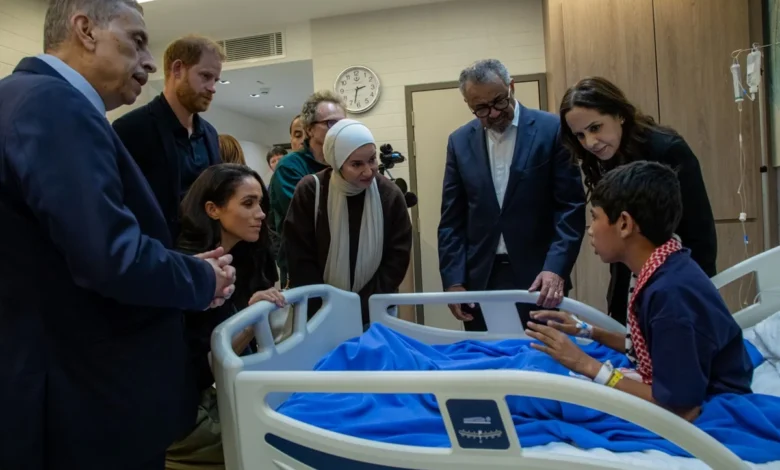
Moving beyond diplomatic engagements in the capital, Dr. Tedros transitioned from high-level political talks to frontline humanitarian operations by visiting a specialized, WHO-supported hospital facility dedicated to treating pediatric patients evacuated from Gaza. During the hospital tour, the Director-General engaged directly with young patients, their anxious families, and the tireless frontline medical professionals who work around the clock to deliver advanced treatments for severe traumatic injuries, pediatric oncology cases, and other complex, life-threatening medical conditions.
This poignant field visit powerfully illustrated the vital lifeline provided by the medical evacuation corridor traversing Jordan. It simultaneously underscored an urgent appeal for sustained, predictable international donor support to ensure that vulnerable children and other catastrophic casualties can continuously access the specialized interventions they desperately require. Healthcare administrators on the ground briefed the WHO delegation on the immense logistical pressures facing local hospitals, emphasizing that international burden-sharing remains the only viable path to preventing systemic collapse in specialized pediatric care units.
Mobilizing Resources: High-Level Donor and Partner Convenings
In a concerted effort to translate diplomatic goodwill into actionable financial commitments, Dr. Tedros convened a strategic, high-level roundtable meeting later in the day. The gathering brought together key health sector partners, major donor government representatives, specialized United Nations agencies, and prominent international philanthropic organizations.
The core agenda of the multilateral meeting addressed critical financing priorities designed to reinforce Jordan’s national health infrastructure while simultaneously sustaining ongoing humanitarian relief operations. Key thematic areas on the table included the rapid scaling up of comprehensive mental health services and the provision of adequate, sustained financial support to host nations bearing the disproportionate socioeconomic and infrastructural costs of accommodating large refugee populations.
Participants engaged in rigorous dialogue regarding sustainable financing models, welcoming the strong spirit of collaboration displayed by the international donor community. Attendees reaffirmed their joint commitment to long-term investments in health system resilience, recognizing that the health security of Jordan directly impacts the stability of the entire Middle East region.
Bilateral Engagements and Advancing Primary Healthcare
Complementing the multilateral discussions, Dr. Tedros held focused bilateral talks with Jordan’s Minister of Health. The dialogue centered on structural reforms required to fortify the country’s domestic health architecture and accelerate the complete realization of universal health coverage.
Jordan has consistently demonstrated commendable global leadership by anchoring its national health strategy in a robust primary healthcare approach. Notably, the kingdom has successfully integrated mental health services directly into routine primary care consultations, ensuring that psychological support is treated with the same urgency and accessibility as physical ailments. The World Health Organization continues to provide vital technical and operational backing to this progressive integration through the Director-General’s Special Initiative for Mental Health, a flagship global program aimed at bridging treatment gaps in resource-constrained and crisis-affected settings.
High-Profile Advocacy: The Role of Archewell Philanthropies
Adding a prominent global advocacy dimension to the state visit, Dr. Tedros was accompanied throughout several key engagements by Prince Harry, the Duke of Sussex, and Meghan, the Duchess of Sussex. The royal couple participated in their official capacities as the founders of Archewell Philanthropies and as long-standing, dedicated global advocates for the World Health Organization’s core health missions.
Over the years, Archewell Philanthropies has provided instrumental support to a diverse array of WHO-led initiatives. Their contributions range from championing equitable international access to COVID-19 vaccines during the height of the pandemic to mobilizing resources for complex medical evacuation frameworks and comprehensive mental health programs in crisis zones.
During the joint appearances, Prince Harry lent his voice as a prominent global ally of the WHO’s mental health campaigns. He forcefully articulated the critical necessity of prioritizing mental health investments across diverse communities and emergency settings, urging policymakers to pay particular attention to the psychological burdens borne by men, young people, and children caught in the crosshairs of conflict.
Reflecting on the collaborative effort, Dr. Tedros expressed profound appreciation for the royal couple’s unwavering dedication. "I want to thank our partners, including Prince Harry, Duke of Sussex and Meghan, Duchess of Sussex, whose commitment to mental health and humanitarian action has helped bring visibility, resources and hope to some of the world’s most vulnerable communities," Dr. Tedros remarked. "Their collaboration is helping to advance WHO’s mission to ensure health for all."
Echoing these sentiments, Prince Harry shared his firsthand perspective on the transformative power of compassionate international intervention. "It is an honour to join the Director-General of the World Health Organization in Jordan, a country that is leading by example in compassion, resilience and innovation," Prince Harry stated. "Through our work with Archewell Philanthropies, my wife and I have seen first-hand the impact of WHO’s efforts to support mental health and deliver life-saving care in emergencies."
The Duke further emphasized the fundamental interconnectedness of psychological healing and broader geopolitical recovery. "We remain deeply committed to advancing awareness, reducing stigma and expanding access to mental health support for all those affected by conflict and crisis. Mental health is fundamental to recovery, dignity and long-term peace, and we are proud to stand with WHO and partners around the world to make it a global priority," he added.
Day Two Itinerary: Rehabilitation, Cancer Care, and Community Resilience
As the high-level State visit transitions into its second and final day, Dr. Tedros maintains a rigorous schedule designed to inspect diverse facets of Jordan’s health ecosystem. The itinerary features a scheduled tour of Jordan’s National Center for Rehabilitation of Addicts. Operating with direct support from the WHO, this specialized facility provides comprehensive, integrated medical, psychological, and social support services to individuals struggling with substance use disorders, serving as a regional model for compassionate, evidence-based care.
Additionally, the Director-General is slated to meet with prominent community leaders and grassroots women’s organizations, including representatives from the Jordanian Hashemite Fund for Human Development (JOHUD). These grassroots engagements are designed to evaluate community-level health resilience and the empowerment of women in driving localized health initiatives.
The second day will also include a high-level visit to the renowned King Hussein Cancer Center (KHCC). There, Dr. Tedros and his delegation will review cutting-edge advancements in regional oncology care, discuss specialized training programs for regional physicians, and explore pathways for expanded cross-border collaboration in the fight against cancer.
The State visit will officially conclude following a series of final wrap-up meetings with international development partners and humanitarian logistics coordinators. These closing discussions will formally reinforce Jordan’s indispensable position as a premier regional hub for emergency medical evacuations, rapid humanitarian response deployment, and long-term health system resilience across the Eastern Mediterranean.
Background Context: Jordan’s Geopolitical and Humanitarian Burden
To fully grasp the significance of Dr. Tedros’s current visit to Amman, one must analyze the unique socioeconomic and geopolitical pressures resting on the Hashemite Kingdom. Despite possessing limited natural resources and facing chronic economic headwinds, Jordan has historically maintained an open-door policy for populations fleeing systemic violence, state collapse, and military conflict in the Middle East.
According to data compiled by the United Nations High Commissioner for Refugees (UNHCR) and national authorities, Jordan currently hosts approximately 1.3 million Syrian refugees, alongside hundreds of thousands of refugees originating from Iraq, Yemen, Sudan, and other regional conflict zones. When factoring in registered and unregistered populations, the total number of displaced persons residing within the kingdom exceeds three million—representing nearly a third of the nation’s total population.
Despite the immense strain placed on public infrastructure, water supplies, the education sector, and the national healthcare grid, Jordan has consistently integrated refugee populations into its public service networks. The national healthcare system, in particular, has absorbed millions of primary healthcare consultations, emergency interventions, and chronic disease management treatments for non-citizens, often relying on international burden-sharing mechanisms that frequently face funding shortfalls.
The outbreak of hostilities in Gaza in late 2023 introduced an acute new dimension to Jordan’s humanitarian responsibilities. Situated directly adjacent to the immediate conflict theater, the kingdom mobilized its military medical corps, civil defense networks, and humanitarian organizations to establish forward-operating field hospitals inside Gaza, while simultaneously setting up the vital medical evacuation corridor to transport critically injured patients—particularly pediatric trauma and oncology cases—into specialized Jordanian facilities.
Analysis: Implications for Regional Health Security and International Solidarity
Public health analysts and geopolitical observers note that Dr. Tedros’s visit carries profound implications for both regional stability and global health diplomacy. By personally endorsing Jordan’s healthcare model, the WHO is signaling to the international community that supporting frontline host nations is not merely an act of charity, but an absolute prerequisite for maintaining regional and global health security.
First, the visit serves to re-energize flagging international donor interest in Middle Eastern humanitarian appeals. With donor fatigue setting in globally amid overlapping crises in Eastern Europe, Africa, and other regions, funding for protracted refugee situations in the Middle East has experienced notable declines in recent fiscal cycles. The high-profile presence of the WHO Director-General—bolstered by the global media reach of high-profile philanthropists like Prince Harry and Meghan—acts as a powerful megaphone to redirect international capital toward underfunded appeals.
Second, the spotlight on Jordan’s mental health integration strategy provides a scalable blueprint for other developing and middle-income nations. Historically, mental health has been severely neglected in humanitarian responses, often treated as an afterthought once physical stabilization is achieved. By demonstrating how primary healthcare clinics can successfully embed psychological support into routine patient pathways, Jordan offers empirical proof that mental health interventions can be successfully decentralized even in resource-constrained environments.
Finally, the operational focus on the medical evacuation corridor highlights the critical importance of keeping supply lines and transit routes open during active armed conflicts. International humanitarian law mandates the protection of medical infrastructure and the facilitation of safe passage for the wounded and sick; however, translating these legal frameworks into operational realities on the ground requires immense diplomatic capital and institutional trust—commodities that Jordan has continuously supplied to the international community.
As the World Health Organization concludes its high-level mission in Amman, the international public health community faces a clear imperative: to match Jordan’s extraordinary moral and operational leadership with robust, predictable, and long-term financial commitments. Only through genuine global solidarity can the health systems of host nations remain resilient against the compounding shocks of modern displacement, climate change, and protracted regional conflict.
Media Contacts and Institutional Inquiries:
For further information, media credentials, or interview requests regarding the WHO Director-General’s visit to Jordan, please contact the designated press representatives:
- Paul Garwood
Communications Officer
World Health Organization (WHO) - WHO Media Team
World Health Organization Headquarters