Fed Rate Decision Sparks Market Shock: New Fed Chair Adopts Hawkish Stance as Stubborn Inflation Drives Rate Hike Fears

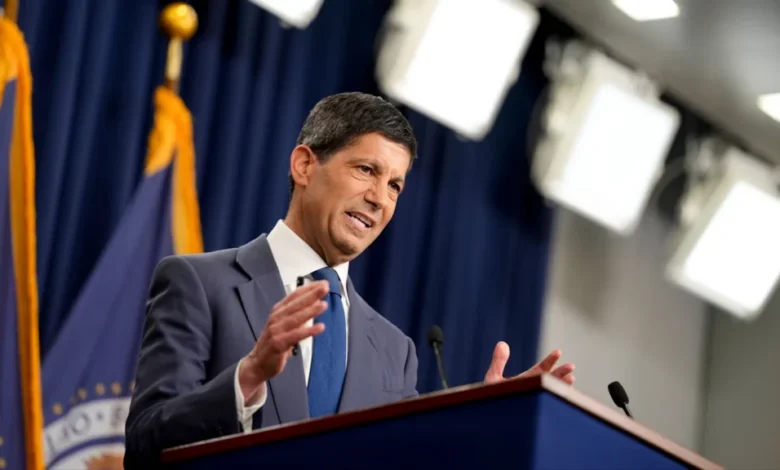
Federal Reserve Chair Jerome Powell, alongside recently appointed Fed Chair Kevin Warsh, has ignited a wave of volatility across global financial markets following the latest Federal Open Market Committee (FOMC) policy meeting. The central bank voted 12-0 to raise the benchmark interest rate by 25 basis points, bringing the federal funds rate to a target range of 3.75% to 4.00%—the highest level recorded since July 2023. This unexpected shift marks a significant turning point in United States monetary policy, as the central bank pivots away from previous easing cycles to combat lingering, persistent inflationary pressures. The announcement immediately rippled through equity markets, cryptocurrency assets, and fixed-income securities, prompting analysts and investors to re-evaluate macroeconomic forecasts for the remainder of the year and into 2026.
Background and Context of the FOMC Decision
The path leading to the September FOMC meeting was defined by persistent economic data that consistently outperformed consensus forecasts. Throughout the preceding quarters, consumer price index (CPI) and personal consumption expenditures (PCE) metrics repeatedly demonstrated that inflation was proving significantly stickier than anticipated. Despite aggressive monetary tightening initiated in previous years, robust labor markets, sustained consumer spending, and resilient corporate earnings prevented inflation from dropping sustainably to the Federal Reserve’s coveted 2% target.
Market participants had initially priced in a prolonged pause or even potential rate cuts as supply chain bottlenecks eased. However, structural labor shortages and wage growth continued to exert upward pressure on prices. The divergence between falling inflation expectations and actual economic resilience forced the Federal Reserve to reconsider its forward guidance. The unanimous 12-0 vote underscores a rare consensus among FOMC policymakers that additional monetary restraint is required to prevent inflation from becoming permanently entrenched in the broader economy.
Chronology of Events Leading to the September Rate Hike
The economic narrative shifted visibly over the summer months leading up to the September policy announcement. In June and July, preliminary inflation prints showed unexpected bounces, shattering the prevailing market consensus that monetary policy was sufficiently restrictive.
- Early Summer Data Revisions: Revised gross domestic product (GDP) figures for the second quarter of the year came in stronger than expected, signaling that the economy was accelerating rather than cooling under the weight of higher borrowing costs.
- Labor Market Resilience: Monthly non-farm payroll reports continued to post robust job gains, defying predictions of a cooling labor market and driving wage growth well above historical averages.
- The Leadership Transition: Amidst this shifting economic backdrop, Kevin Warsh assumed the role of Federal Reserve Chair, taking the helm from Jerome Powell. The leadership transition introduced an element of policy uncertainty, which Warsh quickly addressed by signaling a hardline approach to price stability.
- The September FOMC Meeting: On September 16, following extensive deliberations, the FOMC released its updated policy statement, officially breaking the prolonged pause and enacting the 25-basis-point hike.
Detailed Breakdown of the Summary of Economic Projections (SEP)
Alongside the rate decision, the Federal Reserve released its updated Summary of Economic Projections (SEP), providing a granular look into the expectations of the 18 participating FOMC officials. The updated dot plot revealed a hawkish recalibration of monetary policy expectations.
For the end of 2026, the median projection for the federal funds rate was revised upward to 4.1%, signaling that policymakers anticipate keeping rates elevated for an extended duration. Furthermore, the SEP projected full-year GDP growth for 2026 at a resilient 2.3%, while unemployment was expected to remain low at 4.1%. Concurrently, core PCE inflation was projected to remain elevated at 3.4%.
Financial markets reacted swiftly to these projections. Equity indexes faced immediate downward pressure as institutional investors adjusted their discount models to account for higher-for-longer borrowing costs. Concurrently, cryptocurrency markets—including Bitcoin—experienced a sharp pullback, ending a multi-day institutional inflow streak as traders reassessed risk appetite in light of tighter liquidity conditions.
Kevin Warsh’s Hawkish Stance and Institutional Independence
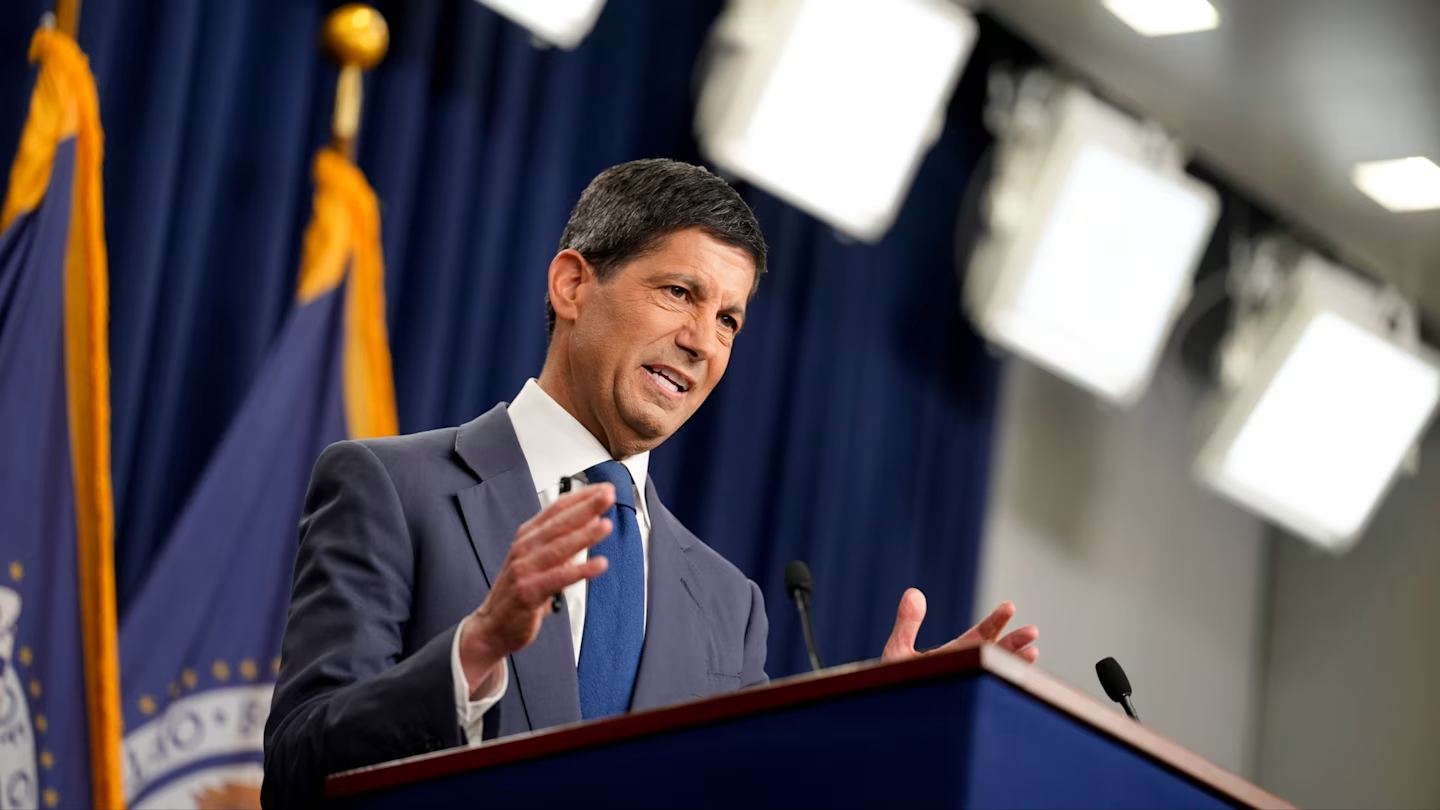
In his post-meeting address, Federal Reserve Chair Kevin Warsh delivered remarks that underscored a commitment to aggressive monetary policy enforcement. Addressing the press, Warsh emphasized that persistent inflation remains the single greatest threat to long-term economic prosperity.
"While we acknowledge the sacrifices made by households and businesses over the past few years of high borrowing costs, our primary mandate is clear: price stability," Warsh stated during the press conference. He warned that premature easing of monetary policy would risk unmooring inflation expectations entirely, which would ultimately require an even more painful economic correction down the road.
Despite persistent political pressure from the White House urging the central bank to lower borrowing costs and support economic expansion, Warsh and the FOMC demonstrated unwavering institutional independence. Observers noted that the latest policy action reflects a central bank determined to fulfill its statutory mandate free from external political interference. When questioned about political pressure during the briefing, Warsh reiterated that the Fed’s decisions are guided exclusively by empirical data and economic reality rather than political expediency.
Broader Impact on Global Markets and Asset Classes
The pivot toward a tighter monetary stance has triggered broad cross-asset reallocations. Fixed-income markets saw yields climb across the curve, with short-term Treasuries bearing the brunt of the repricing. Yields on two-year and ten-year government bonds surged as traders priced in a higher terminal rate.
In the equity markets, growth stocks and technology sectors experienced heightened volatility. High-multiple equities, which benefited immensely from expectations of impending monetary easing, faced severe valuation adjustments. Analysts note that corporate earnings will likely face increased scrutiny in upcoming quarters as borrowing costs remain elevated, potentially squeezing profit margins for capital-intensive industries.
Cryptocurrency markets, which had previously correlated positively with liquidity expansions, faced immediate downward pressure. Institutional investors pulled capital from digital asset investment products, bringing an end to a notable multi-day inflow streak. Market analysts suggest that the contraction in risk-on liquidity will likely cap speculative rallies in the near term, forcing digital asset markets to trade on fundamental adoption and network utility rather than macro-driven liquidity waves.
Future Outlook and Policy Implications
Looking ahead, the Federal Reserve’s trajectory will depend heavily on incoming economic data, particularly employment metrics and monthly inflation prints. While the 25-basis-point hike was framed as a necessary calibration step to ensure price stability, policymakers have left the door open for further adjustments should inflation prove more resilient than currently modeled.
Economists remain divided on whether additional hikes will be necessary before the end of the year. Much will depend on how consumer spending reacts to the cumulative impact of higher borrowing costs. If labor markets begin to soften and consumer demand moderates at a faster pace, the Fed may find the room it needs to pause its tightening cycle once again. However, should inflation persist above the 2% target, the central bank has signaled it will not hesitate to utilize its full policy toolkit to restore economic balance.