From Garage Hobbyists to NASA Engineers: The Lifelong Passion Driving the Dale Reed Subscale Flight Research Laboratory

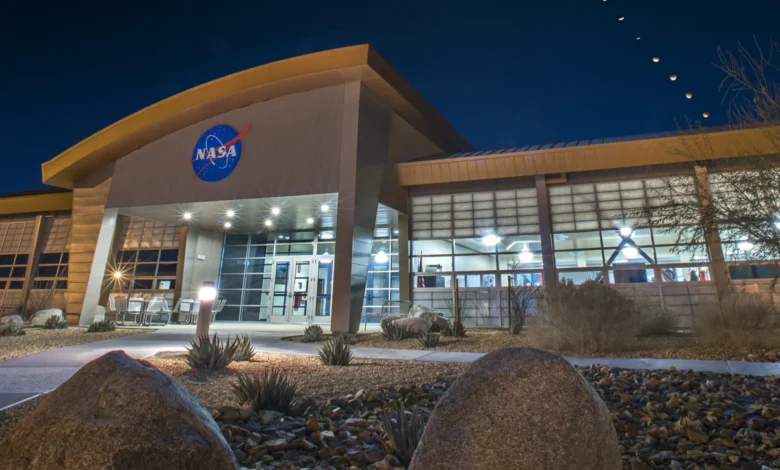
EDWARDS, California — Long before they began shaping the future of aerospace exploration and aeronautical engineering at the National Aeronautics and Space Administration, Derek Abramson, Justin Hall, and Justin Link were quietly honing their craft in home garages and neighborhood backyards. Armed with balsa wood, glue, and radio transmitters, these childhood hobbyists spent their early years building, modifying, and piloting model aircraft. Today, that lifelong fascination forms the operational backbone of NASA’s prestigious Dale Reed Subscale Flight Research Laboratory, situated at the Armstrong Flight Research Center in Edwards, California.
At this specialized facility, the trio transforms amateur enthusiasm into mission-critical innovation. The laboratory is tasked with supporting a diverse array of research initiatives, ranging from advanced autonomous navigation systems designed for future crewed landings on the Moon and Mars to experimental, cutting-edge aeronautics concepts that demand rapid, low-cost evaluation. By utilizing small, remotely piloted, and fully autonomous subscale aircraft, NASA engineers can explore high-risk aerodynamic theories and unorthodox design configurations without risking the immense capital and human safety factors associated with full-scale flight testing.
Within this high-stakes environment, Abramson, Hall, and Link occupy pivotal operational positions. Abramson serves as the laboratory’s chief engineer, providing critical technical oversight and systems design expertise. Hall holds the position of chief pilot, leveraging his extensive flight experience to maintain rigorous safety standards while solving complex aerodynamic challenges in real time. Link operates as a specialized drone pilot and fabricator, utilizing his hands-on construction background to design and assemble advanced research vehicles. Together, this integrated team bridges the gap between theoretical aerospace concepts and physical flight reality, rapidly designing, building, and evaluating experimental platforms for the agency.
The Genesis of the Dale Reed Laboratory
Named in honor of Dale Reed, a pioneering NASA aeronautical engineer legendary for his work with lifting bodies and early subscale flight testing, the laboratory at Armstrong continues a storied tradition of experimental aviation. Subscale flight testing has long served as an invaluable stepping stone in the aerospace development lifecycle. Before committing millions of dollars and years of development to a full-scale prototype, researchers often rely on scaled-down models to validate computer simulations, test unconventional control laws, and observe flight behaviors in real-world atmospheric conditions.
The modern incarnation of the Dale Reed Laboratory expands upon this historical foundation by incorporating modern autonomy, advanced composite materials, and miniaturized avionics. As aerospace engineering shifts toward electric vertical takeoff and landing (eVTOL) vehicles, supersonic transport concepts, and complex planetary exploration platforms, the demand for rapid prototyping has skyrocketed. The team at Armstrong provides NASA with the agility required to test these emerging paradigms efficiently.
Diverse Backgrounds, Shared Trajectories
Although Abramson, Hall, and Link converged at NASA more than a decade ago, their journeys to the Armstrong Flight Research Center followed distinct, highly individualized paths shaped by family influences, military service, and lifelong aviation pursuits.
Derek Abramson’s fascination with flight began in early childhood, sparked by rubber-band-powered stick-and-tissue model airplanes and early radio-controlled systems. That hobbyist foundation quickly matured into professional ambition; Abramson completed his first solo flight while still in high school and subsequently earned his private pilot’s license. Eager to deepen his technical capabilities, he enlisted in the U.S. Navy, where he served as an avionics technician working on complex tactical aircraft, including the Grumman EA-6B Prowler and the McDonnell Douglas F/A-18 Hornet. Following his military service, Abramson transitioned into civilian aerospace engineering, contributing to the flight testing of major military platforms such as the B-1 Lancer bomber and the Bell Boeing CV-22 Osprey tiltrotor. His tenure at NASA Armstrong began during an internship where he applied his extensive operational and engineering background to remotely piloted and autonomous research vehicles.
Justin Hall’s entry into aviation was forged by vivid childhood memories beneath the flight paths of Edwards Air Force Base and surrounding aerospace testing corridors. Growing up, Hall watched legendary aircraft, including the Mach 3 Lockheed SR-71 Blackbird, streak across the sky above his elementary school playground. He also witnessed history firsthand when he watched a Space Shuttle landing from his father’s shoulders. Building and flying model aircraft became a constant fixture in his life. Over the years, his reputation as a highly skilled radio-control pilot at national fly-ins and aviation trade events grew, eventually catching the attention of NASA recruiters looking for exceptional stick-and-rudder talent capable of handling experimental subscale research aircraft.
Justin Link’s connection to aviation is rooted in a multi-generational family legacy of military service and technical craftsmanship. Link was only five years old when he built his first balsa-wood glider with his father and flew it in an open field near their home. As he matured, his hobby expanded to encompass radio-controlled cars, boats, helicopters, and advanced aircraft. Aviation service permeates Link’s family tree: his great-grandfather served in the U.S. Army Air Corps, both grandfathers served in the U.S. Air Force, and his father worked as an Air Force avionics technician. Encouraged by family and peers, Link pursued competitive aviation, racing sailplanes and piloting scaled warbird models in competitions. Prior to joining NASA, he spent more than a decade working professionally with large unmanned aerial systems (UAS), specializing in research and development, advanced composite material fabrication, and specialized manufacturing techniques.
The Mechanics of Rapid Prototyping and Flight Testing
The day-to-day operations of the Dale Reed Subscale Flight Research Laboratory require a seamless synthesis of engineering theory and practical craftsmanship. When a NASA research group conceptualizes a new aerodynamic shape or guidance system, the subscale flight lab is frequently tapped to determine its viability in atmospheric flight.
The process typically begins with computer-aided design (CAD) modeling, followed by structural analysis. Link utilizes his extensive fabrication background to construct the airframes, often employing lightweight composite materials, fiberglass, carbon fiber, and specialized foams to achieve the optimal strength-to-weight ratio. Once the physical airframe is assembled, Abramson and the engineering team integrate the onboard avionics suites, telemetry systems, and autonomous flight control computers.
Before any experimental aircraft touches the sky, rigorous ground testing is conducted to verify system reliability, control surface actuation, and radio frequency link stability. When the vehicle is cleared for flight, Chief Pilot Justin Hall and drone pilot Justin Link take the controls. Operating from ground stations equipped with real-time telemetry displays, the pilots manage the aircraft through complex flight test cards designed to extract specific aerodynamic data.
This iterative approach allows NASA to test novel concepts—such as altered wing configurations, unconventional propulsion integration, and entry, descent, and landing (EDL) architectures for planetary bodies—at a fraction of the cost and risk of full-scale testing. If an experimental design encounters instability or fails during a subscale test, engineers can analyze the telemetry data, modify the prototype, and fly again within days or weeks, rather than years.
Broader Impact and Future Implications for NASA Missions
The work conducted by Abramson, Hall, and Link extends far beyond the boundaries of the Edwards, California facility, directly influencing major programs across NASA’s Aeronautics Research Mission Directorate, Science Mission Directorate, and Exploration Systems Development Mission Directorate.
In the realm of advanced air mobility (AAM) and sustainable flight, subscale testing provides crucial empirical data to validate computational fluid dynamics (CFD) models. As the commercial aviation sector moves toward electrified propulsion and distributed electric propulsion (DEP) architectures, understanding the complex aerodynamic interactions between rotors and lifting surfaces is critical. The Dale Reed Laboratory enables researchers to safely probe the flight envelopes of these novel configurations.
Furthermore, as NASA prepares for sustained human exploration of the Moon under the Artemis program and looks ahead toward crewed missions to Mars, autonomous navigation and precision landing technologies are of paramount importance. Subscale vehicles equipped with experimental sensors and terrain-relative navigation algorithms allow engineers to test landing sequences in terrestrial environments that simulate extraterrestrial challenges.
Industry analysts and aerospace researchers have increasingly praised the return on investment offered by subscale flight research laboratories. In an era where aerospace development costs frequently scale exponentially, facilities that bridge the gap between numerical simulation and full-scale hardware manufacturing are vital for maintaining the pace of American innovation.
Conclusion: A Continuing Legacy of Flight
For Derek Abramson, Justin Hall, and Justin Link, working at NASA’s Armstrong Flight Research Center represents the culmination of a lifelong passion that began in childhood garages and weekend hobby fields. Their unique blend of grassroots tinkering, military-grade discipline, and professional engineering expertise ensures that the Dale Reed Subscale Flight Research Laboratory remains at the cutting edge of aerospace research.
As NASA looks toward the horizon of supersonic commercial flight, advanced autonomous systems, and deep space exploration, the aircraft taking shape in the Armstrong subscale lab—and the dedicated professionals flying them—will continue to lay the groundwork for humanity’s next great leaps in aviation.