WHO Director-General Concludes High-Level Visit to Jordan Highlighting Universal Health Coverage, Refugee Support, and Humanitarian Action

World Health Organization (WHO) Director-General Dr. Tedros Adhanom Ghebreyesus successfully wrapped up the first day of his high-profile, two-day state visit to the Hashemite Kingdom of Jordan today, focusing heavily on the critical intersection of universal health coverage (UHC), mental health infrastructure, and robust humanitarian health action. The visit served as a powerful testament to the enduring, strategic partnership between the WHO and the Jordanian government, highlighting the nation’s exemplary role as a regional anchor of stability, medical innovation, and profound humanitarian generosity.
High-Level Engagements and the Royal Audience
The defining diplomatic moment of the opening day was Dr. Tedros’s formal audience with His Majesty King Abdullah II. The high-level meeting underscored Jordan’s unwavering national and global leadership in positioning healthcare as a foundational pillar of human dignity and national security. Discussions held at the royal palace centered on pragmatic strategies for strengthening comprehensive health systems, significantly expanding equitable access to specialized medical care, and sustaining vital international and regional support for emergency health responses across the Middle East.
Particular emphasis during the royal dialogue was placed on the plight of the Palestinian people, specifically noting the complex logistics surrounding the evacuation of critically ill and injured patients from Gaza into specialized medical facilities within Jordan. Furthermore, discussions addressed the immense socio-economic and infrastructural pressures shouldered by Jordan as it continues to host millions of vulnerable refugees.
"I wish to express my appreciation to His Majesty King Abdullah II for his unwavering commitment to advancing universal health coverage," Dr. Tedros stated following the meeting. "I also extend my thanks to His Majesty and the people of Jordan for their solidarity and generosity in providing essential health services to more than three million refugees, primarily from Gaza and Syria, who are living within the country."
Dr. Tedros further lauded Jordan’s expansive humanitarian footprint, specifically highlighting the visionary scope of King Abdullah II’s Medical Corridor initiative. This critical operational lifeline facilitates the safe transit and delivery of advanced, specialized medical care to severely ill and injured children evacuated directly from active conflict zones in Gaza. Observers note that Jordan continues to demonstrate a gold standard for international humanitarian jurisprudence, prioritizing basic humanity above geopolitical divides.
Ground-Level Realities: Visiting Evacuated Children
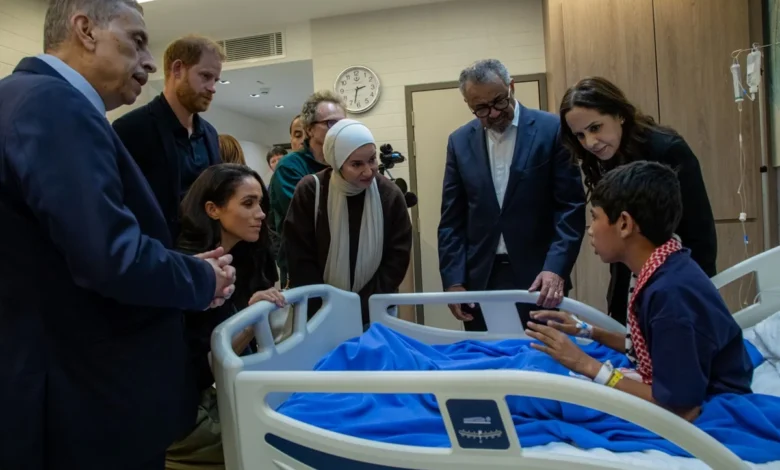
Moving beyond diplomatic chambers, Dr. Tedros transitioned from policy discussions to direct humanitarian observation by visiting a specialized, WHO-supported Jordanian hospital currently providing advanced medical care to children evacuated from Gaza. During the hospital tour, the WHO Director-General walked the wards, interacting directly with young patients, their anxious families, and the resilient frontline healthcare workers who deliver life-saving interventions under immense emotional and operational strain.
The facility visits shed light on the multifaceted medical challenges confronting these young evacuees, ranging from traumatic blast injuries and complex fractures to advanced oncology treatments and chronic pediatric conditions. Dr. Tedros emphasized that these touching human stories underscore the absolute necessity of keeping the Jordanian medical evacuation corridor fully operational. He issued a renewed call to the international donor community for sustained, predictable financial and logistical support to ensure that vulnerable children and other high-risk patients can seamlessly access specialized diagnostics and long-term therapeutic care.
Mobilizing Financial and Strategic Partnerships
In addition to his clinical visits, Dr. Tedros convened a strategic, high-level roundtable meeting involving key international health partners, major donor governments, United Nations agencies, and prominent global philanthropic organizations. The core agenda of the consultation was to map out and secure critical financing priorities aimed at structural health system strengthening within Jordan, while simultaneously shoring up ongoing regional humanitarian health initiatives.
The dialogue placed considerable focus on scaling up integrated mental health services—an area where Jordan has made significant strides—and formulating sustainable funding models to assist countries burdened by large, protracted refugee populations. Dr. Tedros welcomed the robust collaboration demonstrated by the international donor community, urging stakeholders to view investments in Jordan’s healthcare infrastructure not merely as regional aid, but as a direct contribution to global health security.
Later in the day, the WHO chief held bilateral consultations with Jordan’s Minister of Health. Their talks zeroed in on institutional reforms designed to cement Jordan’s primary healthcare framework, ensuring that UHC remains inclusive and resilient in the face of external shocks. Jordan has consistently earned global praise for its progressive integration of mental health services into routine primary healthcare clinics, a structural transformation actively supported by the Director-General’s Special Initiative for Mental Health.
The Role of Philanthropy and High-Profile Advocacy
Significantly enhancing the visibility of the visit, Dr. Tedros was accompanied throughout several key engagements by Prince Harry, the Duke of Sussex, and Meghan, the Duchess of Sussex, in their capacities as founders of Archewell Philanthropies. The Duke and Duchess have maintained a long-standing, active partnership with the WHO, lending their global platform to various public health campaigns ranging from equitable vaccine distribution during the COVID-19 pandemic to targeted medical evacuation and mental health advocacy.
Prince Harry, participating actively as a global mental health ally, used the platform to underscore the urgent imperative of investing in psychological resilience across communities experiencing chronic conflict and systemic displacement. He directed specific attention toward the neglected psychological needs of men, adolescents, and children caught in the crosshairs of humanitarian emergencies.
"It is an honour to join the Director-General of the World Health Organization in Jordan, a country that is leading by example in compassion, resilience, and innovation," Prince Harry remarked. "Through our work with Archewell Philanthropies, my wife and I have seen first-hand the impact of WHO’s efforts to support mental health and deliver life-saving care in emergencies. We remain deeply committed to advancing awareness, reducing stigma, and expanding access to mental health support for all those affected by conflict and crisis. Mental health is fundamental to recovery, dignity, and long-term peace, and we are proud to stand with WHO and partners around the world to make it a global priority."
Echoing these sentiments, Dr. Tedros praised the enduring contributions of the Duke and Duchess. "I want to thank our partners, including Prince Harry, Duke of Sussex, and Meghan, Duchess of Sussex, whose commitment to mental health and humanitarian action has helped bring visibility, resources, and hope to some of the world’s most vulnerable communities. Their collaboration is helping to advance WHO’s mission to ensure health for all."
Day Two Agenda and Future Outlook
As the state visit moves into its second and final day, Dr. Tedros’s itinerary features several high-impact field visits designed to showcase specialized medical and social institutions within the kingdom. His schedule includes a targeted tour of Jordan’s National Center for Rehabilitation of Addicts, an innovative facility supported by the WHO that delivers comprehensive, integrated medical, psychological, and social rehabilitation services to individuals struggling with substance use disorders.
Additionally, the WHO chief is slated to meet with grassroots community leaders and prominent women’s empowerment networks, including representatives from the Jordanian Hashemite Fund for Human Development (JOHUD). These sessions are intended to highlight the vital role of community-led organizations in driving grassroots health literacy, maternal care, and social cohesion.
The itinerary will also feature an analytical tour of the renowned King Hussein Cancer Center, where Dr. Tedros will review state-of-the-art oncology advancements, clinical research protocols, and prospective avenues for regional medical collaboration. The visit will officially conclude with a series of closing roundtables with humanitarian operations partners, further solidifying Jordan’s indispensable geopolitical positioning as an irreplaceable hub for medical evacuation, emergency epidemic response, and systemic health resilience in the Middle East.
Background Context and Wider Implications
To fully comprehend the significance of Dr. Tedros’s state visit, it is essential to examine Jordan’s unique socio-demographic landscape. Despite facing persistent economic constraints, water scarcity, and geopolitical volatility within its immediate neighborhood, the Hashemite Kingdom has historically maintained an open-door policy for displaced populations. Official demographic metrics indicate that Jordan currently hosts approximately 1.3 million Syrian refugees—of whom roughly 670,000 are formally registered with the United Nations High Commissioner for Refugees (UNHCR)—alongside hundreds of thousands of refugees of other nationalities, including Iraqis, Yemenis, and Sudanese. Furthermore, the kingdom has absorbed significant demographic inflows resulting from historical and ongoing regional conflicts, maintaining pressure on local infrastructure, public school systems, and, crucially, national healthcare delivery networks.
Public health analysts emphasize that Jordan’s primary healthcare model serves as a vital blueprint for developing nations seeking to implement universal health coverage under financial duress. By decentralizing basic health delivery and embedding mental health diagnostics directly into community clinics, the Ministry of Health has successfully mitigated potential bottlenecks in tertiary hospitals. However, international public health experts warn that without sustained financial burden-sharing by the global community, the long-term sustainability of Jordan’s public health infrastructure remains vulnerable to sudden regional shocks, such as spikes in cross-border refugee movements or escalating healthcare costs associated with advanced trauma management.
The integration of mental health services into mainstream Jordanian healthcare is another critical area of interest for the global health community. Decades of conflict in the surrounding region have left an invisible, profound psychological toll on millions of individuals, particularly children and adolescents. By prioritizing psycho-social support alongside physical trauma care, Jordan and the WHO are establishing an integrated care paradigm that recognizes psychological rehabilitation as an indispensable component of emergency medical response, rather than an afterthought.
Ultimately, Dr. Tedros’s ongoing visit serves as both an endorsement of Jordan’s exemplary humanitarian record and a stark reminder to the international community. As geopolitical conflicts continue to displace record numbers of civilians globally, the burden borne by front-line host countries like Jordan requires robust, predictable, and multilateral burden-sharing. The WHO’s continued engagement in Amman reinforces the message that regional health security is inextricably linked to global stability, and that safeguarding the health of refugees and evacuees is a shared moral and operational imperative.