The State of the United States Power Grid in 2026 Reveals a Complex Transition Toward Renewables Amid Shifting Economic Policies

The United States energy landscape is undergoing a profound transformation as the electric grid navigates a period of moderate demand growth, the maturation of renewable energy integration, and a shifting federal regulatory environment. Data through the first seven months of 2026 indicates that while total electricity demand has risen by 2 percent compared to the same period in 2025, the pace of this increase remains significantly lower than many analysts had predicted. This moderate growth, combined with the continued expansion of wind and solar capacity, suggests that the grid is currently capable of absorbing the electrification of the economy—driven by electric vehicles (EVs), heat pumps, and industrial shifts—without experiencing the systemic volatility often associated with rapid energy transitions.
A Chronology of Grid Evolution in 2026
The year 2026 has been marked by a departure from the high-growth trends observed in 2025, when demand increased by 3 percent over the previous year. The current 2 percent growth rate reflects a cooling of previous expectations regarding the immediate, massive load requirements of emerging data centers. Several factors contribute to this stabilization. First, energy efficiency measures, which acted as a buffer for demand throughout the early 2000s, continue to play a vital role. Second, there is a growing trend of industrial entities, particularly large-scale data centers, opting for behind-the-meter generation, such as natural gas-powered facilities, to meet their needs. By generating their own power, these entities mitigate their direct impact on the public grid, effectively decoupling their expansion from the load on regional utility providers.
The first quarter of 2026 saw the continued rapid integration of utility-scale solar projects, though the second quarter witnessed a notable cooling in the rate of new capacity additions. By mid-2026, the cumulative impact of federal policy shifts—specifically the rollback of certain renewable energy incentives—began to register in the industry’s quarterly growth metrics. Despite this, the total contribution from renewable sources remains a pillar of the nation’s energy security.
Analyzing the Solar Growth Trajectory
The explosive growth of solar power, which saw year-over-year increases exceeding 30 percent in recent periods, has begun to normalize. In the first seven months of 2025, solar generation increased by 48 terawatt-hours (TWh) over the preceding year. During the same timeframe in 2026, that growth totaled 39 TWh. While a 22 percent growth rate remains impressive by historical standards, the decline in the rate of expansion highlights the sensitivity of the market to regulatory headwinds.
The federal government’s current stance on renewable energy has created an environment of uncertainty for developers. With the removal or reduction of specific tax credits and direct incentives, the financial barrier to entry has increased for smaller, independent renewable firms. Nevertheless, the economic reality remains that solar power is, in many regions, the most cost-effective method for adding new generation capacity. Small-scale, or rooftop, solar installations have proven particularly resilient, maintaining a growth rate of over 12 percent, indicating strong consumer demand for energy independence and localized production.
Grid Composition and the Role of Fossil Fuels
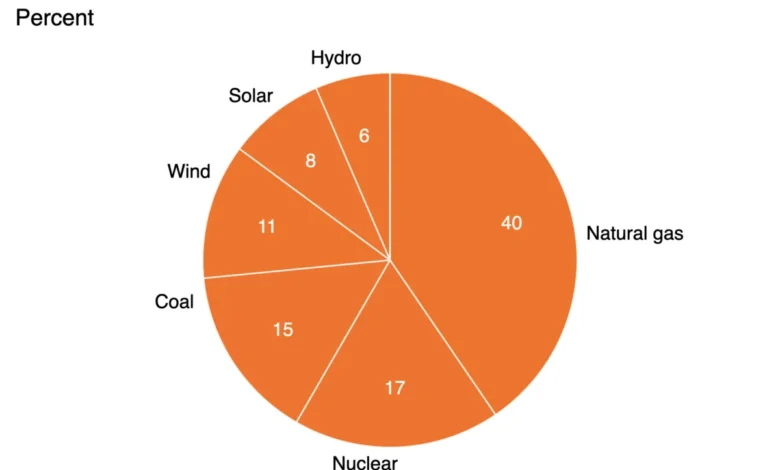
The current generation mix underscores a significant decline in the reliance on coal, which has dropped by over 10 percent year-over-year. As coal exits the market, its void is being filled by a combination of natural gas and renewable sources. Wind and solar now account for 21 percent of total US electricity demand. Significantly, the growth in renewable output for the first seven months of 2026 reached 55 TWh, which more than covers the 51 TWh increase in total grid demand. This indicates that for the current year, the nation’s incremental power needs are being satisfied entirely by carbon-free sources, setting a milestone for the energy transition.
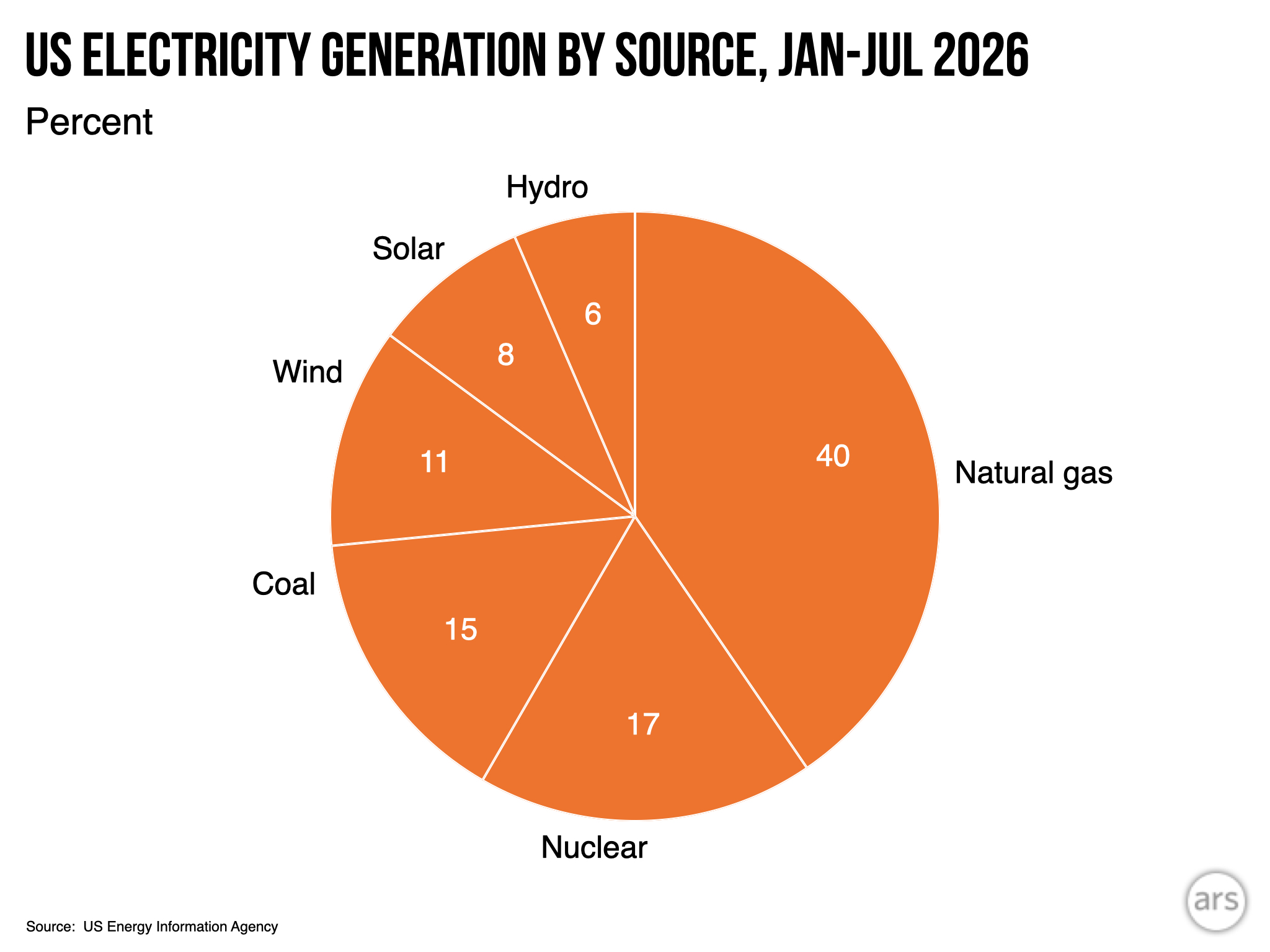
When hydroelectric power is included, renewables cover 27 percent of US demand. When nuclear power—which has remained relatively stable—is factored into the equation, 45 percent of the nation’s electricity is generated from non-carbon-emitting sources. This compares to the European Union, which generates roughly 65 percent of its electricity from emissions-free sources, though the US grid faces different challenges, including a vast geographic spread and a decentralized regulatory structure.
Future Projects and Infrastructure Developments
Looking toward the remainder of 2026 and into 2027, the Energy Information Administration (EIA) has identified several key projects slated for completion. Among the most notable are two large-scale offshore wind projects off the East Coast, including a massive 2.6 GW installation in Virginia. These projects represent a significant engineering achievement, yet they may stand as the last of their kind for several years. The current administration has actively incentivized developers to abandon offshore leases, signaling a policy pivot away from offshore wind development in favor of other energy priorities.
Conversely, onshore wind development remains robust in the Midwest and the Great Plains, where transmission infrastructure has been bolstered to handle the increased load. In the South and the Midwest, new solar installations are appearing in regions previously considered non-viable due to lower irradiance levels. This suggests that improved panel technology and favorable land-use economics are expanding the geographic footprint of solar energy.
Battery Storage as a Strategic Asset
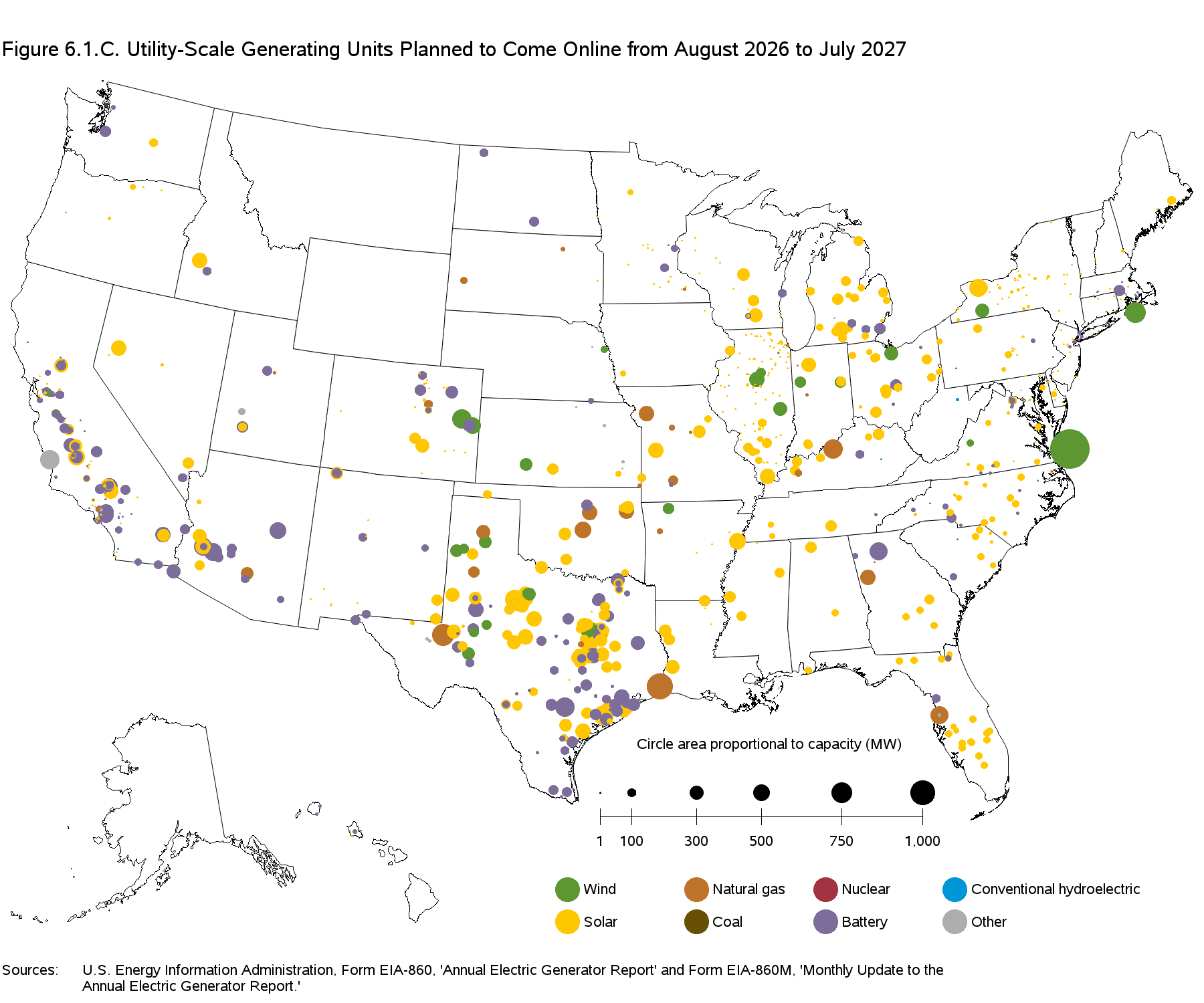
Perhaps the most significant technical shift in 2026 is the expansion of battery energy storage systems (BESS). Historically concentrated in the high-demand markets of California and Texas, battery installations are now appearing in Arizona, Colorado, and even the Midwest. In Michigan, for instance, new solar farms are being paired with utility-scale battery storage to provide firm, dispatchable power during peak demand hours. This trend toward "hybridization"—pairing generation with storage—is essential for stabilizing a grid that is increasingly dependent on intermittent sources.
A large-scale storage project is also nearing completion in Georgia, marking a shift in the Southeast’s approach to grid management. The transition from pure generation to a mix of generation and storage is helping to alleviate the strain on existing transmission lines and reducing the need for "peaker" plants, which typically burn natural gas or diesel to meet brief, intense spikes in demand.
Implications for the Energy Sector
The implications of these developments are twofold. First, the grid is proving to be more flexible than skeptics suggested. The ability to meet increased demand with renewable growth alone is a testament to the success of technological advancements in power electronics and grid management. Second, the policy environment is acting as a primary constraint on the speed of the transition. The divergence between the economic viability of renewables and the current regulatory climate creates a "stop-start" dynamic that complicates long-term investment planning for utility providers.
Furthermore, the absence of new coal or nuclear power plant developments points to a long-term retirement of baseload fossil-fuel assets. With no new coal plants commissioned in over 13 years and none in the pipeline, the future of the US power sector is clearly shifting toward a decentralized, diversified, and largely renewable-heavy model. The persistence of natural gas, however, remains a key feature of the transition, as it serves as a bridge, providing the necessary redundancy to ensure grid reliability during periods of low renewable output.

Conclusion: A Transition in Flux
The United States is currently in a state of energy transition that is both technologically advanced and politically fraught. The data from 2026 shows that while the growth of solar energy is slowing from its previous breakneck pace, it remains a central component of the nation’s infrastructure strategy. The grid is successfully absorbing the demands of modern electrification, and the proliferation of energy storage is helping to solve some of the inherent challenges of renewable integration.
As the country moves forward, the primary challenge will be to balance the immediate need for reliable, affordable electricity with the long-term imperative to modernize the grid. Whether the current policy trajectory will lead to a slowdown in decarbonization remains to be seen, but the inherent momentum of the renewable energy sector suggests that the transition is well beyond the point of reversal. The coming years will likely be defined by the success of battery storage deployment and the ability of regional grids to manage the decline of traditional, carbon-heavy power sources.
Related posts: