Sylvester Stallone Reveals the Tense Reality Behind His Father’s Rocky Cameo and the Struggle for Parental Validation

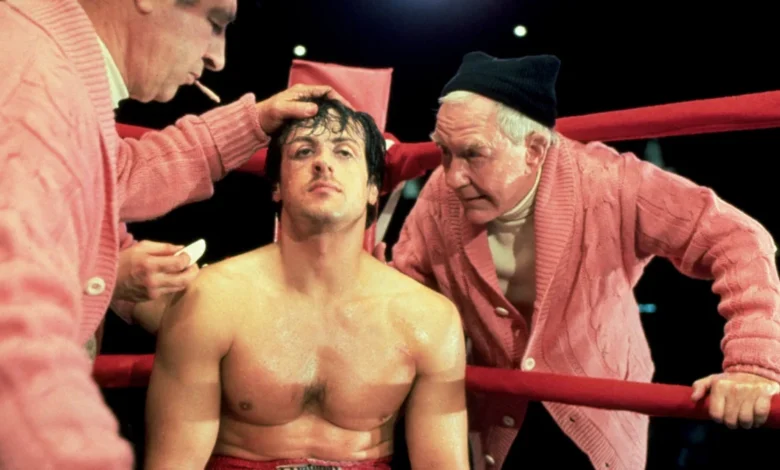
Sylvester Stallone’s meteoric rise to global superstardom began with the 1976 release of Rocky, a film that not only defined his career but also became a cultural touchstone for the underdog spirit. However, as the three-time Academy Award nominee prepares to release his candid memoir, The Steps, on October 23, he is pulling back the curtain on the turbulent personal dynamics that defined his early days in Hollywood. Central to this reflection is the complicated, often adversarial relationship he shared with his father, Frank Stallone Sr., a man whose presence in the iconic film’s climactic boxing match was meant to be a bridge of reconciliation but instead devolved into a volatile confrontation.
The narrative of Rocky is famously one of persistence—a mirror of Stallone’s own struggle to get the screenplay produced and to convince studio executives that he, a relative unknown at the time, was the only choice to play the titular character. Behind the cameras, that struggle for recognition extended into his private life. Stallone, now a cinematic legend, has spoken openly about the "really nasty" atmosphere on the set of that pivotal scene, where his father served as the bell ringer during the legendary fight between Rocky Balboa and Apollo Creed.
A Fractured Bond: The Context of the Rocky Set
The decision to cast Frank Stallone Sr. in a cameo was, in hindsight, an attempt by a young actor to seek the approval of a father who remained perpetually elusive. In an interview with The New York Times, Stallone described the gesture as a plea for connection. "It was like: I just want you to love me for a little bit," he noted. "Like, look what I did! Share it with me. I know you thought I was a fool my whole life, but here we are."
The set of a major motion picture, especially one with the tight budget and logistical constraints of the original Rocky, is a high-pressure environment. The boxing sequences were meticulously choreographed, requiring exact timing to ensure that the punches landed with visual impact while keeping the actors safe. When Frank Stallone Sr. failed to adhere to the rhythmic demands of the scene—specifically the ringing of the bell—the professional tension collided with deep-seated personal history.
"He didn’t ring the bell properly," Stallone explained. "I kept fighting and fighting and fighting. Everything’s choreographed. It’s one, two, three, four, bell. Not six, seven, eight, nine, ten. Carl Weathers is like, ‘What’s going on?’"
The resulting altercation, which Stallone characterized as a "really bad Italian drama," serves as a sobering reminder that even in the midst of professional triumph, the ghosts of childhood trauma often dictate the behavior of adults. The scene was not merely a mistake in timing; it was a breakdown in the communication between a father and son who had never truly learned how to interact without friction.
The Anatomy of a Difficult Upbringing
To understand the gravity of the incident on the Rocky set, one must examine the environment in which Sylvester Stallone was raised. In his forthcoming memoir, he paints a picture of a childhood defined by "constant bombastic explosions" followed by chilling silence. Stallone describes his father as a man who was "very, very cold and tough," a figure who relied on physical intimidation to assert dominance within the household.
Stallone’s recollection of his father’s behavior suggests a cycle of volatility that was deeply ingrained. If a disagreement occurred, the younger Stallone would often find himself bracing for a physical reaction. "He had very big hands. You learn to duck," Stallone noted. By choosing not to include every graphic detail of these encounters in his book, Stallone makes it clear that his goal is not to elicit pity, but rather to document the reality of his formative years. This period of his life, while "insane," provided the psychological fodder that would eventually fuel the emotional authenticity of the Rocky character.

The reconciliation between the two did not truly arrive until the final years of Frank Stallone Sr.’s life, leading up to his death in 2011. This timeline is critical, as it highlights that the wounds from the 1976 set lasted for over three decades.
Chronology of a Hollywood Icon’s Early Struggles
The trajectory of Stallone’s career is often simplified into a "rags to riches" story, but the chronology of the 1970s reveals a more complex reality:
- 1970–1975: Stallone struggles as an actor in New York City, taking bit parts and writing screenplays to make ends meet. During this time, the tension with his father remains a constant, silent presence in his life.
- 1976: The filming of Rocky commences. The casting of Frank Stallone Sr. as the bell ringer is intended to be a moment of professional validation. The incident on set marks a low point in their interpersonal history.
- 1976 (November): Rocky is released to critical acclaim and massive box office success, grossing over $225 million worldwide on a $1 million budget.
- 1977: Rocky wins the Academy Award for Best Picture. Despite the public success, the internal conflict between Stallone and his father persists.
- 2011: Frank Stallone Sr. passes away. The reconciliation occurs shortly before his death, providing a measure of closure to a lifelong conflict.
- 2024 (October): Publication of The Steps, which provides the most comprehensive account to date of the father-son dynamic.
- 2024 (November): The release of the biopic I Play Rocky, which documents the intense creative process and personal battles Stallone faced during the production of the original film.
The Broader Impact: Art Imitating Life
The psychological cost of the entertainment industry is a frequent topic of debate, but the case of the Stallone family provides a unique look at how performance can be used as a tool for emotional processing. By putting his father in a position of power—the man who rings the bell, effectively controlling the duration of the fight—Stallone was metaphorically asking his father to grant him the space to succeed. When that failed, the resulting "nasty" outcome became a microcosm of their entire relationship.
Industry analysts and film historians often point to the "Rocky" films as the ultimate exploration of masculine vulnerability. While the character of Rocky Balboa is often associated with physical toughness, the longevity of the franchise is attributed to his emotional softness and his search for belonging. It is now clear that this vulnerability was not an act; it was a direct reflection of Stallone’s own experience navigating the demands of a father who was largely incapable of providing the warmth he craved.
Official Narratives and Cultural Legacy
The release of the biopic I Play Rocky, directed by Peter Farrelly and starring Anthony Ippolito, serves as a timely companion to the memoir. By focusing on the period where a young, struggling Stallone was writing the script and fighting for the right to star in it, the film highlights the intersection of creative ambition and familial expectation.
While the film focuses on the professional hurdles—the reluctance of producers to cast an unknown, the financial risks, and the physical training—the inclusion of the father-son dynamic adds a layer of depth that humanizes the legend. Industry observers note that the willingness of stars like Stallone to share these darker, more complex moments in their memoirs is part of a larger trend toward transparency in Hollywood. This shift allows audiences to view iconic figures not as untouchable celebrities, but as individuals shaped by the same domestic pressures as the general public.
Implications for Future Generations
The story of Sylvester Stallone and his father is, at its core, a universal one: the struggle for parental recognition and the pursuit of a legacy that justifies the pain of the past. As The Steps hits bookshelves, it will undoubtedly invite new discussions about the nature of mentorship, the influence of father figures in the lives of high-achievers, and the way in which art can be used to resolve the unsaid conflicts of the past.
The incident on the set of Rocky may have been a "bad Italian drama" at the time, but it has now been transformed into a chapter of film history that informs how we view the character of Rocky Balboa. When audiences watch the original film, they are now aware that the man behind the bell was not merely an extra, but a catalyst for the very real, very human turmoil that drove Stallone to create one of the most enduring cinematic heroes of all time.
In the final analysis, Stallone’s willingness to discuss these uncomfortable truths serves to humanize the massive commercial success of his career. It reminds both fans and critics that behind every blockbuster, every red carpet appearance, and every iconic punch, there is a person striving for the simplest of human needs: to be seen, understood, and eventually, loved by those who shaped them. The legacy of Rocky is not just in the box office records, but in the enduring, often painful, search for the reconciliation that Sylvester Stallone finally found in the twilight of his father’s life.