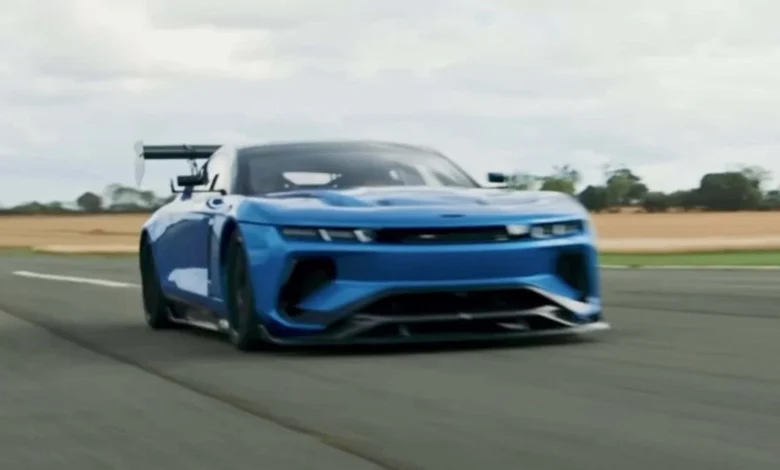
The storied British automotive brand Jensen is marking its return to the global stage with the unveiling of the Jensen Interceptor GTX, a formidable prototype that blends traditional British grand touring heritage with modern, high-output American powertrain technology. While the current iteration of the vehicle is strictly confined to track use, the debut signals a strategic pivot for the manufacturer as it explores the feasibility of a production-ready road car. This development represents the culmination of years of brand resurrection efforts, aiming to recapture the spirit of the iconic Interceptor models that defined British performance in the 1960s and 1970s.
The Historical Context of the Jensen Brand
The Jensen Interceptor, originally produced between 1966 and 1976, was celebrated for its unique combination of Italian-inspired styling—penned by Touring of Milan—and reliable, high-displacement American V8 engines supplied by Chrysler. It became a symbol of "gentleman’s express" motoring, offering comfort, luxury, and raw power.
Following the original company’s collapse in the mid-1970s, the brand name underwent various ownership changes and attempted revivals. The latest initiative to bring Jensen back to market focuses on integrating modern engineering standards while maintaining the aesthetic silhouette that enthusiasts associate with the name. By debuting the GTX prototype, the company is testing the waters of contemporary high-performance engineering, leveraging a track-only development phase to refine chassis dynamics and powertrain reliability before committing to a commercial road-going platform.
Powertrain Architecture and Engineering Specifications
At the heart of the Jensen Interceptor GTX lies a radical transformation of the traditional V8 layout. The vehicle utilizes a 6.8-liter supercharged V8 engine derived from a General Motors block. However, the internal components have been extensively modified by Late Model Engine (LME) in Texas, a specialist firm renowned for high-performance LS and LT engine builds.
The engineering process involves a complete overhaul of the donor block. Key upgrades include:
- CNC-Machined Cylinder Heads: Optimized for airflow and thermal efficiency to support forced induction.
- Titanium Valves: Reduced reciprocating mass to allow for higher RPM stability.
- Reinforced Rotating Assembly: Enhanced pistons, rods, and crankshaft to handle the extreme cylinder pressures associated with supercharging.
- Motec Engine Management: A sophisticated electronic control unit (ECU) system that allows for precise fuel mapping, ignition timing, and torque management.
The result of these modifications is a powertrain that produces approximately 973 horsepower in its current state of tune. Jensen engineers have indicated that the platform possesses significant headroom, with potential outputs reaching up to 1,200 horsepower depending on the calibration. Delivering this power to the wheels is a manual transmission, a deliberate choice that preserves the driver-centric engagement expected of a vehicle with such high performance parameters.
Development Timeline and Future Road-Car Aspirations
The current prototype serves as a mobile laboratory. The primary objective for the Jensen development team is to stress-test the structural integrity and thermal management of the vehicle under sustained high-load conditions found on a race circuit.
According to preliminary plans released by the company, the development cycle is divided into distinct phases:
- Phase I (Prototype Validation): Establishing the performance baseline, testing cooling systems, and refining the suspension geometry on the track.
- Phase II (Road-Legal Homologation): Modifying the prototype to meet international safety and emissions regulations. This involves the integration of catalytic converters, noise reduction systems, and passive safety features.
- Phase III (Production Specification): Creating two distinct model lines: the GT, intended for grand touring with a focus on ride comfort and long-distance capability, and the GTR, a more aggressive, track-focused variant.
There is currently no official timeline for the production of the road-legal model. However, the company has emphasized that the GTX prototype is the technical foundation for both the GT and GTR variants. The success of the prototype on the track will largely dictate the pace of these future releases.
Market Analysis and Industry Implications
The decision to revive a heritage brand with a high-horsepower V8 is a bold move in an automotive market that is rapidly shifting toward electrification. By opting for a high-output internal combustion engine, Jensen is positioning itself as a niche manufacturer targeting enthusiasts who prioritize mechanical visceral feedback over efficiency.
From a market perspective, the Interceptor GTX faces significant competition. It enters a landscape populated by established boutique manufacturers and performance divisions of major luxury brands. To succeed, the road-going version must overcome several hurdles:
- Regulatory Compliance: Meeting Euro 6d or equivalent emission standards with a 6.8-liter supercharged engine is a significant engineering challenge that requires advanced catalyst technology and precise fueling strategies.
- Price Positioning: Given the intensive labor involved in the engine build and the low-volume nature of the production, the final vehicle is expected to carry a substantial price tag, placing it in the realm of hyper-luxury and exotic sports cars.
- Brand Perception: Jensen must convince a new generation of buyers that it can deliver the reliability and after-sales support expected of a modern luxury brand, a common struggle for resurrected marques.
Despite these challenges, the audio profile of the engine—often described as a "glorious song"—and the raw power output provide a strong marketing hook. The ability to blend the classic aesthetic of the original 1960s Interceptor with nearly 1,000 horsepower of modern engineering is a unique selling point that few competitors can replicate.
Official Stance and Future Outlook
While Jensen has remained relatively quiet regarding the specifics of the production rollout, the consensus among automotive analysts is that the brand is playing a long game. By building the race car first, they are demonstrating technical competence. The "track-only" label serves as both a development tool and a teaser for potential investors and collectors.
If Jensen successfully transitions the GTX from the track to the public roads, it will represent one of the most ambitious automotive revivals of the decade. The shift from a race-spec machine to a road-ready GT requires a delicate balance between raw, untamed performance and the refined comfort required for a vehicle bearing the Interceptor name.
Ultimately, the Jensen Interceptor GTX is more than just a prototype; it is a statement of intent. The company is betting that there is still a place in the market for a high-displacement, manual-transmission, rear-wheel-drive machine that prioritizes the sensory experience of driving. As the industry moves toward autonomous and electric mobility, the arrival of such a car serves as a reminder of the enduring appeal of traditional mechanical performance. For now, enthusiasts and industry observers alike will be watching the track testing closely, waiting for the first signs of a road-legal iteration that could restore Jensen to its former glory.