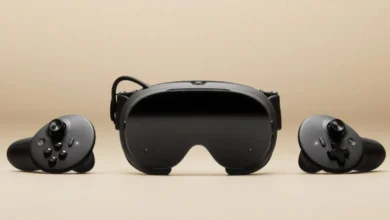
The annual Meta Connect conference has long served as Mark Zuckerberg’s premier stage for outlining the technological horizon, spanning virtual reality headsets, generative artificial intelligence models, and ambient computing devices. At this year’s iteration, however, one overarching theme dominated the exhibition floors, keynote presentations, and developer sessions alike: the social media conglomerate is positioning its future squarely on the evolution of smart glasses.
Throughout the multi-day event in Silicon Valley, attendees, company personnel, and technology influencers sported various iterations of Meta’s facial hardware. Demonstrations across the campus predominantly featured frames equipped with computational audio, contextual AI integrations, and lightweight sensor arrays. Amidst a crowded ecosystem of wearable technology, Meta’s latest hardware showcases a deliberate pivot away from camera-centric controversy toward functional, privacy-conscious audio solutions designed for mainstream adoption.
Addressing Privacy Concerns with Camera-Free Design
The centerpiece of Meta’s hardware preview was an unreleased line of audio-only smart glasses, developed in the wake of mounting public scrutiny regarding surveillance capabilities. Earlier iterations of smart eyewear faced sharp criticism from privacy advocates who labeled camera-equipped frames as potential instruments for unauthorized recording in public spaces. In response to these concerns, the engineering team stripped the new frames of optical sensors entirely.
The forthcoming audio-only model features a configuration of six directional microphones but lacks any native capability to capture visual media of the surrounding environment. During hands-on testing, the absence of camera hardware yielded a noticeable reduction in weight, resulting in a significantly lighter and more ergonomic profile compared to its predecessors. Company representatives emphasized that the primary design objective centers on seamless daily communication and media consumption, allowing users to stream audio or manage telephonic communication without requiring physical interaction with a smartphone.
Despite the omission of visual capture technology, the frames integrate deeply with Meta’s proprietary agentic artificial intelligence ecosystem, designated internally as Muse. This conversational interface operates entirely through voice commands, letting wearers interact with a persistent digital assistant while moving through public spaces.
The Integration of Agentic AI: Muse and Ambient Computing
The integration of the Muse personal agent represents Meta’s broader push to transition artificial intelligence from static screens into ambient, wearable environments. Designed to function as a proactive digital assistant, Muse can execute complex organizational tasks, including drafting electronic correspondence, compiling operational to-do lists, and retrieving real-time informational queries akin to mobile large language models.
During live demonstrations, the system exhibited both its functional utility and its current technological limitations. Because the glasses rely continuously on audio input via their six-microphone array, environmental conversations can occasionally trigger unintended commands. Testers noted that speaking concurrently to a human interlocutor and the artificial intelligence system created parsing conflicts, causing the virtual assistant to vocalize over human speech.

Nevertheless, industry analysts observe that the capability to perform remote digital administration via voice commands points toward a significant shift in consumer hardware expectations. By embedding conversational AI directly into lightweight eyewear, Meta aims to bridge the gap between abstract software services and physical utility, though consumer willingness to converse aloud with standard eyeglasses in public settings remains an open question for market researchers.
Democratizing Assistive Technology: Audio Glasses for Hearing Loss
Beyond consumer entertainment and productivity software, Meta used the Connect conference to debut a specialized application of its audio architecture directed at healthcare accessibility: smart glasses engineered specifically to assist individuals with hearing impairments.
According to public health data, approximately 50 million individuals in the United States alone experience varying degrees of hearing loss, a condition that frequently imposes substantial financial burdens due to the high cost of traditional medical hardware. Conventional prescription hearing aids often retail between $1,500 and $3,000 per device, placing them out of reach for a significant demographic of consumers. Meta’s research division revealed that the newly developed assistive glasses, which have undergone a five-year development cycle, are projected to launch at a retail price point of approximately $150.
In controlled testing environments simulating auditory impairment through industrial-grade earplugs, the glasses successfully amplified targeted vocal frequencies. The device features user-controlled acoustic modes, allowing wearers to toggle between a focused directional setting—which isolates the voice of an individual directly in front of the user—and an omnidirectional setting designed to capture ambient sound fields uniformly. While these frames are not formally certified medical devices, industry observers suggest that low-cost consumer hardware with acoustic amplification capabilities could fundamentally alter the market dynamics of hearing accessibility products.
Chronology and Development Timeline
The evolution of Meta’s smart glasses division reflects a calculated, multi-year progression from experimental fashion collaborations to core hardware infrastructure:
- 2019–2021: Meta initiates foundational research into wearable optics and spatial audio, culminating in the initial partnership with EssilorLuxottica to explore connected eyewear concepts.
- 2021: The company releases its first-generation camera-equipped smart glasses under the Ray-Ban Meta brand, establishing baseline consumer interest but immediately drawing scrutiny from privacy advocates regarding continuous recording capabilities.
- 2023–2024: Integration of multimodal artificial intelligence models into existing hardware frames, allowing users to query visual surroundings using onboard cameras and voice commands.
- Early 2026: Public backlash intensifies concerning surveillance implications, prompting Meta to accelerate the development of privacy-focused, camera-free configurations.
- Late 2026 (Meta Connect): Meta unveils its unreleased camera-free audio glasses, alongside specialized acoustic assistance prototypes and advanced integrations with the Muse agentic AI platform.
Market Implications and Industry Outlook
The commercial viability of smart eyewear has historically remained restricted to a niche consumer segment. Despite significant capital investments by major technology conglomerates, including Apple, Google, and Snap, augmented and smart glasses have struggled to achieve mass-market penetration due to battery limitations, social stigma, and privacy regulations.
By diversifying its product strategy—offering lightweight entertainment frames, privacy-compliant audio models, and low-cost assistive hearing devices—Meta is attempting to establish multiple entry points into the consumer market simultaneously. Economic analysts note that pricing the assistive audio frames at $150 significantly undercuts traditional medical technology sectors, potentially disrupting established supply chains if regulatory compliance and audio fidelity standards are successfully met.
As Mark Zuckerberg continues to direct corporate resources toward ambient computing paradigms, the overarching question facing the industry is whether mainstream consumers will adopt facial hardware for daily communication and digital management. While attendees at the Meta Connect conference exhibited an overwhelmingly favorable consensus regarding the future of wearable computing, wider global adoption will depend heavily on addressing ongoing concerns regarding social etiquette, data privacy, and ergonomic comfort over extended periods of daily use.
Related posts: