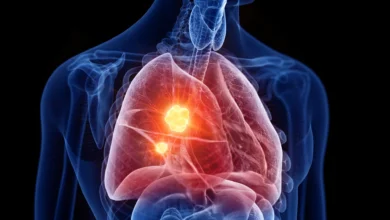
Oregon State University Researchers Develop Dual-Action Nanoparticle Therapy to Combat Lung Cancer and Muscle Wasting

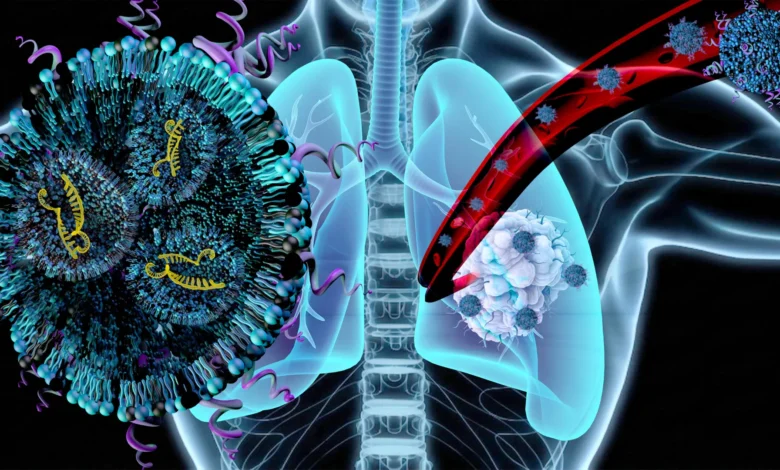
In a significant breakthrough for oncology and regenerative medicine, a team of researchers at Oregon State University (OSU) has engineered an experimental therapeutic platform capable of simultaneously targeting lung tumors and addressing the debilitating condition known as cancer cachexia. The study, recently published in the Journal of Controlled Release, introduces a novel delivery mechanism using lipid nanoparticles (LNPs) to transport mRNA directly to cancer sites, marking a potential shift in how clinicians might manage the complex interplay between tumor progression and systemic physical decline.
The research, spearheaded by Oleh Taratula and Yoon Tae Goo of the OSU College of Pharmacy, addresses a long-standing hurdle in mRNA-based therapies: the tendency for conventional delivery systems to sequester in the liver rather than the intended target. By leveraging the body’s own biological signaling, the team has achieved a 2.5-fold increase in tumor burden reduction in murine models, offering a beacon of hope for patients facing the dual diagnosis of lung malignancy and rapid muscle atrophy.
The Scientific Mechanism: Harnessing Vitronectin for Targeted Delivery
At the core of this development is the strategic use of lipid nanoparticles—microscopic vessels measuring between one and 100 billionths of a meter. While LNPs have gained global prominence due to their role in mRNA COVID-19 vaccines, their application in oncology has been historically hampered by "off-target" accumulation. When injected systemically, traditional LNPs are often cleared by the liver, rendering them ineffective against peripheral tumors in the lungs.
The OSU team circumvented this limitation by exploiting the interaction between LNPs and a protein found in human blood serum called vitronectin. As the LNPs circulate, they naturally bind to vitronectin. This protein-lipid complex then acts as a homing beacon, gravitating toward integrin receptors—proteins that are significantly overexpressed on the surface of lung tumor cells. Integrins act as the "connective tissue" of cellular communication, bridging the internal skeleton of a cell to its external environment. By mimicking the body’s own signals, the nanoparticles bypass healthy tissue and deposit their therapeutic genetic cargo directly into the tumor.
The Dual Threat: Cancer Cachexia and the Role of Follistatin
Lung cancer remains one of the most formidable challenges in modern medicine. According to the American Cancer Society, approximately 230,000 new cases of lung cancer are diagnosed annually in the United States, with a mortality rate that remains alarmingly high at roughly 125,000 deaths per year. For many patients, the threat is not solely the tumor itself, but the secondary development of cachexia.
Cachexia is a complex metabolic syndrome characterized by severe weight loss, muscle atrophy, and a significant decrease in quality of life. Unlike typical weight loss resulting from decreased caloric intake, cachexia is a pathological process that persists even when a patient is adequately nourished. It affects up to 30% of cancer patients and is directly responsible for a high percentage of cancer-related mortality.
The OSU research team addressed this through the delivery of follistatin mRNA. Follistatin is a naturally occurring protein that serves two critical roles: it functions as a tumor suppressor and a potent promoter of muscle growth. By instructing the lung tumor cells to produce follistatin, the treatment initiates a two-pronged attack: the protein inhibits the proliferation of the cancer cells while simultaneously signaling the body to counteract the muscle-wasting effects of cachexia. This holistic approach represents a departure from traditional treatments that often focus solely on the tumor, frequently ignoring the systemic physical deterioration of the patient.
Chronology and Development of the Research
The path to this discovery was iterative, involving years of collaborative research across multiple disciplines. The project, which received support from the National Cancer Institute, the Eunice Kennedy Shriver National Institute of Child Health and Human Development, and the National Research Foundation of Korea, began with the optimization of the lipid nanoparticle formulation.
- Initial Formulation (Years 1-2): Researchers focused on identifying the specific lipid ratios required to ensure stability in the bloodstream and effective encapsulation of the mRNA payload.
- Targeting Validation (Year 3): The team identified the role of vitronectin in directing the particles to integrin-positive lung cells, a discovery that allowed them to fine-tune the delivery mechanism.
- Preclinical Testing (Years 4-5): The current findings stem from rigorous testing in mouse models. The data showed that not only did the particles reach the lung tissue with high efficiency, but the localized production of follistatin led to a statistically significant decrease in tumor volume compared to control groups treated with conventional, non-targeted LNPs.
- Current Status: The research has reached the end of the preclinical validation stage, with the current focus shifting toward safety profiling and potential scaling for future clinical trials.
Implications for Clinical Oncology
The implications of this research are substantial. If successfully translated to human trials, this treatment could provide a "one-stop" therapeutic intervention. Currently, patients suffering from lung cancer cachexia often require a regimen of chemotherapy, radiation, and nutritional support, with limited options to reverse the muscle wasting that often leads to treatment discontinuation and increased vulnerability to infections.
"Systemic delivery of mRNA therapeutics to lung cancer tumors has been a significant challenge in our field," noted Oleh Taratula. "Compared to conventional LNPs, our approach achieved an approximately 2.5-fold greater reduction in tumor burden." This efficiency suggests that lower doses of the therapeutic agent might be required, potentially reducing the systemic toxicity often associated with aggressive cancer treatments.
However, experts emphasize that the transition from animal models to human patients is a complex process. The researchers acknowledge that while the results are promising, additional studies are mandatory to ensure that the mRNA-induced follistatin production does not trigger unintended biological feedback loops or off-target effects in human subjects.
A Collaborative Approach to Innovation
The success of this study was facilitated by a diverse group of researchers from the OSU College of Pharmacy, including Vladislav Grigoriev, Tetiana Korzun, Ammar Salem, Kongbrailatpam Shitaljit Sharma, Prem Singh, Chrissa Kioussi, and Olena Taratula. Furthermore, the collaboration included industry expertise from Daniel Marks of Endevica Bio, a company specializing in peptide therapies, highlighting the importance of public-private partnerships in moving laboratory breakthroughs toward clinical application.
As the scientific community reviews these findings, the focus will likely remain on the longevity and safety of the mRNA expression. Because mRNA is inherently temporary, clinicians are optimistic that the treatment can be dosed and controlled, avoiding the permanent genetic alterations associated with other forms of gene therapy.
The Path Forward
Looking toward the future, the research team is evaluating the next steps for regulatory approval and funding for Phase I clinical trials. This will involve stringent safety assessments to monitor how the human immune system interacts with the lipid nanoparticle carriers and to ensure that the localized production of follistatin remains within therapeutic, non-toxic limits.
While the medical community remains cautious, the OSU discovery provides a clear roadmap for addressing the intersection of tumor biology and systemic metabolic health. If the promise of this mRNA-based LNP technology holds, it could fundamentally alter the prognosis for lung cancer patients, shifting the standard of care from merely managing symptoms to actively reversing the debilitating physical consequences of the disease. For now, the scientific community awaits the subsequent phases of this study with significant interest, as it represents a sophisticated leap in the utilization of nanomedicine to solve one of the most stubborn problems in oncology.
Related posts: