Gorilla Habitats and Pristine Forest at Risk as the Democratic Republic of the Congo Opens Over Half Its Territory to Oil and Gas Drilling

The Democratic Republic of the Congo (DRC) is currently positioned at a precarious environmental crossroads as its government moves forward with a massive expansion of fossil fuel exploration. According to a landmark report titled Forests to Frontlines: Oil Expansion Threats in the DRC, released by the research organization Earth Insight, the government has initiated an auctioning process for 52 new oil and gas blocks. This latest round, combined with three blocks previously awarded, places more than 53 percent of the nation’s landmass—including some of the most ecologically vital forests on the planet—under the shadow of industrial extraction.
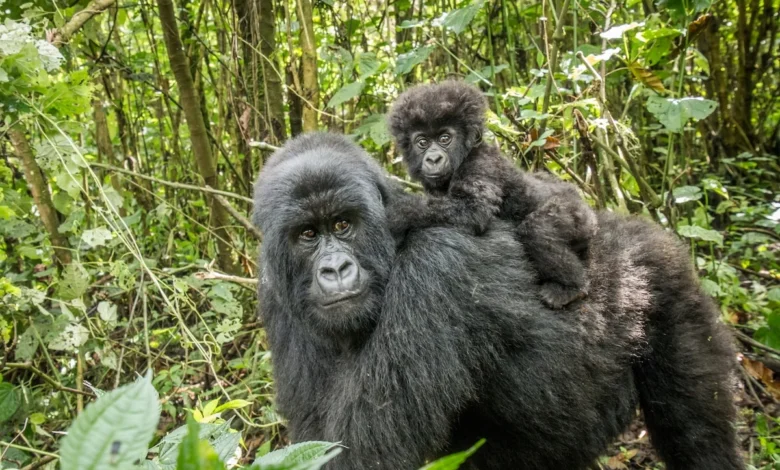
This development threatens approximately 306 million acres of intact tropical forest, jeopardizing the survival of iconic endangered species, including the eastern lowland gorilla and the bonobo. As global leaders struggle to meet the goals of the Paris Agreement and curb deforestation, the decision by the DRC government to prioritize hydrocarbon extraction over conservation has drawn sharp criticism from environmental scientists, human rights organizations, and local community leaders.
A Chronology of Escalating Extraction
The current crisis did not emerge in a vacuum. To understand the gravity of the situation, it is necessary to examine the timeline of the DRC’s shift toward industrial exploitation of its protected landscapes.
In 2022, the government of the DRC sparked international controversy by launching an auction for 30 oil and gas blocks. At the time, global conservation groups warned that many of these blocks overlapped with critical protected areas, including the Virunga National Park—Africa’s oldest national park and a UNESCO World Heritage site—and the massive Cuvette Centrale peatlands.
Despite sustained international pushback, the government proceeded with the 2022 auction. The 2025 initiative represents a dramatic scaling up of these ambitions. By expanding the auction to 52 additional blocks, the government is not merely continuing its previous policy but significantly broadening the geographic scope of potential environmental degradation. The inclusion of the Kivu-Kinshasa Green Corridor—a project ostensibly designed to facilitate ecological connectivity and sustainable development—within these oil concessions has highlighted a profound incoherence in national policy. Approximately 72 percent of this corridor now overlaps with proposed oil blocks, effectively neutralizing its utility as a climate mitigation strategy.
The Ecological Significance of the Congo Basin
The Congo Basin is frequently referred to as one of the "lungs of the Earth," second only to the Amazon in terms of its role in global carbon sequestration and biodiversity support. The region is home to the Cuvette Centrale, the world’s largest tropical peatland complex. These peatlands act as a colossal carbon sink, storing an estimated 30 gigatons of carbon—roughly equivalent to three years of total global fossil fuel emissions.
When these peatlands are disturbed through road construction, seismic surveying, or drilling infrastructure, the stored carbon is at risk of being released into the atmosphere as methane or carbon dioxide. This would not only accelerate the rate of global warming but would also irreversibly damage the delicate hydrologic cycles that sustain the region’s rivers and forests.
Beyond carbon, the biodiversity metrics are staggering. The areas slated for auction encompass 20.5 million acres of officially protected areas and 21.3 million acres of designated "Key Biodiversity Areas." These regions provide critical habitat for forest elephants, diverse bird populations, and thousands of endemic plant species. The fragmentation of these ecosystems via industrial roads and pipelines creates "edge effects," which increase the vulnerability of wildlife to poaching, disease, and climate-induced habitat shifts.

Human Rights and the Socio-Economic Cost
The implications of the auction extend far beyond the biological realm. The regions targeted for exploration are home to an estimated 39 million people. Many of these inhabitants belong to Indigenous communities whose cultural identity, spiritual heritage, and daily survival are inextricably linked to the integrity of the forest and river systems.
Pascal Mirindi, a campaign coordinator for Notre Terre Sans Pétrole (Our Land Without Oil), has been a vocal critic of the government’s trajectory. "Imagine: 39 million Congolese people and 64 percent of our forests could be directly affected by the awarding of these oil blocks," Mirindi noted in a recent statement. "The government promotes the Kivu-Kinshasa ecological corridor while simultaneously selling off the land for extraction. Where is the logic? Where is the coherence? We are reminding our leaders that the Congolese people are the primary sovereign."
For these communities, the promise of "sustainable development" via oil revenue is viewed with skepticism. History in the Niger Delta and other oil-rich African regions has shown that fossil fuel extraction often leads to localized environmental degradation, pollution of water sources, and the marginalization of local governance structures, with few economic benefits reaching the rural poor.
Analysis of International Commitments
The DRC’s push for oil extraction sits in direct tension with its international climate commitments. As a signatory to the Convention on Biological Diversity and the Paris Agreement, the nation has historically received financial support from the international community intended to bolster forest conservation.
The Forests to Frontlines report argues that the current licensing round undermines the credibility of these commitments. If the government proceeds with the exploration of the 52 blocks, it risks alienating the international partners and donor nations that have invested billions into the preservation of the Congo Basin. The report explicitly calls for the immediate cancellation of the 2025 licensing round and an end to all future hydrocarbon expansion within the country’s sensitive ecological zones.
Furthermore, there is a clear demand for greater transparency. The current process lacks the necessary oversight from civil society, and the report emphasizes that meaningful participation by local communities in environmental decision-making is not currently being facilitated. Without a framework that ensures free, prior, and informed consent (FPIC) from Indigenous and local populations, any industrial development in these areas is likely to exacerbate social tensions and lead to human rights violations.
The Path Forward: Conservation vs. Extraction
The coalition behind the report—which includes the DRC-based organization CORAP (Coalition des Organisations de la Société Civile pour le Suivi des Reformes et de Action Publique) and the Rainforest Foundation UK—is advocating for a fundamental pivot in the DRC’s economic model. They argue that the country’s long-term economic resilience depends on preserving the ecosystem services that the forest provides, such as water filtration, climate regulation, and non-timber forest products that support the local economy.
The international response to the DRC’s oil ambitions will be a test case for global climate diplomacy. If the global community remains silent, it signals a tolerance for the erosion of some of the world’s last remaining wildernesses. Conversely, if donors and international institutions leverage their financial and diplomatic influence, there remains a window to steer the DRC toward a model of development that prioritizes its status as a global climate anchor rather than a site of fossil fuel exploitation.
As Anna Bebbington, a research manager at Earth Insight, stated, the development of oil and gas in these fragile ecosystems would have devastating, long-term impacts on global biodiversity and the fight against climate change. The data is clear: the cost of exploration—measured in carbon emissions, species loss, and the displacement of millions—far outweighs the potential revenue from oil. The coming months will be critical in determining whether the DRC will protect its natural heritage for future generations or choose a path that, while potentially lucrative for a few, may lead to the permanent degradation of the Congo Basin.