The United States Space Force is currently evaluating the strategic necessity of expanding its domestic launch infrastructure as the cadence of orbital missions accelerates at an unprecedented rate. While officials acknowledge that a third major launch site is becoming an operational imperative to ensure national security and commercial dominance, the Department of Defense has yet to commit to a formal timeline or a specific procurement model. The deliberation centers on whether the military should develop a new federal installation, partner with state-run facilities, or leverage private-sector infrastructure, such as emerging commercial spaceports.
Lieutenant General DeAnna M. Garrant, a key voice within the Space Force’s infrastructure planning division, has emphasized that any movement toward a new base will require a robust, multi-layered collaboration with local and state governments. Currently, the Space Force maintains a cautious stance, stating that while all avenues are being explored, no definitive roadmap has been finalized.
The Scaling Challenge: From 175 to 700 Launches
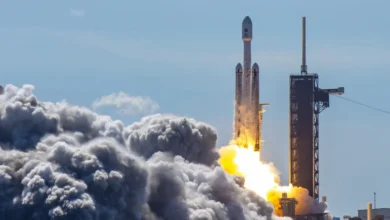
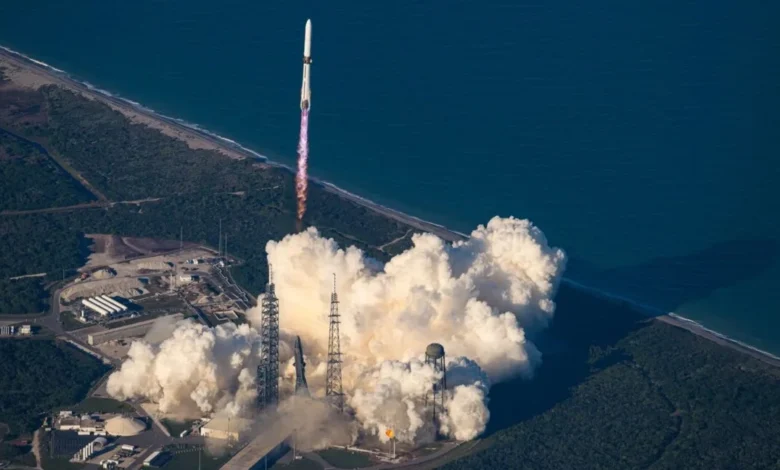
The urgency behind this expansion is driven by staggering growth projections in the aerospace sector. In the previous calendar year, the United States saw 175 orbital launch attempts, primarily concentrated at two major hubs: Cape Canaveral Space Force Station and Kennedy Space Center in Florida, and Vandenberg Space Force Base in California. While these sites have historically handled the bulk of American space activity, they are approaching their maximum throughput capacity.
Space Force modeling suggests that by 2036, the national launch ecosystem will need to support approximately 700 launches annually to accommodate the rapid expansion of satellite constellations, deep-space exploration initiatives, and national security payloads. This four-fold increase in demand presents a significant logistical bottleneck. Cape Canaveral and Vandenberg occupy limited geographic footprints, and the current frequency of launches is already straining the range safety infrastructure, personnel availability, and environmental monitoring capabilities at both sites.
Geographic Resiliency and National Security
Beyond the sheer volume of traffic, the Space Force is increasingly concerned with "geographic resiliency." Currently, the vast majority of U.S. national security assets are funneled through just two primary nodes. This concentration creates a critical single-point-of-failure risk. A natural disaster, such as a major hurricane impacting the Florida coast, or a kinetic military strike on a launch facility, could theoretically neutralize the U.S. ability to place satellites into orbit for an extended period.
A third, geographically distinct launch site would mitigate these risks by providing an alternative access point to space. Diversifying the physical locations of launch operations ensures that the military can maintain mission assurance even if one or both of the primary ranges are rendered non-operational. This strategic redundancy is considered a top priority by military planners who view space dominance as the defining theater of 21st-century warfare.
Current Landscape of U.S. Spaceports
The United States is not starting from a blank slate; it currently possesses a patchwork of launch capabilities that inform the current debate. NASA’s Wallops Flight Facility in Virginia serves as a vital, albeit limited, asset. Historically used for suborbital research and small-to-medium-class orbital launches, Wallops provides a template for federal-local integration. Similarly, the Pacific Spaceport Complex in Alaska, owned and operated by the state, has demonstrated the viability of non-federal launch infrastructure, particularly for polar orbit missions.
However, these existing facilities are optimized for specific mission profiles and do not possess the heavy-lift capacity or the integrated range safety systems required for the massive increase in heavy-lift launches projected for the next decade. The question remains whether to upgrade these existing facilities or to construct a greenfield site capable of supporting next-generation super-heavy launch vehicles.
The Rise of Private-Public Partnerships
A significant pivot in the current discourse involves the potential for the Space Force to lease land or infrastructure from commercial entities. This approach represents a departure from traditional government-owned, government-operated (GOGO) models. Recent reports indicate that private companies, including SpaceX, are exploring massive, multi-billion-dollar investments in new, private spaceports. Specifically, SpaceX’s interest in southern Louisiana as a potential site for a massive new facility has sparked speculation regarding how the military might interact with such entities.
When asked whether the Space Force would consider a "lease-to-use" model for a private site, Garrant noted that no options have been dismissed. The decision matrix currently includes four primary paths:
- Federal Installation: Constructing a new, military-controlled base from the ground up, ensuring total command and control.
- State-Land Utilization: Expanding current state-owned spaceports, which would lower the initial capital expenditure for the military.
- Public-Private Partnerships (P3): Engaging in long-term contracts where the military provides funding or regulatory stability in exchange for dedicated launch capacity.
- Leveraging Commercial Sites: Simply becoming a customer at a private spaceport, treating the military’s launch needs as a commercial transaction.
Each of these paths presents distinct advantages and drawbacks. A federal installation offers the highest level of security and mission control but carries a massive upfront cost and long lead times. Conversely, leveraging private infrastructure allows for faster implementation but introduces risks regarding commercial reliability and potential conflicts of interest between private profit-seeking and national security requirements.
Economic and Logistical Implications
The selection of a new site will have profound economic consequences for the host region. A project of this magnitude brings significant job creation, infrastructure development, and an influx of aerospace engineering talent. Consequently, state governments across the U.S. are already lobbying for consideration, pitching their respective coastlines as the ideal location for a third major range.
From a logistics perspective, the selection criteria will likely prioritize proximity to existing logistics chains, favorable weather patterns, and the ability to integrate into the existing National Airspace System without causing excessive disruption to commercial aviation. Furthermore, the site must be capable of handling the high-decibel acoustic environment and hazardous propellant storage that define modern rocketry.
Analytical Outlook: The Path Forward
The delay in finalizing a plan reflects the complexity of balancing immediate launch demand with long-term strategic stability. The Space Force is currently conducting an exhaustive analysis of the trade-offs between speed, cost, and security.
Experts in aerospace policy suggest that the most likely outcome will be a hybrid approach. Rather than choosing one model, the Space Force may develop a "networked" launch strategy where it maintains core federal sites for high-classification, ultra-sensitive national security payloads, while aggressively offloading routine or secondary missions to a combination of expanded state-run facilities and private, commercially operated ports.
This transition toward a more decentralized launch architecture mirrors the broader "New Space" movement, which emphasizes agility and private-sector innovation. By diversifying its launch portfolio, the Space Force not only ensures the resilience of its orbital infrastructure but also fosters a competitive domestic market, which could lower the overall cost of access to space for the taxpayer.
As the 2036 target approaches, the pressure to break ground on a third site will intensify. The coming fiscal years will be critical, as the Department of Defense must secure the necessary congressional appropriations and environmental clearances to begin the next phase of its infrastructure evolution. For now, the mission remains clear: to ensure that the United States retains an undisputed edge in the high-stakes, rapidly expanding domain of orbital spaceflight. The path to achieving this, however, remains a complex tapestry of public policy, private-sector ambition, and the harsh realities of global security.