Ancient star collisions could explain mysterious Little Red Dots and ‘impossible’ black holes

The Problem of Premature Supermassive Black Holes
The standard model of galactic evolution has faced a significant challenge since the James Webb Space Telescope (JWST) began returning data in 2022. Astronomers have identified supermassive black holes—objects containing millions or billions of times the mass of our sun—existing in galaxies less than 1 billion years after the Big Bang. Under current theories of accretion, a black hole requires significantly more time to "feed" on surrounding gas and merge with other black holes to achieve such colossal proportions.
The existence of these behemoths in the infancy of the universe suggests that they did not start as small, stellar-mass seeds. Instead, they must have originated from "heavy seeds"—intermediate-mass black holes (IMBHs) ranging from 100 to 100,000 solar masses. However, no single star in the modern, mature universe has enough mass to collapse into an IMBH directly. This has led researchers to look toward the extreme conditions of the early universe to find the missing link in black hole formation.
Modeling Chaos: The Mechanism of Stellar Mergers
In a study published in the Astrophysical Journal on October 26, the UCLA research team utilized advanced simulations to recreate the dynamics of early stellar clusters. Unlike the stable, organized structure of galaxies today, the early universe was characterized by dense, unrefined, and highly chaotic regions.
The simulations revealed that in these high-density environments, stars were packed so tightly that physical collisions were not just possible, but frequent. While high-speed collisions in the modern universe tend to be destructive, the slower relative velocities in these early, dense clusters allowed for a process of repeated, runaway mergers.
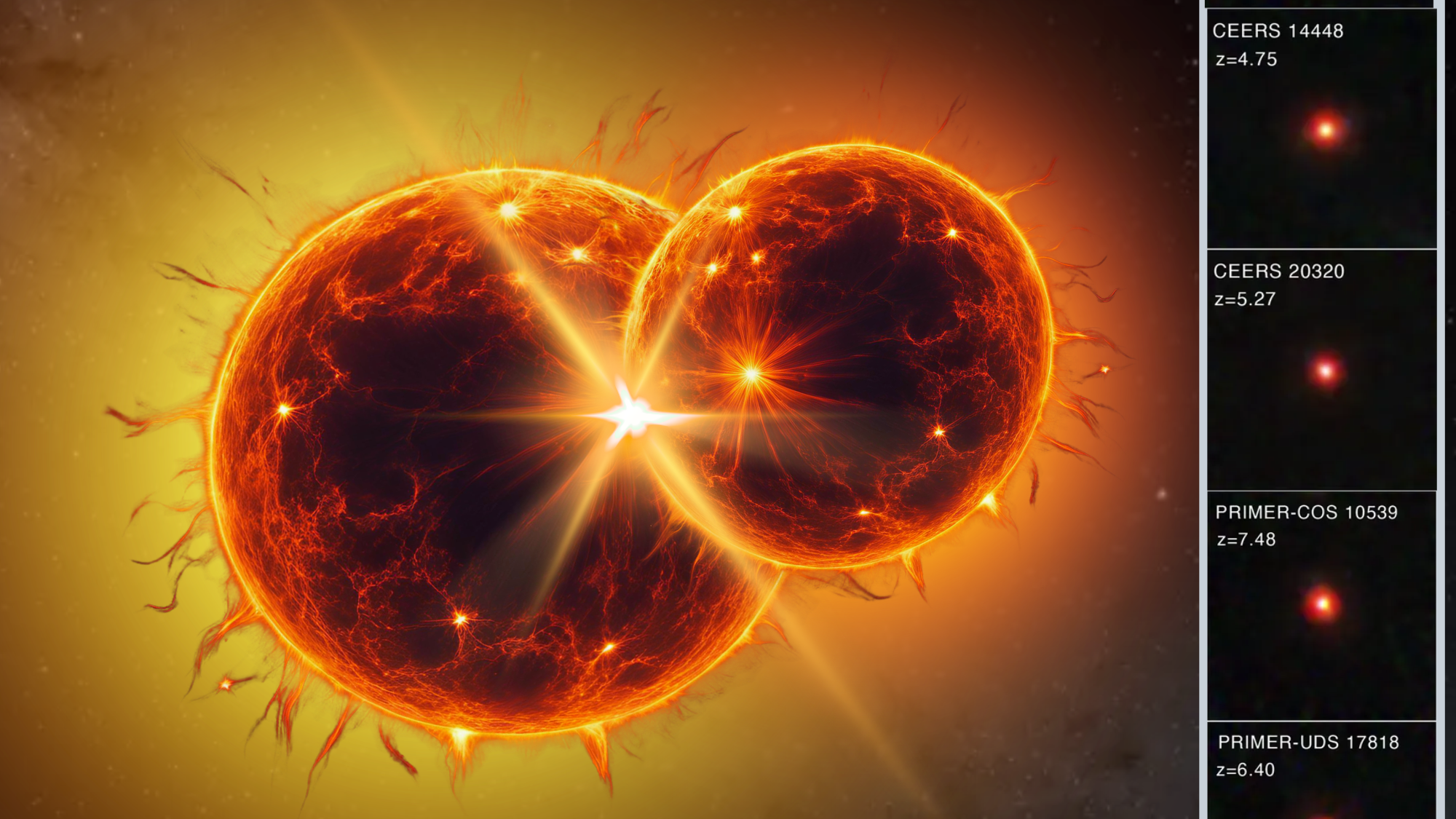
When stars collided at lower speeds, they did not shatter; instead, they coalesced. Over time, these stellar mergers could create a single, gargantuan star with a mass equivalent to that of an entire star cluster. Claire Williams, a researcher at UCLA and a lead member of the team, noted that when such an ultra-massive star reached the end of its lifecycle, it would have no physical path other than gravitational collapse, effectively birthing an intermediate-mass black hole. This "heavy seed" provides the necessary head start for the black hole to grow into a supermassive titan within the limited time frame allowed by the early universe’s chronology.
Little Red Dots: The Cosmic Elephant
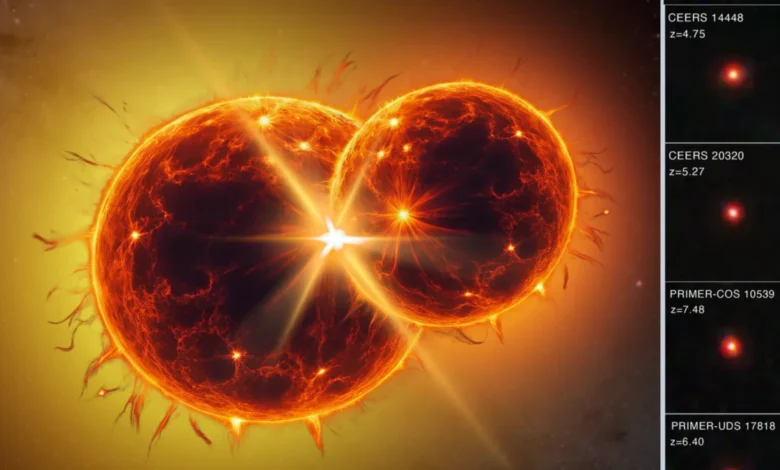
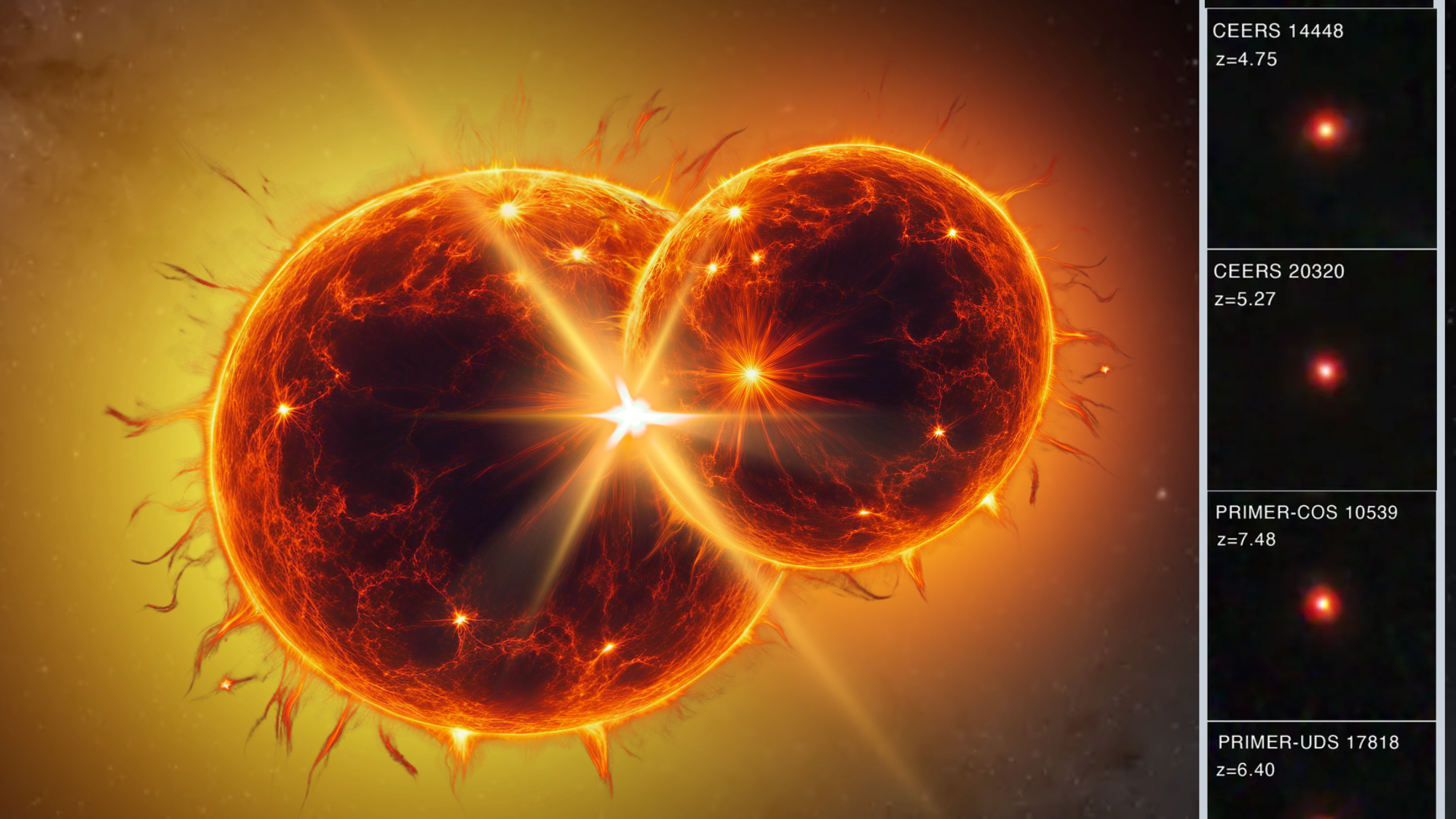
Concurrent with the mystery of supermassive black holes, the JWST has been capturing images of "Little Red Dots"—extremely compact, red-tinted objects that appear to be prevalent in the early universe but curiously absent by the time the cosmos reached the 2-billion-year mark.
The scientific community has struggled to classify these objects, often comparing the effort to the parable of blind men describing an elephant. Some argue they are obscured active galactic nuclei, while others suggest they are regions of intense, concentrated star formation. The new UCLA research offers a unifying theory: Little Red Dots are the very clusters where these stellar mergers are occurring.
"Our research connects several of those perspectives together and may help us see more of the elephant," said Smadar Naoz, a researcher at UCLA involved in the project. The red color, according to the team’s analysis, is a signature of the intense, localized star formation and the subsequent dust production associated with these dense, colliding environments.
Chronology of the Early Universe and the Disappearance of the Dots
To understand why these objects vanished, one must look at the timeline of cosmic development.
- 0–500 Million Years Post-Big Bang: The universe is a "wild west" of dense gas clouds and chaotic star clusters. Frequent stellar collisions occur, creating massive stars that eventually collapse into IMBH seeds.
- 500 Million – 1 Billion Years: These IMBH seeds begin to accumulate matter, rapidly growing into the supermassive black holes observed by JWST.
- 1 Billion – 2 Billion Years: As the universe expands and cools, the density of these clusters drops. The "chaotic" conditions required to sustain the merger process dissipate.
- 2 Billion+ Years: Galaxies reach a state of relative equilibrium. The extreme environments that birthed the Little Red Dots no longer exist, and the clusters have either evolved into stable galactic cores or been incorporated into larger galactic structures.
The disappearance of the Little Red Dots is therefore a natural consequence of the universe "growing up." As gravity smoothed out the distribution of matter and the initial frenzy of star formation subsided, the conditions necessary to produce these unique, short-lived objects were lost to history.
Supporting Data and Astrophysical Implications
The significance of this study lies in its ability to reconcile two distinct observational puzzles with a single physical mechanism. By providing a pathway to intermediate-mass black holes, the researchers address a major hurdle in black hole evolution. Furthermore, the simulation results align with the observed luminosity and spectral data of Little Red Dots, which have consistently challenged previous models.
Data from the JWST has shown that these red objects are not only small but incredibly dense. Traditional stellar evolution models cannot account for the amount of radiation or mass concentration seen in these dots. By introducing the variable of runaway stellar collisions, the UCLA model provides a robust framework that accounts for the mass distribution without requiring "exotic" physics that deviate from standard general relativity.
Broader Impact on Cosmology
The implications of this research extend beyond black holes and into the broader study of galaxy formation. If supermassive black holes were formed in these dense, early-universe clusters, it suggests that black holes may have played a more active role in "sculpting" the galaxies that formed around them than previously thought.
The environment that gives birth to the black hole—the dense cluster—also provides a ready supply of gas and stars for the black hole to consume in its infancy. This creates a feedback loop where the black hole, the cluster, and the surrounding galaxy evolve in tandem.

As astronomers continue to analyze the deep-field imagery provided by the JWST, the "Little Red Dots" remain a focal point for understanding the transition from the chaotic early universe to the structured cosmos we occupy today. The ability to simulate these environments with such detail is a testament to the progress in computational astrophysics, though researchers acknowledge that this is only the beginning. Further observations will be required to confirm the presence of these intermediate-mass seeds within the remnant hearts of older galaxies, which would serve as the "smoking gun" for this theory of runaway stellar mergers.
For now, the work provides a compelling narrative of a universe that started with a period of violent, high-speed interaction, setting the stage for the massive gravitational titans that now anchor the centers of galaxies across the observable universe. The research serves as a reminder that the stillness of the modern night sky belies a past defined by collision, collapse, and rapid, transformative growth.