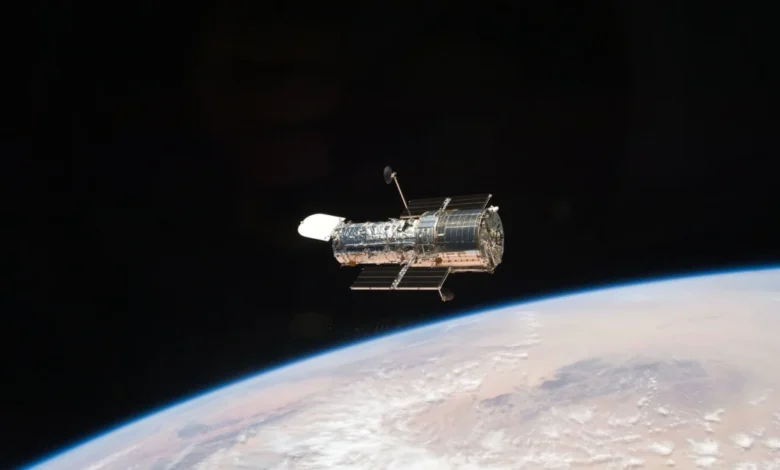
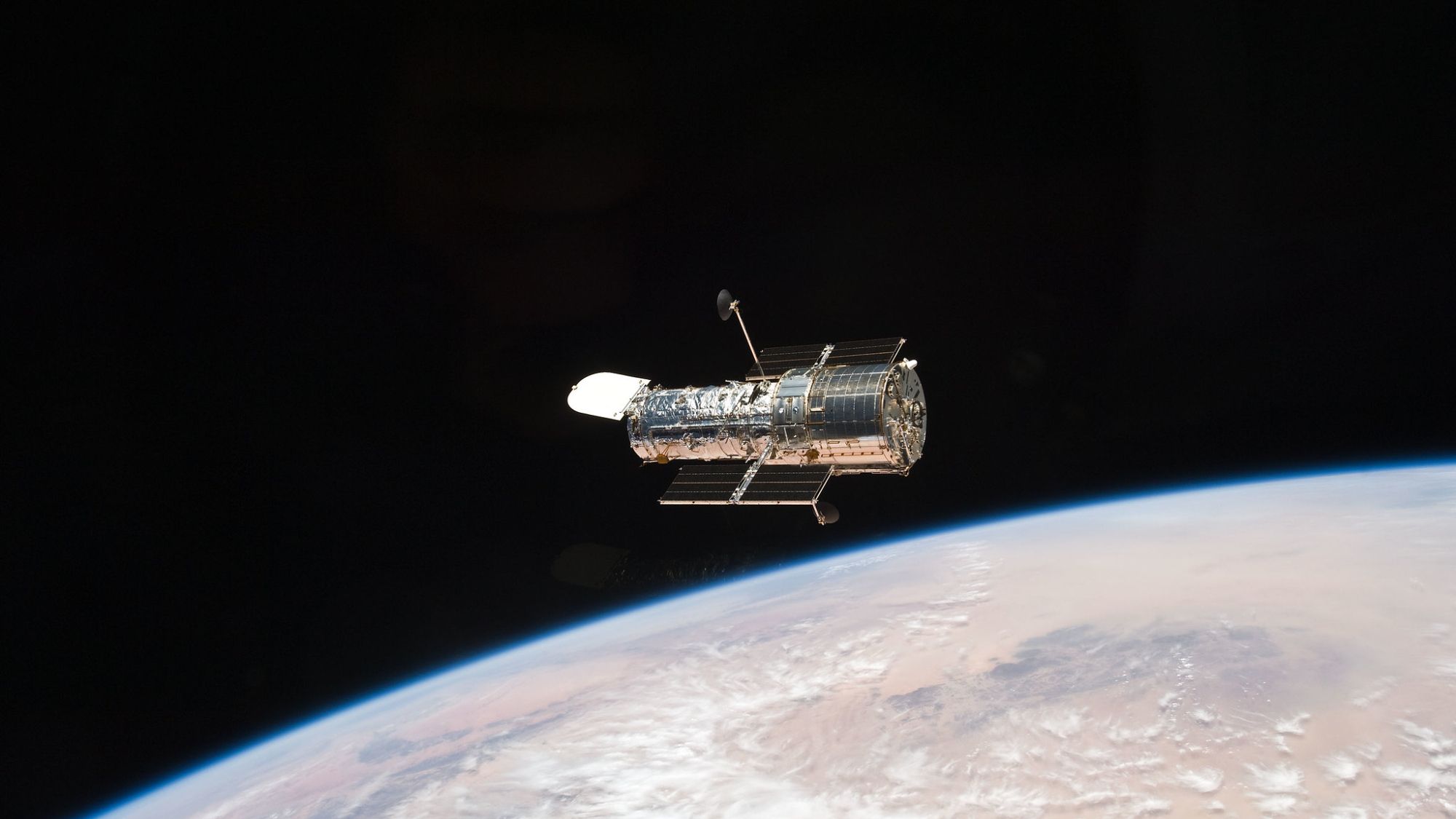
The Hubble Space Telescope, a symbol of human ingenuity and a cornerstone of modern astrophysics, is facing a critical juncture in its operational life. NASA has officially signaled a renewed interest in securing the future of the observatory, issuing a formal request for information (RFI) on October 29 regarding in-space servicing capabilities. As the telescope continues its gradual descent toward Earth’s atmosphere—a process dictated by the relentless physics of orbital decay—the agency is exploring whether a commercial or robotic intervention could extend its mission beyond its currently projected 2033 or 2034 demise.
A Legacy of Scientific Dominance
Launched in April 1990 aboard the Space Shuttle Discovery, Hubble was designed to peer further into the cosmos than any instrument before it. Over more than three decades, the telescope has fundamentally altered our understanding of the universe. Its observations provided the first direct evidence that the expansion of the universe is accelerating, a discovery that garnered the 2011 Nobel Prize in Physics. Beyond cosmology, Hubble has captured high-resolution imagery of nebulae, tracked weather patterns on gas giants within our solar system, and peered back toward the "cosmic dawn," observing galaxies formed shortly after the Big Bang.
The telescope’s scientific output remains unparalleled. NASA data indicates that Hubble has contributed to at least 23,000 peer-reviewed scientific papers. Despite the presence of newer, more powerful instruments like the James Webb Space Telescope (JWST), Hubble remains in high demand. Recent agency reports highlight that the scientific community requests approximately seven times the amount of observing time available on the telescope each year, underscoring its continued relevance in an era of rapid technological advancement in space observation.
The Challenge of Orbital Decay
The primary threat to Hubble’s longevity is not hardware failure, but the environment in which it operates. Located in low Earth orbit (LEO) at an altitude of approximately 340 miles (540 kilometers), the telescope is subject to atmospheric drag. Although this region of space is vacuum-like, the presence of trace gases causes the satellite to lose velocity, resulting in a gradual drop in altitude.
During the Space Shuttle era, NASA astronauts visited Hubble five times between 1993 and 2009 to replace failing components, install new cameras, and manually boost the telescope’s orbit. However, with the retirement of the shuttle fleet in 2011, the capability to perform such delicate, human-led maintenance vanished. Without a "reboost" mission, Hubble is expected to reenter the Earth’s atmosphere by the mid-2030s, at which point it will burn up unless a controlled disposal or recovery mission is executed.
Shifting Policies and Commercial Interest
The conversation surrounding a rescue mission has evolved significantly over the last three years. In 2022, billionaire entrepreneur and private astronaut Jared Isaacman proposed a partnership involving SpaceX to utilize the Crew Dragon spacecraft for a Hubble-servicing mission. At the time, NASA leadership expressed concerns regarding the technical risks, noting that a docking maneuver with an aging, non-cooperative satellite could inadvertently damage the telescope’s delicate outer structure or its sensitive instrumentation.
However, the political and administrative landscape has shifted. As of late 2025, with Jared Isaacman serving as NASA Administrator, the agency’s stance has pivoted toward a more aggressive exploration of commercial solutions. In an official statement released on October 30, Administrator Isaacman emphasized that the immense scientific return provided by Hubble necessitates a comprehensive evaluation of every viable option to extend its operational life. The agency is now actively seeking industry input on how a robotic or commercial spacecraft could safely dock with the observatory to either raise its altitude or potentially upgrade its aging systems.
The Context of Recent Servicing Failures
The urgency behind the current RFI is underscored by the recent, high-profile attempt to save another iconic NASA instrument: the Neil Gehrels Swift Observatory. Earlier this year, NASA partnered with the private firm Katalyst Space Technologies on a $30 million mission designed to extend the life of the aging gamma-ray telescope. The mission was spurred by increased solar activity, which heated the upper atmosphere, causing it to expand and significantly increase the drag on satellites in LEO.
While the "LINK" spacecraft successfully reached orbit, control issues rendered the docking attempt impossible. Swift is currently undergoing reentry, a somber reminder of the technical hurdles inherent in autonomous rendezvous with legacy hardware. This failure serves as a cautionary tale for the Hubble project; it highlights that while the private sector is eager to innovate, the mechanical challenges of maneuvering around a high-value, non-cooperative asset are profound.
Strategic Implications for NASA
The RFI issued by NASA serves two distinct purposes. Primarily, it acts as a market survey to determine if the aerospace industry has matured enough to offer a low-cost, high-reliability solution for orbital maintenance. Secondly, it provides a contingency framework. The document explicitly outlines that if a servicing or reboost mission is deemed technically or financially unfeasible, the selected partner must be capable of facilitating a safe, controlled reentry of the telescope into the atmosphere, ensuring that no large, hazardous debris reaches populated areas.
If a mission were to be approved, technical experts suggest it would likely need to occur around 2032 to maximize the effectiveness of the orbital boost. This would provide enough time for the development and testing of a specialized docking mechanism—one that does not rely on the legacy docking interfaces designed for the Space Shuttle.
The Public and Scientific Value
The public’s emotional attachment to the Hubble Space Telescope cannot be overstated. Images such as the "Pillars of Creation" in the Eagle Nebula have become cultural touchstones, bridging the gap between complex astrophysics and public wonder. For the scientific community, Hubble provides a vital complement to the James Webb Space Telescope. While JWST operates primarily in the infrared spectrum, Hubble’s sensitivity to visible and ultraviolet light provides a unique data set that is critical for multi-wavelength astronomy.
The loss of Hubble would create a significant "blind spot" in our observational capabilities. Consequently, the push to keep it operational is not merely a matter of historical preservation, but a strategic necessity for the continuity of time-series data. As NASA evaluates the responses to its RFI, the global astronomical community waits to see if the ingenuity that defined the shuttle era can be replicated by the burgeoning commercial space sector.
Ultimately, the goal is to keep the "People’s Telescope" in the sky for as long as possible. If successful, such a mission would represent a milestone in space logistics, proving that humanity can not only launch grand observatories but maintain them indefinitely, turning LEO into a sustainable environment for long-term scientific discovery. For now, the future of Hubble remains in the hands of engineers, private contractors, and the difficult, unforgiving physics of the thermosphere.