Physics-based Learning for Imaging Planets: How AI Gradient Descent is Revolutionizing Exoplanetary Discovery with the James Webb Space Telescope

The quest to image exoplanets—distant worlds orbiting stars far beyond our solar system—has long been hampered by the extreme contrast between the blinding glare of host stars and the faint, flickering light of their orbiting companions. For years, astronomers have relied on coronagraphs and complex post-processing algorithms to suppress stellar light. However, a groundbreaking advancement in computational astrophysics, detailed in a study published in the journal Nature, has introduced a new paradigm. By leveraging the same mathematical engines that power modern artificial intelligence, researchers have developed a process called FLIP (Physics-based Learning for Imaging Planets) to push the James Webb Space Telescope’s (JWST) imaging capabilities to their theoretical limits.
The core of this innovation lies in the marriage of deep learning optimization techniques with precise physical modeling. While the world of artificial intelligence has made massive strides in training neural networks—often involving billions of parameters—via a mathematical technique known as gradient descent, this power has rarely been harnessed for high-contrast astronomical imaging. By optimizing the performance of gradient descent on high-end Graphics Processing Units (GPUs), researchers have found a way to calibrate the JWST’s NIRCam (Near-Infrared Camera) instrument with unprecedented precision, effectively "denoising" images to reveal planets that were previously buried in instrumental glare.
The Mechanism Behind FLIP: Precision Through Optimization
At the heart of the FLIP process is the integration of a physical model of the JWST’s optical hardware. The team behind the research, recognizing that the telescope’s performance varies based on subtle thermal shifts and mechanical vibrations, created a framework that treats the entire imaging system as a series of parameters—roughly one million of them—that can be tuned.
The optimization cycle begins with a simulated point spread function (PSF), which represents the ideal shape of a star’s light as captured by the telescope. Using gradient descent, the software iteratively adjusts these parameters to match the PSF to the data obtained from an actual star observation. Because this process is computationally intensive, the team utilized high-performance GPU architecture to reduce the processing time to approximately 30 minutes.
Once the initial model is established, the researchers perform a final fine-tuning step using the specific scientific image under investigation. This is a critical distinction from traditional post-processing; it accounts for the fact that the telescope’s optical configuration shifts slightly between observations. By dynamically adjusting for these environmental variables, the system can extract signal from noise with a level of fidelity that traditional static models cannot replicate.
Chronology of the Breakthrough
The development of FLIP represents a culmination of years of work in both optical engineering and computational science. The path to this discovery can be traced back to the initial deployment of the James Webb Space Telescope in late 2021. As the telescope began sending back data, astronomers immediately faced the challenge of "speckle noise"—the tiny, artificial artifacts created by the telescope’s complex optical train that can easily be mistaken for faint planets.
By 2023, preliminary experiments into using neural networks for image reconstruction began to emerge in the astrophysical community. However, these were largely black-box models that lacked the physical grounding required for rigorous scientific analysis. The transition to a "physics-based" approach—where the AI is constrained by the laws of optics—was the turning point. Throughout 2024, the team tested various iterations of the FLIP algorithm against archive data from the NIRCam instrument. The successful results published in early 2026 reflect the maturation of this technique, moving from experimental simulation to a robust tool capable of yielding peer-reviewed scientific findings.
Empirical Results and Performance Benchmarks
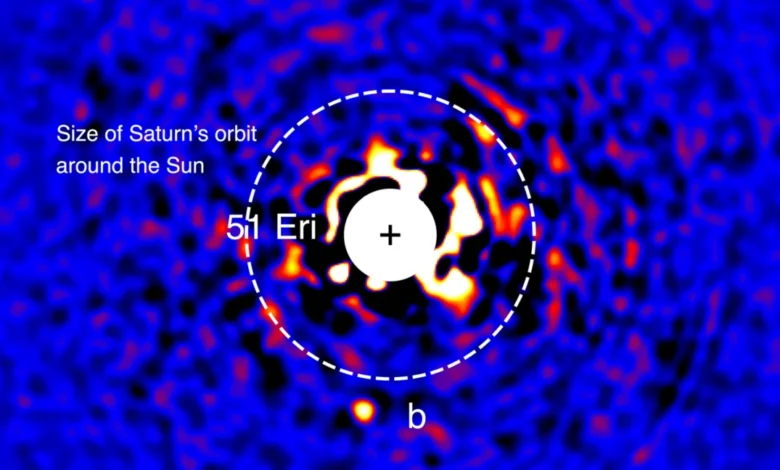
To validate the efficacy of FLIP, the researchers targeted a set of diverse celestial subjects. The test group included two stars known to harbor exoplanets—HIP 65426 and 51 Eridani—and a third, TYC 5899, which serves as a control because it lacks known planets but displays high variability between observations.
The results were statistically significant. By applying the FLIP algorithm to the Webb data, the team reported an improvement in the signal-to-noise ratio (SNR) by a factor of 1.5 to 2. This is not merely an incremental gain; in the realm of high-contrast imaging, such an increase represents the difference between a blurry detection and a clear, characterizable observation.
Perhaps most notably, at a specific infrared wavelength sensitive to the presence of carbon dioxide, the researchers successfully identified a planet that had remained hidden in the original raw data. In the case of TYC 5899, the sensitivity of the observations was boosted by a staggering factor of 15. These figures provide a clear benchmark for how algorithmic optimization can extend the operational life and scientific reach of current flagship observatories without requiring costly hardware upgrades.
Implications for Future Space Exploration
The success of FLIP has profound implications for the future of exoplanetary research. The current search for Earth-like planets is frequently limited by the sensitivity of current instruments. If an algorithm can lower the noise floor of existing hardware, it theoretically allows astronomers to detect older, colder, and lower-mass planets that have historically eluded detection.
Furthermore, the researchers have noted that FLIP acts as a diagnostic tool for the telescope itself. By highlighting where the algorithm makes the most dramatic changes to the model, scientists can gain insights into the physical state of the telescope’s hardware, such as potential mirror misalignments or thermal stresses on the instrument housing. This feedback loop could lead to better operational procedures for the JWST and future observatories, such as the upcoming Habitable Worlds Observatory.
Expert Perspectives and Scientific Context
While the astronomical community has long utilized data reduction pipelines, the shift toward deep learning-based optimization represents a fundamental change in philosophy. Dr. Elena Rossi, an astrophysicist specializing in high-contrast imaging who was not involved in the study, noted that the integration of hardware physics into the optimization loop is what makes this approach scientifically sound. "Traditionally, we feared that AI might introduce ‘hallucinations’ into the data," Rossi stated. "By forcing the algorithm to adhere to the physical model of the NIRCam, the researchers have bridged the gap between computational efficiency and observational integrity."
This sentiment is echoed by the research team, who emphasize that FLIP is designed to be transparent. Unlike many AI systems that function as "black boxes," the parameters in the FLIP model correspond to physical realities of the telescope. This ensures that the results are not just visually improved, but physically accurate.
Conclusion: A New Era of Computational Astronomy
The introduction of FLIP marks the beginning of an era where software optimization is as critical to astronomical discovery as the physical mirrors and lenses of a telescope. As the James Webb Space Telescope continues its mission to peer into the origins of the universe, the ability to squeeze more information out of every photon is paramount.
The successful implementation of gradient descent to solve the challenges of exoplanetary imaging provides a roadmap for future missions. By treating telescopes not as static machines, but as dynamic, optimizable systems, astronomers are effectively upgrading their view of the cosmos. As these computational methods become standard practice, the barrier between the blinding light of stars and the faint signature of other worlds continues to diminish, bringing us one step closer to answering the fundamental question of whether we are alone in the universe.
The study, published in Nature (DOI: 10.1038/s41586-026-11213-z), serves as a foundational text for this new methodology, providing the mathematical framework for other research teams to begin implementing similar pipelines across the global astronomical community. Whether through improved sensitivity or a deeper understanding of instrumental behavior, the legacy of FLIP will likely be felt for decades to come, defining the next generation of space-based observational science.