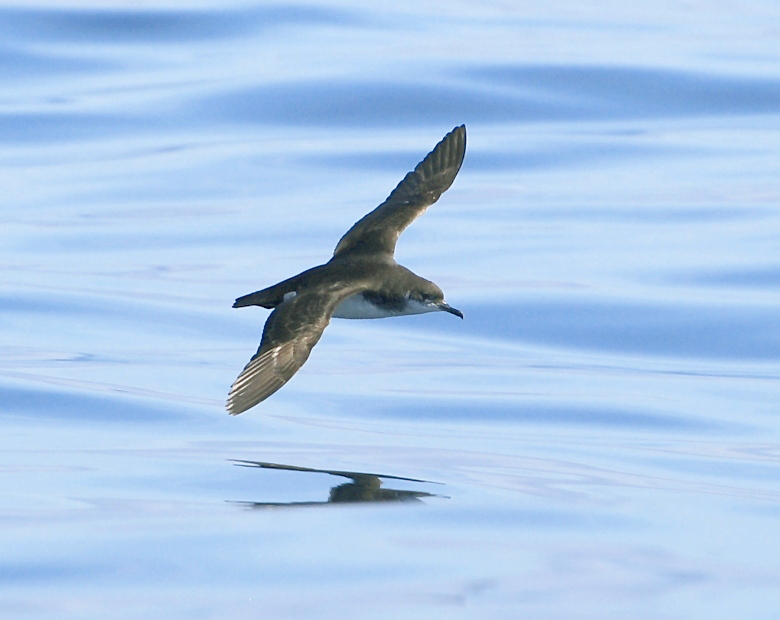
Flying across multiple time zones is a well-documented human struggle, characterized by a persistent mismatch between the body’s internal biological clock and the local environmental time. While travelers often reach for caffeine or melatonin to combat the resulting fatigue and disorientation, this phenomenon is not a uniquely human experience. Recent research published in the journal Science indicates that the Manx shearwater, a medium-sized seabird known for its extraordinary trans-Atlantic foraging journeys, suffers from a similar, albeit involuntary, form of jet lag that directly impacts its ability to navigate home.
The study, led by behavioral and sensory ecologist Patrick Lewin of the University of Oxford, provides compelling evidence that these birds rely on a solar-based internal compass that is inherently susceptible to time-shift errors. By analyzing two decades of movement data, researchers have successfully demonstrated that as these birds travel east or west across longitudes, their internal clocks fall out of sync with their surroundings, leading to measurable deviations in their flight paths.
The Mechanism of Avian Navigation
Manx shearwaters are renowned for their endurance. With a wingspan designed for long-distance gliding and a physical profile similar to a pigeon, these birds frequently nest in burrows on coastal islands, particularly around the United Kingdom and Ireland. During the breeding season, they embark on foraging trips that can span hundreds or even over 1,000 kilometers into the North Atlantic.
To return to their burrows, the birds employ a sophisticated, two-part navigational system. First, they rely on a "map sense"—a hypothesized ability to determine their location using environmental cues such as olfactory signals. Second, once their position is established, they utilize the Sun as a compass to maintain a consistent heading.
However, the Sun is a dynamic celestial marker. Because it moves across the sky throughout the day, a bird attempting to fly in a straight line must constantly adjust its heading relative to the solar position. To execute this correctly, the bird requires a precise internal clock. If the clock is slightly off, the bird’s perception of the Sun’s position relative to the time of day is skewed. This is where the "jet lag" effect manifests. As a bird moves across degrees of longitude, its internal clock—which is typically calibrated at dawn and dusk—begins to drift. For every degree of longitude covered, the bird’s internal timing can fall four minutes behind or ahead of local time, causing the bird to miscalculate the Sun’s position and, consequently, veer off its intended course.
Two Decades of Tracking Data
The discovery of this phenomenon was made possible by an extensive longitudinal study. In 2004, when GPS tracking technology first became sufficiently miniaturized to be fitted onto birds of the Manx shearwater’s size, researchers Tim Guilford and Chris Perrins began an ambitious data collection project. Over the following 20 years, the team successfully tracked 3,688 individual foraging trips undertaken by 1,045 birds.
This dataset allowed Lewin and his colleagues to isolate "homing" flights—defined as the purposeful, high-speed, and linear journeys the birds take when returning to their colonies. By correlating these flights with the time of the last sunrise observed by the birds, the researchers were able to calculate the expected degree of navigational error based on the distance traveled east or west.
The findings were striking: the birds exhibited consistent, predictable biases in their flight paths. When traveling east, the birds veered clockwise; when traveling west, they drifted anticlockwise. These deviations, which occurred even when the birds were out of sight of land, matched the theoretical predictions of a Sun-compass influenced by a desynchronized internal clock.
Analysis of Navigational Bias
The observed errors were relatively small—typically resulting in a deviation of roughly 15 minutes of time, which translated into an average course error of about seven degrees. While a seven-degree drift might seem minor over short distances, it represents a significant challenge for an animal navigating the vast, featureless expanse of the open ocean.
Despite these errors, the Manx shearwaters remained remarkably efficient. The researchers concluded that the birds likely possess a corrective mechanism. As they near their destination, they likely cross-reference their current position with familiar landmarks or secondary navigation signals, allowing them to adjust their course as needed. This suggests that birds operate with a redundant navigation system, balancing solar orientation with environmental mapping to minimize the cost of their internal clock discrepancies.
When the birds followed coastlines, the researchers observed a similar phenomenon: the shearwaters drifted slightly toward or away from the shore depending on their expected compass bias. This behavior mirrors that of homing pigeons, which have been observed to rely on familiar roads even when their internal clocks are experimentally shifted.
Broader Biological Implications
The implications of this study extend far beyond the migratory patterns of a single seabird species. The research highlights a fundamental constraint of biological time-keeping. Any organism that possesses an internal circadian clock and is capable of traveling across multiple time zones in a single day is theoretically susceptible to this form of navigational jet lag.
"The same jet lag effect could hit any organism with an internal clock that moves far enough east or west in a single day," says Lewin. "This is particularly relevant for migratory species or animals living in polar regions, where lines of longitude converge and even short distances result in significant time-zone shifts."

The study raises several pressing questions for the scientific community. For instance, while the research confirms that jet lag affects navigation, it does not yet clarify whether these birds experience other symptoms associated with jet lag, such as sleep deprivation, metabolic disruption, or altered foraging efficiency. Investigating these factors will be the next major step for the team, as they look to determine whether these physiological disruptions impact the birds’ overall reproductive success or survival rates.
Future Research and Human Parallels
The potential for applying these insights to other fields is significant. As engineers and scientists continue to develop bio-inspired autonomous navigation systems for drones and robotics, understanding the limitations and error-correction strategies of biological systems like the Manx shearwater is essential. If researchers can determine how these birds manage their navigational errors, it could lead to more robust, fault-tolerant navigation algorithms.
Furthermore, the study offers a unique perspective on the long-term health impacts of jet lag. In humans, chronic disruption of the circadian rhythm is linked to a host of health issues, including cardiovascular disease, metabolic disorders, and cognitive impairment. By studying animals that frequently experience these shifts as a natural consequence of their movement, scientists hope to identify biological mechanisms that might mitigate the negative effects of jet lag.
"In humans, if you do it a lot, in the long term it has really negative health impacts," Lewin noted. "So maybe we could take some inspiration from these animals that are constantly experiencing jet lag and see if there are ways that we can mitigate jet lag affecting humans."
As the scientific community continues to analyze the 20-year dataset, the Manx shearwater stands as a prime model for understanding the intersection of chronobiology and spatial navigation. This research not only sheds light on the hidden challenges faced by seabirds during their foraging missions but also underscores the universality of biological rhythms and the complexities involved in maintaining internal stability in a constantly shifting global environment. The study, published in the journal Science, serves as a testament to the power of long-term ecological monitoring in revealing the intricate, often invisible, mechanics of the natural world.