Blue Origin Expands New Glenn Rocket Capabilities with New GS3 Third Stage and Northstar Engine Development

Blue Origin, the aerospace company founded by Jeff Bezos, has officially announced a significant expansion of its heavy-lift launch vehicle, New Glenn, through the introduction of a new third stage known as the GS3. This strategic development is designed to enhance the rocket’s reach, allowing for direct deployment of satellite constellations into geostationary orbit (GEO) and providing a robust platform for heavy-lift science and exploration missions to the moon and deep space. The announcement, made on November 5, marks a pivotal shift in Blue Origin’s long-term strategy to compete in the increasingly crowded and lucrative market for cislunar and deep-space logistics.
The Evolution of the New Glenn Architecture
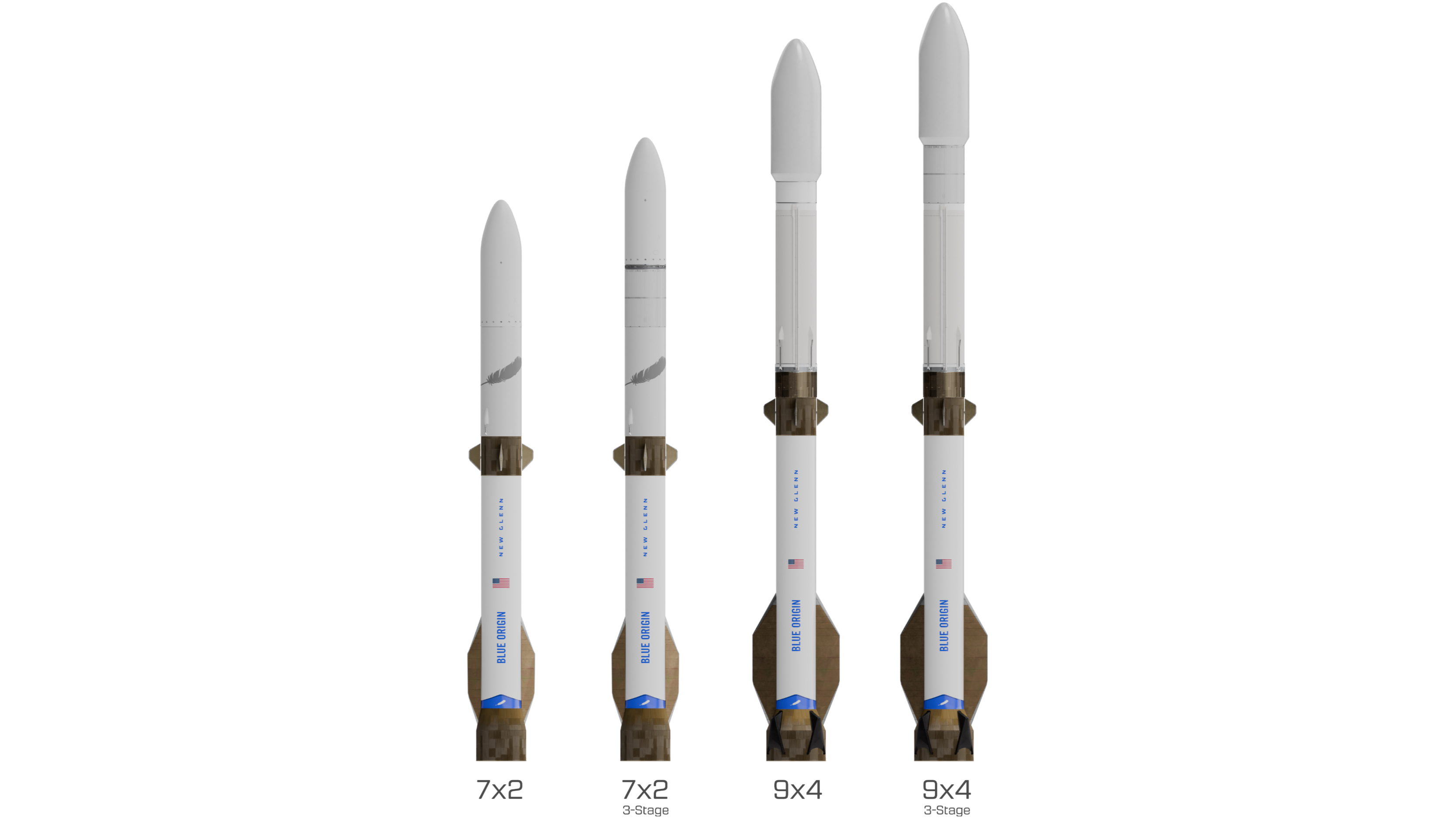
The New Glenn rocket, named after pioneering astronaut John Glenn, was originally conceived as a two-stage heavy-lift vehicle. In its current standard "7×2" configuration, the rocket stands approximately 322 feet (98 meters) tall. The first stage, which is designed for vertical landing and reuse, is powered by seven BE-4 engines burning a combination of liquid oxygen and liquefied natural gas (methane). The second stage utilizes two vacuum-optimized BE-3U engines. This current iteration is capable of delivering 14.3 tons (13 metric tons) to geostationary transfer orbit (GTO) and 50 tons (45 metric tons) to low Earth orbit (LEO).
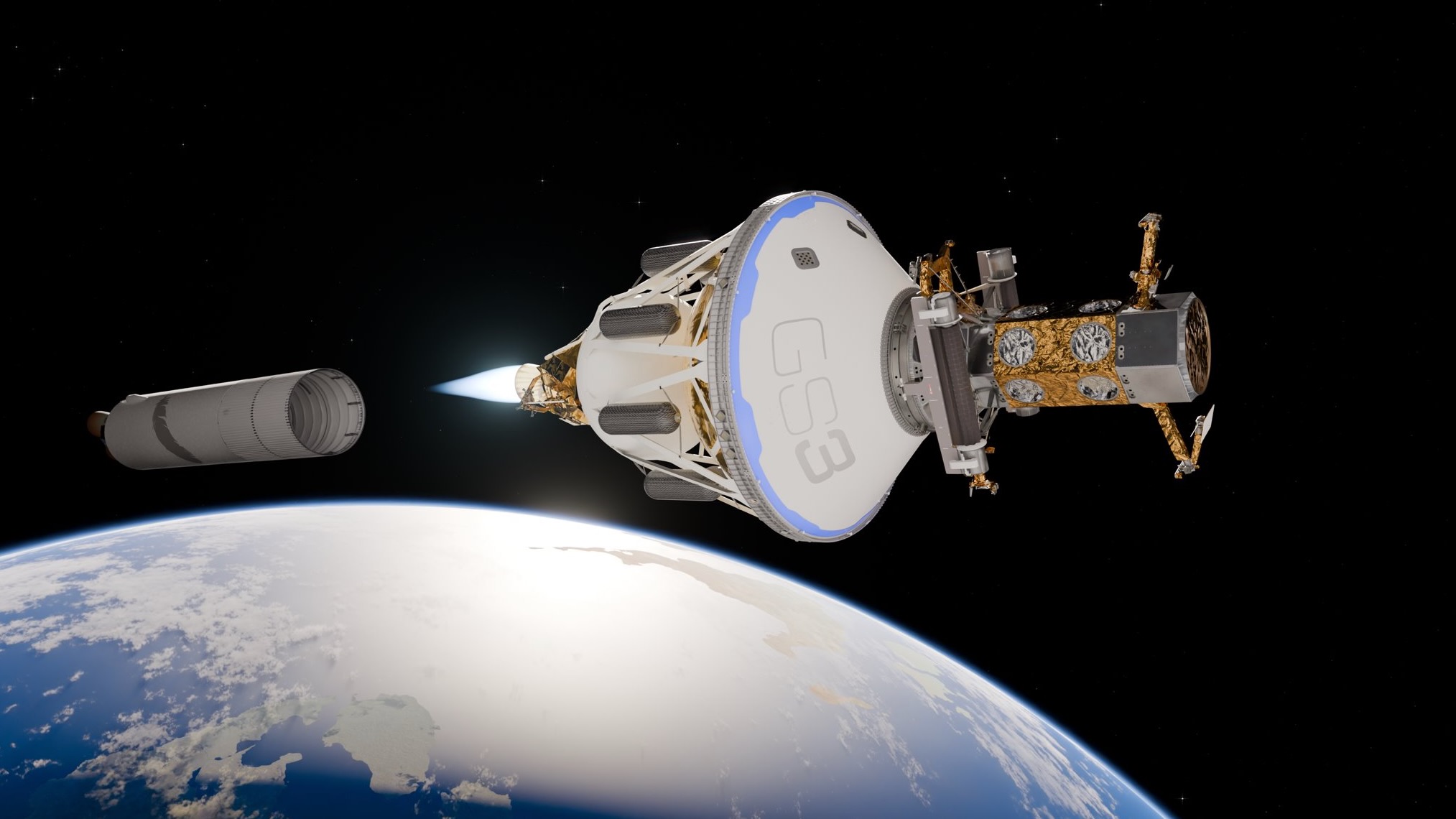
However, market requirements for higher energy orbits and deeper space exploration have necessitated a more versatile architecture. By adding the GS3 third stage, Blue Origin is effectively transforming New Glenn into a multi-purpose launch system. The GS3 stage will be powered by a single BE-7 engine—the same high-performance engine that Blue Origin developed for its Blue Moon lander. The inclusion of this stage enables the rocket to perform complex maneuvers, such as trans-lunar injection (TLI), which is critical for sending heavy payloads toward the lunar surface or further into the solar system.
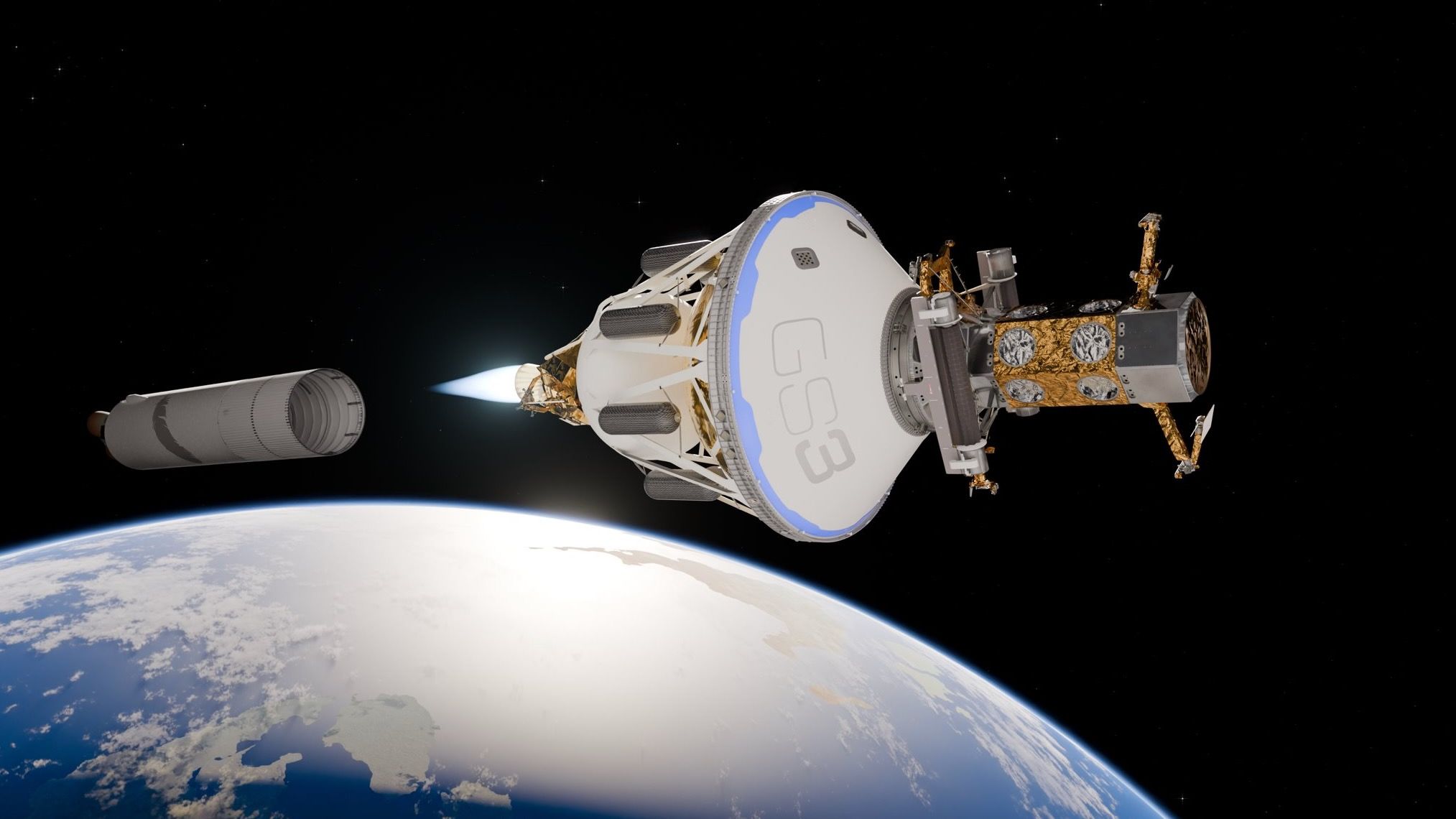
In addition to the standard 7×2 configuration, Blue Origin has been working on a "super-heavy" variant known as the 9×4. This version, which utilizes nine first-stage BE-4 engines and four second-stage BE-3Us, will stand nearly 400 feet (122 meters) tall. With the ability to loft up to 77 tons (70 metric tons) to LEO, the 9×4 configuration positions Blue Origin as a direct competitor to other heavy-lift providers in the industry, including SpaceX’s Falcon Heavy and the emerging Super Heavy-Starship system.
A Challenging Path to Maturity
The road to the GS3 announcement has been marked by a series of operational milestones and technical hurdles. Since its maiden flight in January 2025, New Glenn has completed three successful orbital launches in its 7×2 configuration. These flights, occurring in January, November, and April of 2025, served to validate the fundamental flight characteristics of the massive booster.
However, the program has faced notable setbacks that have tested the company’s resilience. In the April 2025 mission, while the rocket successfully reached space, an issue during the upper-stage deployment sequence resulted in the loss of the AST SpaceMobile "BlueBird 7" communications satellite, which was left in an incorrect orbit. This incident highlighted the complexities involved in orbital insertion for high-value commercial assets.
Furthermore, on May 28, 2025, the program suffered a significant ground-based failure when a New Glenn vehicle exploded during a routine engine test at Cape Canaveral Space Force Station. The resulting fire caused extensive damage to the launch pad infrastructure. Blue Origin immediately pivoted to a comprehensive rebuilding phase, utilizing the downtime to refine both the pad design and the vehicle’s safety protocols. Industry analysts suggest that this period of forced downtime allowed the engineering teams to integrate the design for the GS3 third stage into the broader production roadmap, turning a period of operational stagnation into one of strategic advancement.
Introducing Northstar: The Next Generation of Propulsion
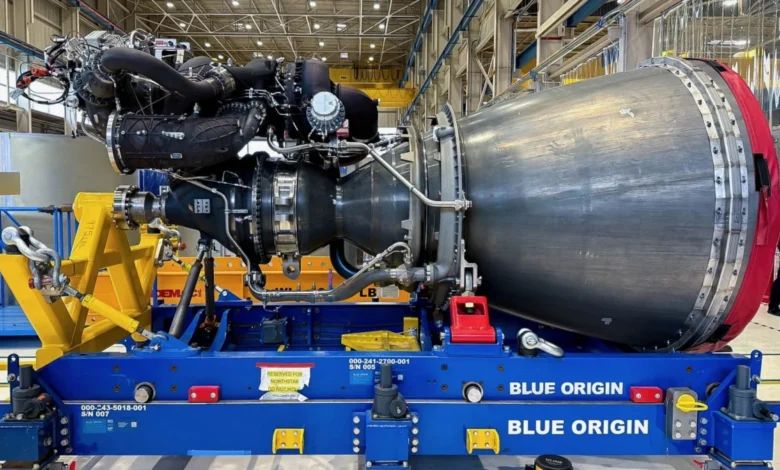
Alongside the unveiling of the GS3, Blue Origin surprised the industry with the announcement of "Northstar," a new first-stage engine currently in development. While the BE-4 engine has been the workhorse of the New Glenn program, Northstar represents a significant evolution in liquid methane/liquid oxygen (methalox) propulsion.
According to technical specifications released by the company, Northstar is designed to be both more powerful and significantly more efficient to manufacture than the BE-4. Key improvements include:
- Increased Thrust: The engine produces 715,000 pounds-force of thrust, an upgrade from the 640,000 pounds-force provided by the BE-4.
- Reduced Complexity: The engine features a 50% reduction in parts count, which lowers the probability of mechanical failure.
- Weight Efficiency: The engine is 30% lighter than its predecessor, allowing for greater payload capacity or increased fuel margins.
- Rapid Manufacturing: Through advanced additive manufacturing and streamlined assembly techniques, Blue Origin claims it can assemble a Northstar engine in less than 24 hours.
The speed of the Northstar program is particularly notable; the company confirmed that the project progressed from initial program approval to the start of development testing in just 11 months. While Blue Origin has not yet committed to a specific flight timeline for the Northstar engine, its development underscores a broader industry trend toward rapid, iterative hardware improvement.
Strategic Implications for Cislunar Operations
The introduction of the GS3 stage is not merely a technical upgrade; it is a signal of intent regarding the lunar economy. By delivering significant payload mass directly to TLI, the GS3 stage allows for faster transit times and preserves precious propellant for on-orbit operations. This capability is vital for missions that require complex docking or extended stays in the vicinity of the moon.
Blue Origin has already secured its first government customer for a GS3-equipped mission, which is currently scheduled for 2028. While the specific nature of the payload remains classified, it is widely expected to involve infrastructure or research equipment aimed at supporting the Artemis program’s long-term goals.
Analysis of the Competitive Landscape
The aerospace industry is currently witnessing a race to provide "heavy-lift-plus" capabilities. With the development of the GS3 and the Northstar engine, Blue Origin is attempting to close the gap with competitors who have already achieved high-cadence, heavy-lift operations. The ability to deploy payloads directly to GEO and deep space simplifies mission architecture for customers, as it removes the need for separate orbital transfer vehicles (OTVs) in many instances.
However, the company faces the challenge of successfully integrating these new systems while simultaneously maintaining a regular launch cadence for its core 7×2 vehicle. The lessons learned from the 2025 launch failures and the pad explosion are likely being baked into the design of the GS3. The focus on reducing part counts in the Northstar engine also reflects a shift toward reliability through simplicity—a hallmark of successful, high-frequency launch providers.
Looking ahead, the success of the New Glenn program will depend on the company’s ability to demonstrate consistent, flawless performance. If Blue Origin can successfully deploy the GS3 stage in 2028 and scale its production of the Northstar engine, it will likely secure a dominant position in the launch market for both commercial satellite operators and government-led deep-space exploration efforts. For now, the aerospace community is watching closely as Blue Origin pivots from the initial flight testing phase toward a future of specialized, high-performance orbital delivery.