Gallagher Premiership Rugby Hiatus: When the 10 Clubs Return After the November Internationals and Nations Championship Break

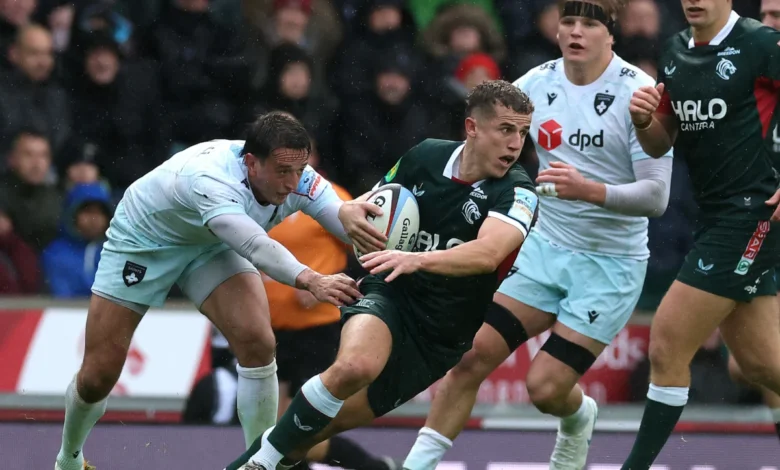
English club rugby is officially entering a period of dormancy as the domestic calendar pauses for the entirety of November. Following the conclusion of a fiercely contested fifth round of fixtures, the ten clubs comprising the Gallagher Premiership have been granted a well-timed, albeit enforced, operational break. This mid-season hiatus aligns directly with the inaugural blocks of the newly structured global rugby landscape, headlined by the marquee fixtures of the Nations Championship.
For fans of England’s top flight, the absence of elite club action leaves a notable void in the weekend sporting schedule. However, the hiatus is a calculated logistical necessity designed to accommodate the heavy influx of international call-ups, player welfare mandates, and the restructuring of the global sporting calendar. As players pack their bags to join their respective national squads, club coaches, administrators, and fans alike look ahead to a busy winter schedule that will dictate the trajectory of the 2026–27 domestic campaign.
The Resumption of Domestic Hostilities: Round 6 Fixtures
The Gallagher Premiership will roar back into life on Friday, December 4, 2026, with an explosive West Country derby that promises to set the tone for the winter block. Bath Rugby will play host to their fierce local rivals, the Bristol Bears, under the Friday night lights at the Recreation Ground. The fixture is traditionally a high-octane affair, and the resumption of the league after a month-long layoff will add an extra layer of pressure and unpredictability to the derby.
Action continues swiftly across the weekend with a full slate of Round 6 fixtures. Saturday, December 5, and Sunday, December 6, will witness crucial matchups designed to shake up the league table. Gloucester Rugby will welcome the Newcastle Red Bulls to Kingsholm, while Harlequins prepare for a titanic clash against Leicester Tigers at the Twickenham Stoop. Meanwhile, perennial heavyweights Saracens lock horns with Northampton Saints in what promises to be a tactical masterclass, and Sale Sharks face off against Exeter Chiefs at the Salford Community Stadium.
These fixtures mark the official re-entry of international stars back into their club setups, provided they emerge unscathed from the bruising encounters of the November window. The immediate return to high-stakes derby matches and heavyweight clashes means teams will have to hit the ground running immediately, leaving little room for ring-rust or slow starts.
The Changing Face of November: Historical Context of the Premiership Hiatus
The decision to take four full weekends off during the autumn international window represents a notable evolution in the operational philosophy of English club rugby. Historically, the Premiership did not enjoy such an extensive blanket break. In previous eras, English clubs would routinely play through the November international window, utilizing the Premiership Rugby Cup (and its predecessor, the Anglo-Welsh Cup) to field developmental squads and fringe players while senior internationals were away with England or other Tier One nations.
Traditionally, the league might sit out two, or at most three, weekends during the autumn block. However, the structural landscape of English rugby has shifted dramatically in recent years. The financial turbulence that saw high-profile clubs such as Wasps, Worcester Warriors, and London Irish enter administration and collapse resulted in a streamlined, 10-team Premiership.
This contraction of the league reduced the total number of regular-season rounds from 24 to 18, creating vital wiggle room within an increasingly congested annual calendar. This newly discovered calendar flexibility has allowed Premiership Rugby to implement comprehensive, synchronized breaks that mirror the international windows. Crucially, this structural breathing room not only accommodates the expanded November commitments—such as the newly minted Nations Championship—but also paves the way for the league to halt completely during the duration of the Six Nations Championship in the spring.
Domestic Action During the Hiatus: The Premiership Rugby Cup
While the marquee names of the Gallagher Premiership will be trading their club jerseys for national team colors, the domestic game does not grind to a complete halt. Club training grounds will maintain a hive of activity, albeit with a significantly younger and less-experienced demographic taking center stage.
Throughout November, directors of rugby will oversee three rounds of the Premiership Rugby Cup. This competition serves a dual purpose: it maintains a steady cadence of competitive rugby for fans, and it offers an invaluable developmental pathway for academy prospects and senior squad members who missed out on international selection. Coaches often utilize this block to blood rising stars, test tactical innovations under competitive pressure, and manage the workloads of senior players who remain at the club.
Furthermore, the second-tier competition, Elior Champ Rugby, will maintain its regular schedule throughout November. This ensures that supporters of the English game still have access to live, high-intensity domestic rugby while the top tier pauses for international duty.
Continental Comparisons: How the URC and Top 14 are Handling November
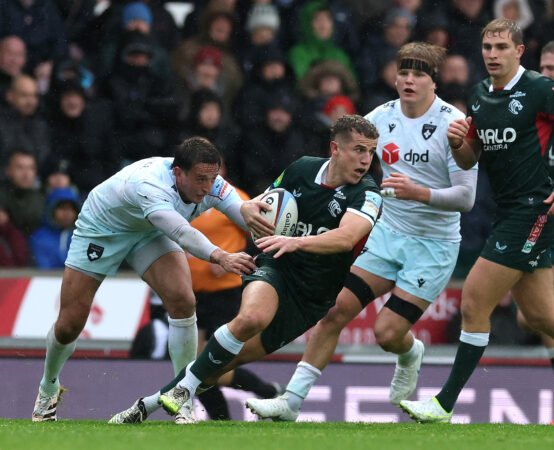
England is not alone in hitting the pause button to accommodate the autumn international window. Across Europe, major leagues are adapting to the demands of the global calendar with varying degrees of disruption.
The United Rugby Championship (URC), which features elite teams from Ireland, Scotland, Wales, Italy, and South Africa, has adopted a synchronization model identical to that of the Gallagher Premiership. Following the completion of the fifth round of fixtures on Saturday, October 31, the URC will go dark for the entirety of November.
The URC will resume concurrently with the English Premiership on Friday, December 4, 2026. The opening night of the return features matches such as the Ospreys hosting Leinster in Wales and the Dragons traveling to face Edinburgh Rugby. The weekend action continues across the international spectrum with heavy-hitting fixtures, including the Lions against the Vodacom Bulls, the Sharks facing the Stormers, Cardiff Rugby welcoming Ulster, the Scarlets taking on Connacht, Glasgow Warriors hosting Benetton, and Zebre Parma playing host to Munster. Like their English counterparts, URC clubs with heavy international representation—particularly powerhouse provinces
like Leinster and Munster—will have to manage the reintegration of their stars carefully.
In contrast, the French Top 14 is charting a slightly different course. While French clubs will grant their players some respite, the tournament is not taking as extensive a break as the Premiership or the URC. The Top 14 will stage a full round of fixtures across the weekend of November 7–8. Following that weekend, the league will observe a two-week hiatus before resuming action on Saturday, November 28.
This scheduling nuance means that the tenth round of the Top 14 will directly clash with Finals Weekend in the Nations Championship. The decision highlights the immense financial and broadcast pressures faced by French club rugby, where domestic television rights holders demand a continuous stream of league action, even at the expense of overlapping with major international showcases.
Player Welfare, Squad Depth, and Strategic Implications
The extensive November break highlights a broader industry-wide shift toward prioritizing player welfare and managing the physiological toll of a brutal modern rugby schedule. With the introduction of the Nations Championship—a high-stakes, bi-annual global competition designed to create a definitive pathway and championship structure for international rugby—the demands on elite players have never been higher.
Sports science data consistently demonstrates that professional rugby players require adequate recovery blocks to sustain performance levels and minimize the risk of catastrophic injuries such as concussions, ligament tears, and chronic joint damage. By mandating a four-week pause in the Gallagher Premiership, governing bodies and club owners are acknowledging that players cannot continually transition between high-intensity domestic fixtures and Test matches without facing burnout.
For club coaches, however, this period presents a unique logistical puzzle. Directors of rugby must plan their training blocks around a fractured squad. While senior internationals are away in high-intensity national camp environments, club training sessions are dominated by academy players, rehabilitation groups, and a handful of senior professionals. Tactical continuity can be difficult to maintain when up to half of a starting XV is absent for a month.
Conversely, the November block offers an exceptional opportunity for squad depth development. Younger players who perform admirably in the Premiership Rugby Cup can force their way into the reckoning for the Premiership’s resumption in December. Coaches frequently emphasize that a successful season cannot be achieved with just fifteen players; building resilience through the wider squad during international windows often proves to be the defining factor in which clubs lift silverware come May.
Looking Ahead to the Winter Block
As the final whistle blew on Round 5 of the Gallagher Premiership, the curtain fell temporarily on domestic English rugby, but the anticipation for what lies ahead is palpable. The league table is tightly packed, and the race for the top-four playoff spots is already shaping up to be fiercely competitive.
When the teams return on December 4, they will step into a grueling winter period characterized by heavy pitches, festive fixtures, and the commencement of the European Champions Cup and Challenge Cup pools. The shadow of the international game will recede momentarily, replaced by the relentless, week-in, week-out attritional warfare of domestic club rugby.
Until then, all eyes turn to the global stage as the world’s best players contest the inaugural blocks of the Nations Championship, while English clubs quietly recalibrate, heal their wounded, and prepare their academies for the battles that await in December and beyond.