The inaugural Spanish Grand Prix held at the newly inaugurated Madrid street circuit has sparked significant debate regarding track design and the technical viability of overtaking in the 2026 Formula 1 era. For McLaren’s Lando Norris, who dominated the early stages of the race from pole position, the event served as a frustrating lesson in the limitations of high-downforce, narrow-track racing. Despite holding a commanding six-second lead during the opening 12 laps, a poorly timed Virtual Safety Car (VSC) period and the inherent physical constraints of the circuit ultimately denied the Briton a victory that his pace seemed to merit.
A Masterclass Undermined by Circumstance
The race began as a testament to the pace of the McLaren MCL36. Norris, having secured a brilliant pole position in qualifying, immediately asserted his authority, extending his lead by half a second per lap in the opening stint. However, the dynamics of the race shifted dramatically when the VSC was deployed.
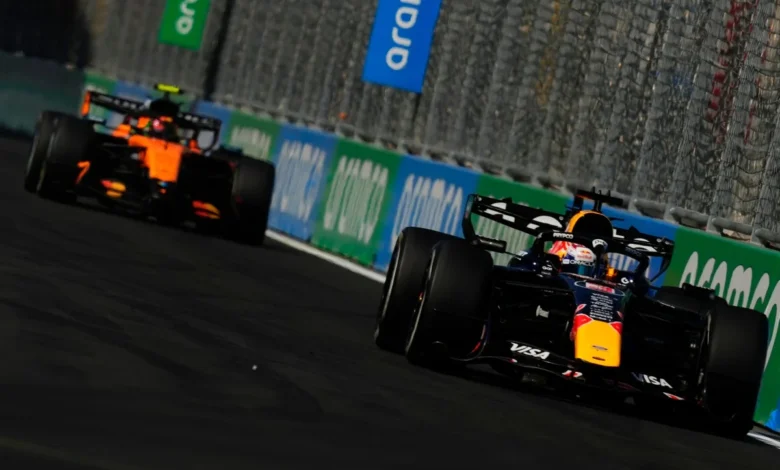
Because Norris had built such a significant gap over the rest of the field, the "delta" time required to navigate the pit lane under caution effectively evaporated his hard-earned cushion. By the time he emerged from a seven-second pit stop—a duration that in itself highlighted operational inconsistencies within the Woking-based team—he found himself 16 seconds adrift of the new leaders, Kimi Antonelli and Max Verstappen.
While the seven-second stop was undoubtedly a major setback, team principal Andrea Stella was quick to temper the criticism directed at his pit crew. He noted that even with a perfect, sub-three-second stop, the tactical landscape of the race would have left Norris compromised. "Lando would have likely rejoined behind George Russell regardless," Stella explained. "More importantly, even if we had emerged in clear air, the fundamental reality of this circuit is that overtaking the frontrunners is effectively impossible under current conditions."
The Madrid Street Circuit: A Strategic Deadlock
The data from the 2026 Spanish Grand Prix paints a sobering picture for the sport’s commercial and technical organizers. With only 10 overtaking maneuvers recorded throughout the entire race distance, the event stands as the least active race in terms of wheel-to-wheel combat for the current season. To provide context, this figure is lower than the 11 overtakes witnessed at the famously tight streets of Monaco.
Further analysis of these maneuvers reveals that the "racing" was largely confined to the back of the grid. Four of the 10 passes involved Valtteri Bottas or Lance Stroll, suggesting that the primary midfield and front-running battles were essentially frozen in a high-speed procession.

The primary culprit, according to engineers and drivers alike, is the configuration of Turn 5. As the heaviest braking zone on the circuit, it is preceded by a sweeping curve that complicates the approach, forcing drivers to compromise their line. The track width at this critical juncture is insufficient to allow for side-by-side racing, creating a "bottleneck effect." When a trailing car closes the gap, the lack of a secondary or tertiary line through the corner means they are forced to fall back, neutralizing any pace advantage gained in the preceding sectors.
Analytical Perspective: Can the Circuit be Salvaged?
From a technical standpoint, the current iteration of the Madrid circuit prioritizes qualifying performance over race-day versatility. The 2026 regulations, which place a high premium on aerodynamic efficiency, have seemingly exacerbated the "dirty air" problem on narrow, twisty street tracks.
Andrea Stella’s critique of the circuit was candid and pointed. "It is a shame that it is so difficult to overtake," the McLaren principal noted. "It requires a significant, almost unsustainable lap-time advantage to make a move stick. F1 governing bodies will need to review whether structural modifications are feasible to introduce genuine overtaking opportunities."
Stella’s assessment highlights a growing concern in the paddock: the trend toward street circuits in major urban centers often compromises the racing product. While the atmosphere in Madrid was electric, the lack of on-track action suggests that the design philosophy prioritized the spectacle of the city over the mechanical necessity of a passing zone. The "long straight" that characterizes the track is, according to Stella, a false promise. "The straight may be long enough, but there is absolutely no way that two cars can enter Turn 5 together. It is practically impossible to attempt a maneuver without risking a race-ending collision."
Operational Imperatives for McLaren
Beyond the circuit design, the race brought into sharp focus the ongoing operational challenges at McLaren. While the team has made monumental strides in car development, the inconsistency in pit stop performance remains a "known unknown" that continues to cost them points.
"We take note that there is a lot of work to do in our operation," Stella admitted. "It is not the first time that we have had a slow stop, and it is something we are addressing internally as a priority. However, we must be objective: even if we had executed a perfect stop, the race was effectively decided by the track’s lack of overtaking potential. We lost the chance to win, but the structure of the race made the recovery of that loss statistically improbable."
Broader Implications for the 2026 Season
As the 2026 season progresses, the results from Madrid will likely influence future track inspections and homologation processes. Formula 1 is currently in a phase where the "show" is as critical as the sport, and a race with only 10 overtakes is viewed by many as a negative metric for the series’ long-term health.

If the sport continues to move toward these confined, high-downforce street environments, the governing body may be forced to look at alternative tire compounds or even drag-reduction system (DRS) adjustments to compensate for the lack of natural passing opportunities.
For Lando Norris, the race was a bitter pill to swallow. His performance—evidenced by his ability to bridge a 16-second gap to the leaders by lap 48—confirmed that he was the fastest man on track. The fact that he could close the distance but never threaten the rear wing of the leading cars is a narrative that will undoubtedly haunt the McLaren team as they look toward the next round of the championship.
Looking Ahead
As the circus moves on from Madrid, the conversation shifts to how teams can better manage VSC windows and whether the FIA will entertain the possibility of track alterations for 2027. For now, the verdict on the Madrid circuit is split: it is a visually stunning venue with a high-stakes, unforgiving nature, but it currently lacks the physical capacity to facilitate the kind of multi-car battles that define the pinnacle of motorsport.
For McLaren, the path forward is clear: continue to refine the aerodynamic package of the MCL36, address the mechanical reliability of the pit stop equipment, and hope for tracks that reward their drivers’ pace rather than stifling it. The 2026 season remains competitive, and with the championship standings tightening, the points lost in Madrid may prove pivotal when the final tally is calculated at the end of the year.
The sport now turns its attention to the next event, where teams will be looking to capitalize on the lessons learned—both about the nature of the cars and the unforgiving reality of modern street racing. The focus remains on the championship battle between McLaren, Ferrari, and the dominant Red Bull, but the shadow of the Madrid circuit will likely linger as a cautionary tale for track designers globally.