The Dual Reality of Artificial Intelligence in Education: A Tale of Two Studies at the University of Maryland

The integration of artificial intelligence into the modern classroom has ignited a global debate, oscillating between the promise of personalized, equitable tutoring and the peril of academic erosion. New, high-stakes research conducted by Jing Liu, director of the Center for Educational Data Science and Innovation at the University of Maryland, provides a critical reality check for educators and policymakers alike. By examining two distinct experiments conducted during the 2025-26 academic year, Liu has surfaced a complex narrative: AI is not a monolith of progress, but a tool whose efficacy is defined entirely by its implementation, context, and the behavioral response of the students it serves.
The Middle School Experiment: Bridging the Gap with Goblins
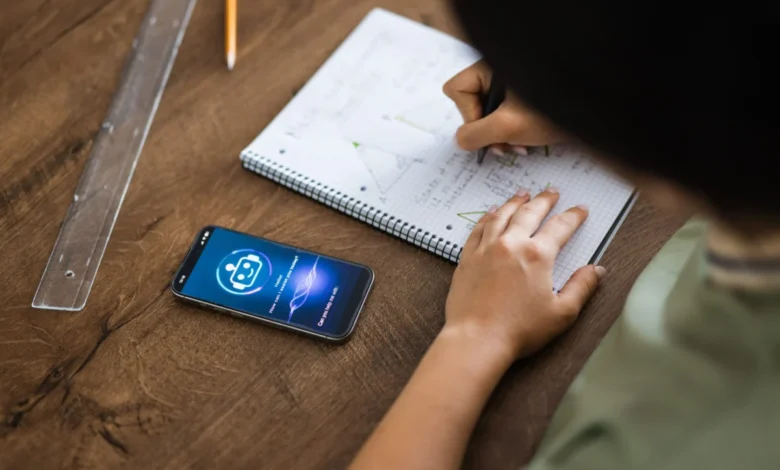
The first study, conducted in the Deer Valley Unified School District in Arizona, focused on the deployment of an AI-powered math practice platform known as "Goblins." Unlike static digital worksheets, Goblins was designed to function as an interactive interlocutor. The platform utilized text-based chat, a virtual whiteboard, and—most crucially—a voice-enabled, animated avatar capable of conducting spoken conversations in seven different languages, including Spanish.
During the 2025-26 school year, the platform was introduced to 6,000 middle school students. The methodology allowed for teacher-led integration, where educators maintained control over assignments and content, rather than outsourcing the curriculum entirely to the algorithm. The results were statistically significant: students who engaged with the platform at a frequency of at least two problems per week demonstrated a performance improvement of 0.11 standard deviations on year-end math assessments. According to the nonprofit research organization Accelerate, which commissioned the study, this margin equates to approximately three additional months of academic progress.
The findings suggest that the human-like interface—the "talk-back" feature—served as a bridge for populations historically marginalized by standard digital platforms, specifically English language learners and students with disabilities. However, the study also highlights the enduring "five-percent problem," a persistent challenge in educational technology where only a small fraction of the student body adheres to the recommended frequency of use. While the results are promising, researchers remain cautious. The correlation between usage and higher scores could reflect self-selection bias: students who are already more motivated to practice mathematics are naturally more likely to utilize digital tools, potentially inflating the perceived impact of the AI itself.
The Higher Education Dilemma: When AI Undermines Engagement
In stark contrast to the success observed in Arizona, a parallel study at the University of Maryland revealed a cautionary tale for higher education. Provost Jennifer King Rice oversaw the implementation of a proprietary AI assistant across various departments, ranging from biology and social sciences to mathematics and English.
In the fall of 2025, researchers randomly assigned 15 professors to incorporate the AI assistant into their courses, while another 15 served as a control group, teaching identical sections without the tool. The assistant was designed to be a comprehensive resource, accessible through the university’s Canvas portal, providing students with answers to questions about syllabi, deadlines, and core conceptual understandings.
The outcome was sobering. By the end of the semester, the 1,100 students in courses equipped with the AI assistant saw their grades drop by an average of 0.11 points on a four-point scale. Beyond the quantitative decline in grades, researchers observed a tangible decrease in student engagement. Students with access to the AI tool were less likely to participate in online discussion boards, less likely to attend office hours, and less likely to engage in collaborative learning with their peers. Perhaps most concerning was the finding that the negative impact was disproportionately severe for first-generation college students, potentially widening existing achievement gaps.

Chronology of the 2025-26 AI Pilot Programs
- Fall 2025: University of Maryland launches a randomized controlled trial (RCT) involving 30 professors and 2,300 students to test a university-wide AI chatbot.
- 2025-26 School Year: The "Goblins" math platform is deployed to 6,000 middle schoolers in Deer Valley, Arizona, as part of a pilot program commissioned by Accelerate.
- Late 2026: Preliminary data from both studies are analyzed by the Center for Educational Data Science and Innovation.
- October 2026: The studies are released simultaneously to demonstrate the divergent outcomes of AI implementation in different educational tiers.
Analyzing the "Offloading" Effect
The negative results at the university level have sparked intense debate among learning scientists. Why would a tool intended to assist students result in lower academic performance? The primary theory, supported by recent studies on "cognitive offloading," suggests that the constant, passive availability of an AI tutor may have encouraged students to bypass the critical thinking process.
Researchers suspect that the presence of the AI assistant in the Canvas environment signaled to students that AI usage was sanctioned, potentially prompting them to utilize external, more powerful generative AI models (such as ChatGPT or Claude) to complete their work. When students use AI to "solve" rather than "learn," they lose the opportunity to grapple with difficult concepts—a fundamental requirement for deep learning. The fact that only 15 percent of students actually used the university-provided assistant, yet the entire group saw a decline in grades, suggests that the mere availability of the tool may have altered the classroom culture in a way that discouraged authentic inquiry.
Policy Implications and the Future of EdTech
The dual findings from these studies offer a roadmap for future AI implementation in schools. For policy makers, the key takeaway is that the "design" of the tool is secondary to the "design" of the pedagogical environment.
- Human-in-the-Loop Requirement: The success of the Goblins platform in middle schools was predicated on teacher involvement. When educators curate the content and maintain authority over the classroom experience, AI acts as an extension of the teacher rather than a replacement for effort.
- Mitigating the "Permission" Signal: Higher education institutions must be wary of the "hidden curriculum." Introducing AI tools without explicit guidelines on academic integrity and the value of struggle can inadvertently signal to students that bypassing effort is acceptable.
- Equity and Access: The finding that the Maryland AI assistant negatively impacted first-generation students suggests that AI could act as a double-edged sword. While it has the potential to provide 24/7 support, it may also exacerbate existing disparities if students are not trained on how to use it as a scaffold for learning rather than a crutch for output.
Provost Jennifer King Rice, in a public statement regarding the University of Maryland findings, emphasized the urgency of this research. "AI tools could exacerbate inequities in learning outcomes," Rice noted, adding that the university intends to use these findings to refine its digital strategy. The decision to release the data publicly, despite the negative outcomes, reflects a growing trend of transparency in academic technology research, which is essential for ensuring that the rapid adoption of AI does not outpace our understanding of its consequences.
Broader Implications for the Field
The educational sector stands at a crossroads. The current landscape is dominated by aggressive marketing from software developers and the rapid, often unvetted, adoption of AI by school districts and universities under pressure to remain "cutting-edge." The work of researchers like Jing Liu serves as a necessary intervention. It demonstrates that the efficacy of a tool is not intrinsic to the software itself, but is contingent upon how it interacts with human psychology, motivation, and the established norms of the classroom.
Moving forward, the focus must shift from "access" to "integration." Providing students with AI is a simple technical challenge; ensuring that such tools foster critical thinking and intellectual growth rather than apathy is a complex pedagogical one. As the field moves toward more robust, randomized controlled trials, the academic community will likely demand more evidence-based frameworks that prioritize the cognitive development of the student over the technical capabilities of the bot.
In conclusion, the message from the 2025-26 studies is clear: AI is not a panacea. When implemented with careful teacher oversight and a focus on engagement, it can offer a personalized, supportive boost to struggling learners. Conversely, when dropped into a curriculum without a clear pedagogical framework, it risks hollowing out the very educational experiences it aims to enhance. As institutions continue to navigate this transition, the lessons from the University of Maryland underscore that while technology may change, the fundamental principles of learning—effort, engagement, and direct instructor interaction—remain non-negotiable.