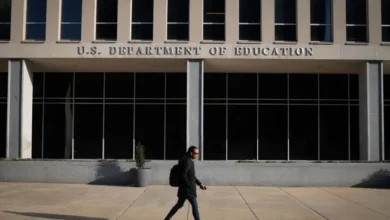
Special Education Professionals and Advocates Raise Alarms Over Federal Oversight Transfer to Health and Human Services

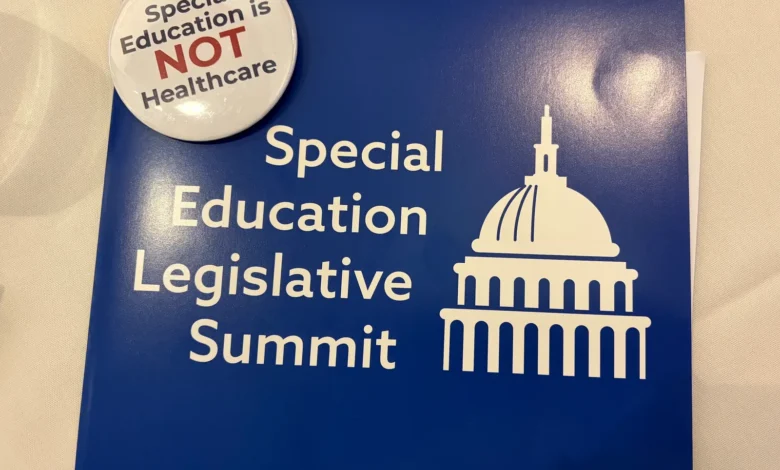
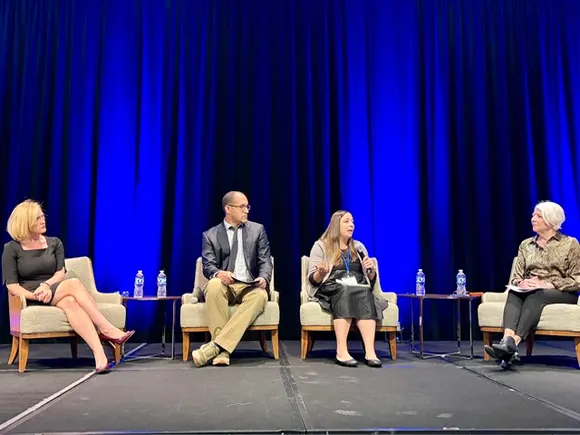
The future of special education in the United States faces a pivotal turning point as the Trump administration proceeds with a sweeping reorganization of the federal government’s role in public schooling. At the Special Education Legislative Summit held this week in Alexandria, Virginia, a coalition of educators, former government officials, and disability rights advocates warned that moving core special education functions out of the U.S. Department of Education would fundamentally undermine the quality of services provided to millions of students. The summit, hosted by the Council for Exceptional Children (CEC) and the Council of Administrators of Special Education (CASE), served as a platform for intense criticism of a new interagency agreement that shifts the administration of special education grants and compliance monitoring to the U.S. Department of Health and Human Services (HHS).
The reorganization is a central pillar of the administration’s "Returning Education to the States" campaign. This initiative aims to dismantle what officials describe as a bloated "education bureaucracy" in Washington, D.C., shifting decision-making power and fiscal responsibility to state and local levels. However, critics at the summit argued that this fragmentation of federal oversight will lead to significant disparities in service delivery across state lines, a reduction in rigorous accountability measures, and a dangerous "medicalization" of educational rights.
The Structural Shift: Moving IDEA to Health and Human Services
Central to the controversy is an interagency agreement announced last month between the Department of Education and HHS. Under this arrangement, key responsibilities for the Individuals with Disabilities Education Act (IDEA)—including the management of formula and discretionary grants, compliance monitoring, and annual state performance determinations—will be outsourced to HHS. While the Department of Education technically retains statutory responsibility for these functions, the day-to-day operations and the personnel overseeing them will reside within a health-focused agency.
Meghan Whittaker, a former chief of staff in the Education Department’s Office of Special Education and Rehabilitative Services (OSERS), expressed deep concern over the logistical hurdles this creates for school districts. Whittaker, who now serves as a program director at The Learning Agency, noted that districts already navigate a complex web of federal and state regulations. By splitting oversight between two different federal departments, the administration risks issuing conflicting guidance.
"There’s a real risk here that the guidance you’re getting from one agency and the guidance you’re getting from another makes it impossible or harder to administer all of the laws that you need to actually administer," Whittaker told the nearly 300 summit attendees. She emphasized that the Office of Special Education Programs (OSEP), housed within OSERS, was specifically designed to ensure that disability is viewed as a natural part of human existence, focusing on educational achievement rather than clinical treatment.
A Chronology of the Reorganization Effort
The current push to redistribute the Department of Education’s duties is not an isolated event but part of a year-long strategy involving 14 different interagency agreements with six federal agencies. The timeline of this transition reveals a rapid acceleration of the administration’s goals:
- Early 2026: The Trump administration launches the "Returning Education to the States" campaign, signaling an intent to eventually eliminate the Department of Education as a standalone cabinet-level agency.
- June 2026: Acting Assistant Secretary of OSERS Kelly Rogers defends the interagency agreements in media interviews, asserting that the moves will not change the Individualized Education Programs (IEPs) or direct services received by students.
- June 16, 2026: U.S. Education Secretary Linda McMahon issues a formal letter to parents, claiming the partnership with HHS was the result of "careful deliberation" and would improve academic outcomes by aligning federal services across the lifespan of individuals with disabilities.
- July 13, 2026: A group of 13 former senior special education officials from both Republican and Democratic administrations signs a letter to Congress, urging lawmakers to block the transfer. They argue that education is a civil right, not a medical condition.
- Mid-July 2026: House Republicans on the Education and Workforce Committee approve a package of 10 bills aimed at permanently moving several Department of Education functions to other agencies, though the specific IDEA and civil rights agreements were not codified in this initial package.
- July 20, 2026: The Special Education Legislative Summit convenes in Alexandria, featuring high-profile pushback from advocates and a formal letter of protest from 86 House Democrats.
Data and Demographic Pressures on Special Education
The debate over federal oversight comes at a time when the demand for special education services is reaching historic highs. According to recent data, approximately 8.2 million students aged 3 to 21 qualified for IDEA Part B services in 2024, representing a 3.8% increase over the previous year. Furthermore, the IDEA Part C program, which provides early intervention for infants and toddlers, served nearly 460,000 children in 2024.
Advocates argue that the administration’s funding proposals are insufficient to meet these growing needs. While the administration has touted an additional $144 million for early intervention and K-12 special education—supplementing a $15.5 billion base for fiscal year 2026—the CEC and CASE contend these figures do not account for inflation or the "tripartite crisis" facing the field: severe teacher shortages, an unprecedented demand for student mental health support, and the steady year-over-year increase in enrollment.
The staffing levels at the Department of Education are also a point of contention. The proposed budget for fiscal year 2027 suggests a drastic reduction in OSERS staff, plummeting from 163 employees in FY 2025 to just 31 in FY 2027. Audrey Levorse, interim executive director of the National Association of State Directors of Special Education, warned that such a reduction would leave states without the technical assistance necessary to measure student progress and maintain federal compliance.
Official Responses and Political Opposition
The administration maintains that the reorganization is about efficiency and results. Secretary Linda McMahon has stated that the partnership with HHS allows for a "continuum of care" that follows a person with a disability from infancy through adulthood. By housing these services in an agency that already manages various health and human service grants, the administration argues it can reduce overhead and focus more resources on the students themselves.
However, political opposition is mounting. On Monday, 86 House Democrats sent a letter to Secretary McMahon calling for an immediate reversal of the agreements involving both special education and the Office for Civil Rights (which is seeing some functions moved to the Department of Justice). The lawmakers expressed fear that the "loss of institutional expertise" would cause "irreparable damage" to offices that millions of families rely on for the protection of their children’s rights.
Senator Patty Murray (D-Wash.) echoed these sentiments during a press call, labeling the interagency agreements "illegal" and a direct attempt to circumvent the legislative process required to abolish a federal department. "Dismantling the Department of Education—continuing on this path—will be devastating for kids with disabilities in America," Murray said.
Analysis of Implications: Education vs. Medical Management
The most profound concern raised by specialists like Marcus Hedrick, a former Education Department attorney, is the shift in the philosophical framework of disability services. By moving oversight to HHS, the administration may inadvertently (or intentionally) shift the focus from "educational access" to "medical management."
Under IDEA, students are entitled to a Free Appropriate Public Education (FAPE) in the Least Restrictive Environment (LRE). This is a civil rights mandate designed to ensure that students with disabilities are integrated into the general education curriculum to the maximum extent possible. Critics argue that HHS, an agency rooted in the medical model of diagnosis and treatment, is ill-equipped to oversee the pedagogical and civil rights nuances of the classroom.
"To those who think that moving OSEP to another agency and reducing its staffing is empowering… it’s not," Hedrick said. "It’s really just abdicating some of the responsibility to support you in implementing the program."
There is also the concern of "technical assistance." When a state or school district struggles to implement a complex part of IDEA, they currently rely on OSEP experts who understand the intersection of disability law and classroom instruction. If those experts are reduced to a skeleton crew or integrated into a health agency, districts may find themselves without a roadmap, leading to a rise in litigation and inconsistent experiences for families depending on their zip code.
Looking Ahead
As the Special Education Legislative Summit concludes, the focus shifts to the halls of Congress and the federal courts. While the Trump administration continues to utilize executive authority to sign interagency agreements, the legality of these moves remains under scrutiny. Advocates at the summit made it clear that they view the "Returning Education to the States" campaign not as a move toward local empowerment, but as a retreat from the federal government’s promise to protect the nation’s most vulnerable learners.
With enrollment in special education programs continuing to climb and the specialized workforce continuing to shrink, the stakes for the 8.2 million students covered by IDEA have never been higher. The coming fiscal year will determine whether the administration’s vision of a leaner, decentralized education system can coexist with the rigorous legal protections that have defined special education for nearly half a century.