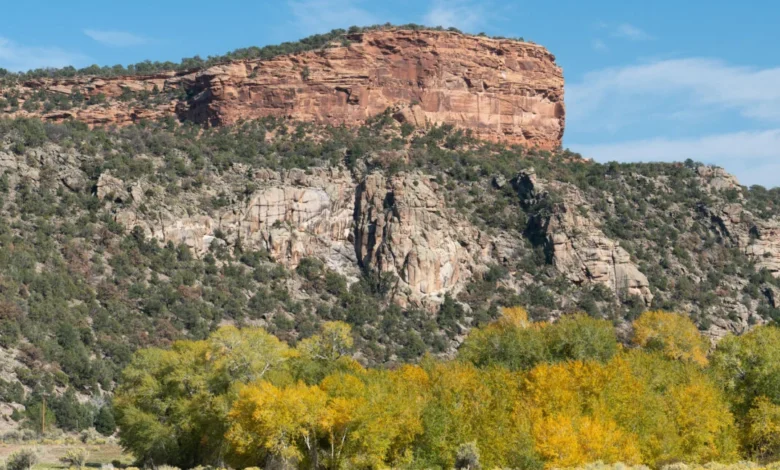
The Great Unconformity stands as one of the most enigmatic chapters in the geological history of our planet. Located within the strata of the Grand Canyon and mirrored in geologic formations across North America, Europe, and China, this feature represents a profound temporal void—a literal erasure of hundreds of millions, and sometimes over a billion, years of rock record. For decades, geologists have struggled to explain why Cambrian-era sandstone, rich with the nascent diversity of early animal life, rests directly upon ancient, crystalline basement rock with no intermediate layers. A new study published in the journal Nature by geoscientist Nicolas Flament and researcher Santosh Dhungana of the University of Wollongong suggests that the answer lies not just in surface-level erosion, but in the slow, convective churning of Earth’s deep mantle.
The Mystery of the Missing Time
The Great Unconformity is defined by a sharp contact between older basement rocks—often metamorphic or igneous—and younger sedimentary layers deposited during the Cambrian period, approximately 541 million years ago. This gap is not uniform in duration; in some regions, the missing sequence spans roughly 200 million years, while in others, it exceeds a billion. This discrepancy has long baffled researchers, as a singular, globally synchronized event—such as a worldwide sea-level drop—would logically produce a more consistent signature.
Historically, the scientific consensus focused on "Snowball Earth" events, periods between 720 and 635 million years ago when the planet was encased in ice. Glaciers are formidable geomorphological agents, capable of scouring landscapes with an efficacy estimated to be ten times greater than fluvial erosion. However, the geographic distribution of the Great Unconformity does not perfectly align with the expected footprint of a global glaciation. If the phenomenon were driven solely by ice, the gap should be ubiquitous. The observed patchiness of the unconformity suggests a more complex, tectonic origin.
Mantle Dynamics: The Lava Lamp Model
To investigate the mechanisms behind this missing record, Flament and Dhungana turned to the concept of "dynamic topography." Earth’s mantle, the viscous layer extending from the base of the crust to nearly 3,000 kilometers deep, is not static. It operates through convection—a process likened to a lava lamp, where heated material rises toward the crust while cooler, denser material sinks back into the depths.
This convective motion exerts a constant, albeit subtle, influence on the surface of the planet. As tectonic plates move over regions of upwelling hot mantle, the crust is pushed upward; conversely, as they move over sinking cold slabs of ocean floor, the ground is pulled downward. While the magnitude of this vertical motion is measured in hundreds of meters rather than kilometers, it is sufficient to alter the base level of erosion and sedimentation over the vast timescales of geologic history.
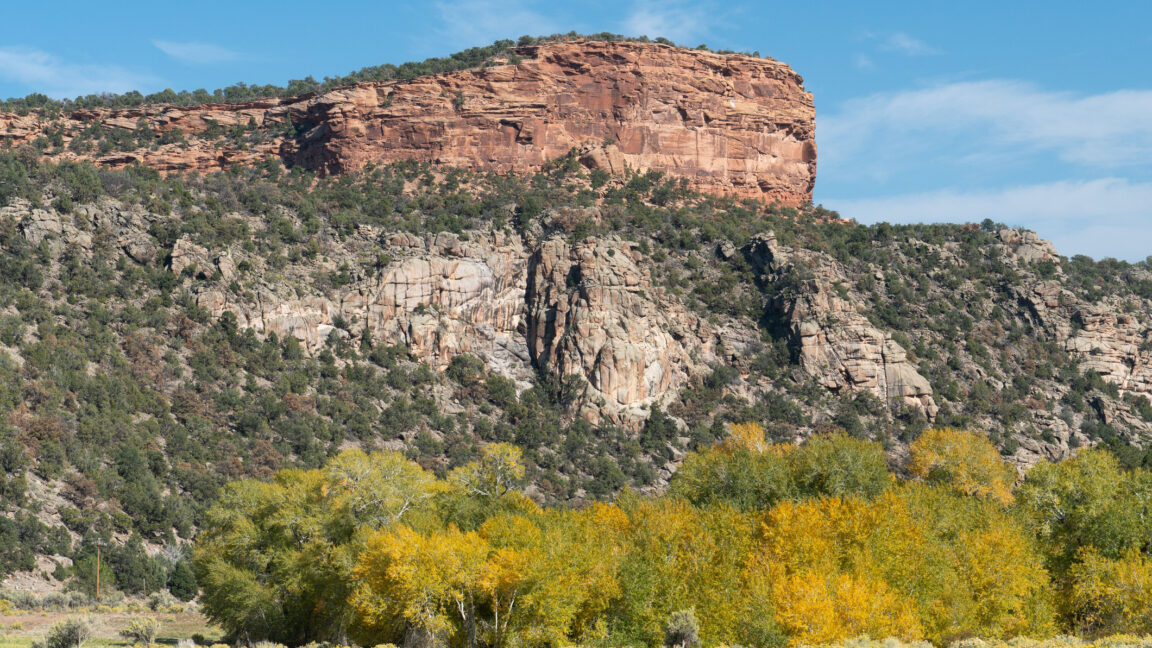
The researchers developed six numerical simulations of mantle convection covering the past billion years. By integrating tectonic plate reconstructions, they tracked the movement of major continental cores—specifically the ancient craton of Laurentia, which forms the bedrock of North America. The simulations revealed a consistent narrative: for nearly 400 million years, between 930 and 510 million years ago, Laurentia was positioned over a region of mantle upwelling. This sustained, gentle uplift created the ideal conditions for long-term erosion, stripping away massive quantities of rock that would have otherwise been preserved.
A Confluence of Forces
The study clarifies that while mantle dynamics provided the stage, it was not the sole actor. The team concluded that dynamic topography was not sufficiently aggressive to carve away the massive amounts of rock observed at the unconformity; rather, it provided the structural elevation that allowed glaciers to finish the job.
The chronology of this event suggests a fortuitous coincidence:
- 930–510 million years ago: Sustained tectonic uplift driven by mantle convection elevates the North American craton.
- 720–635 million years ago: The onset of global glaciations (Snowball Earth) coincides with the elevated landmass, allowing ice sheets to scour the exposed rock efficiently.
- 541 million years ago (Cambrian): As the mantle currents shift and the continents subside, the landmass falls below sea level.
- Post-Cambrian: Marine environments flood the eroded surfaces, depositing the layers of sandstone that now sit atop the ancient basement.
This "two-stage" mechanism explains the unique clarity of the Great Unconformity in North America compared to other continents. In Australia and South America, the geological record indicates multiple cycles of uplift and subsidence, which likely resulted in multiple, smaller unconformities rather than one singular, massive gap.
Broader Implications for Biological Evolution
The significance of the Great Unconformity extends beyond mere stratigraphy; it may have played a pivotal role in the Cambrian Explosion, the rapid diversification of complex life forms. The massive, continental-scale erosion event required to create such a geological gap would have transported unprecedented volumes of sediment and minerals into the world’s oceans.
Geochemists have long hypothesized that the sudden influx of minerals—specifically calcium, magnesium, and phosphorus—altered the chemical composition of the seawater. This "nutrient pulse" could have provided the necessary building blocks for early organisms to develop shells and hard skeletons, a hallmark of the Cambrian radiation. While Flament is cautious not to suggest that mantle convection was the sole driver of biological evolution, the research provides a compelling link between the internal mechanics of the planet and the history of life on its surface.

Challenges in Geologic Modeling
One of the primary challenges in this research remains the inherent uncertainty in reconstructing the paleogeography of Earth. Paleomagnetic data can determine a continent’s latitude with reasonable accuracy, but longitudinal data remains elusive. Furthermore, because the ancient ocean floors of that era have long since been recycled into the mantle via subduction, researchers must create "synthetic" ocean floor models to drive their simulations.
Despite these limitations, the consistency of the results across the majority of the models provides a robust framework for future investigation. The researchers acknowledge that while they have identified the likely engine behind the Great Unconformity, the precise quantification of the vertical movement remains a subject of ongoing debate. Future refinements in seismic imaging of the mantle and more granular paleotectonic reconstructions will be required to confirm these findings with higher certainty.
Conclusion: A Unique Planetary Fingerprint
The Great Unconformity remains a singular feature in the geologic record, primarily because it required a rare alignment of sustained tectonic forcing and global climatic events. While older unconformities may exist—such as those potentially linked to glaciations 2.4 billion years ago—they lack the biological markers, like the rich fossil record of the Cambrian, that make the Great Unconformity so legible to modern geologists.
This study reinforces the view that Earth is an integrated system. The events unfolding at the surface—the erosion of mountains, the flooding of basins, and the subsequent bloom of biological life—are inextricably linked to the heat-driven processes occurring thousands of kilometers beneath our feet. As science continues to bridge the gap between deep-mantle physics and surface geology, the Great Unconformity stands as a testament to the fact that the history of our planet is written not just in the stones we see, but in the hidden forces that moved them.