Super El Niño to peak in late 2026 and push global temperatures to unprecedented record levels next year.

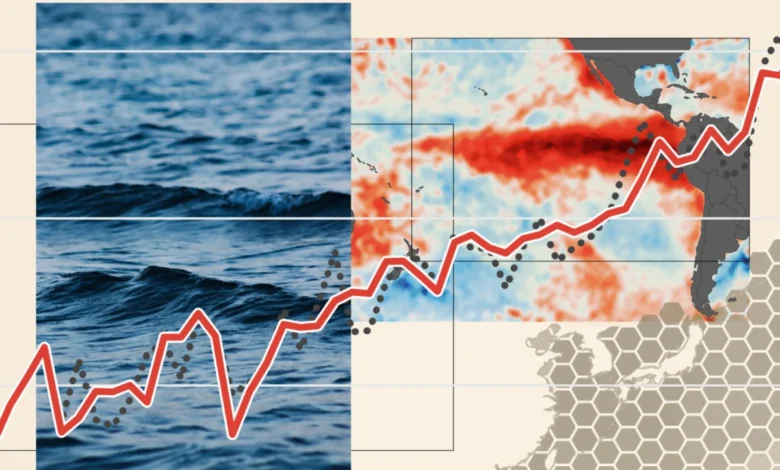
The global climate system is currently contending with a climate phenomenon of extraordinary magnitude, as a massive "super El Niño" event continues to gain intensity across the tropical Pacific. According to the latest "State of the Climate" analysis by Carbon Brief, this naturally occurring, heat-releasing oscillation is projected to reach its zenith at the end of 2026. The atmospheric and oceanic implications are profound, with data-driven models indicating that the resulting heat release will likely propel average global temperatures to record-breaking levels throughout 2027.
Dr. Zeke Hausfather, a prominent climate science contributor and lead analyst on this report, has characterized the development of the current event as "simply staggering." The assessment, which synthesizes more than 600 individual forecasts from 14 distinct climate models and incorporates six global temperature datasets, suggests that the world is entering a period of climatic stress that may be unprecedented in the last millennium.

Understanding the Mechanism of the Super El Niño
El Niño, formally known as the El Niño-Southern Oscillation (ENSO), is a periodic fluctuation in sea surface temperatures and air pressure across the equatorial Pacific. During an El Niño phase, the trade winds—which typically push warm surface water toward the western Pacific—weaken or reverse. This allows massive volumes of warm water to migrate eastward toward the central and eastern Pacific, effectively venting enormous amounts of stored oceanic heat into the atmosphere.
Because the Pacific Ocean covers such a vast portion of the Earth’s surface, this energy transfer has a disproportionate impact on global mean surface temperatures. While human-induced greenhouse gas emissions remain the primary driver of long-term planetary warming, El Niño acts as a significant short-term "booster," temporarily elevating global averages.
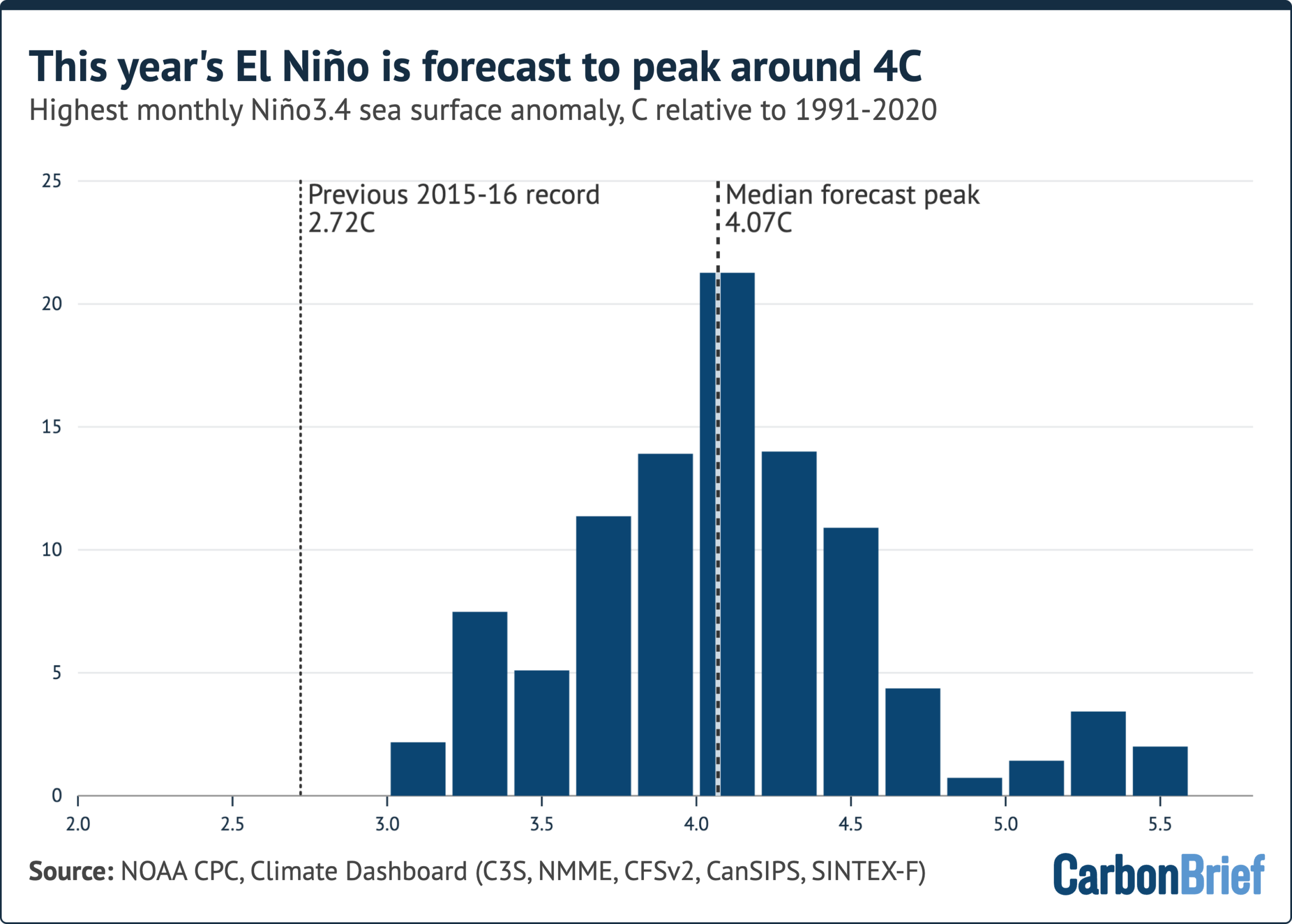
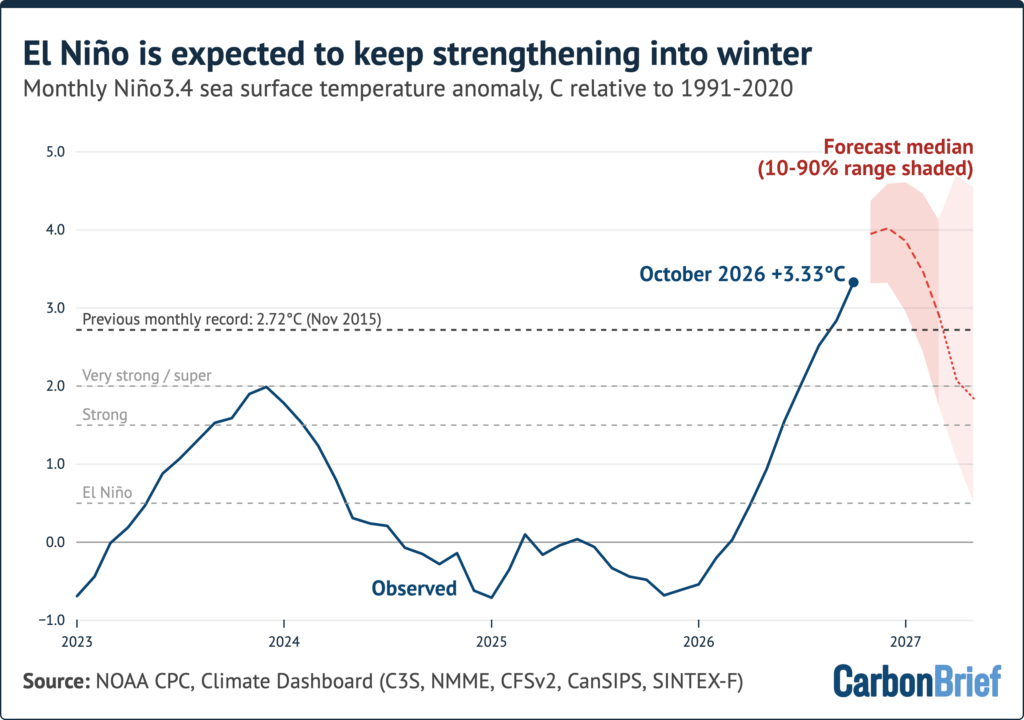
The strength of this event is measured by the "Niño3.4 anomaly," which tracks the departure of sea surface temperatures from the historical average in the central Pacific. The current data shows that the anomaly is trending toward a peak of approximately 4°C—a figure that would shatter the previous record established during the severe 2015-16 event by more than a full degree Celsius.
A Chronology of Record-Breaking Heat
The current cycle, which officially began its rapid escalation in June 2026, has already achieved several historical milestones that illustrate its severity. On September 18, 2026, the daily Niño3.4 anomaly reached 3.11°C, surpassing the previous daily record set during the peak of the 2015 event. This was not an isolated outlier; the entire month of September 2026 recorded the highest monthly anomaly since comprehensive record-keeping began in the mid-19th century, clocking in at 2.84°C.
Climate models suggest that the event will continue to intensify through the final quarter of the year. Ten of the 14 models analyzed indicate that the peak will occur in December 2026, while the remaining four models predict a slightly earlier culmination in November. This trajectory confirms that the heat injection into the global climate system will be sustained through the end of the calendar year, setting the stage for 2027 to become the hottest year on record with a 96% probability.
Projections for 2027 and Global Temperature Lag
One of the most critical aspects of El Niño dynamics is the lag time between the peak of the Pacific warming and the subsequent spike in global temperatures. Because the ocean must effectively "communicate" this heat to the atmosphere and the rest of the planet’s surface, there is typically a three-month delay.

Consequently, while the Pacific may reach its maximum temperature anomaly by the end of 2026, the global atmospheric consequences will be most acutely felt in early-to-mid 2027. Carbon Brief’s projections estimate that the 2027 average global temperature will rise to approximately 1.74°C above pre-industrial levels. This threshold is of significant concern to the international scientific community, as it approaches the upper bounds of the targets set by the Paris Agreement, albeit temporarily driven by natural variability.
Socio-Economic and Environmental Implications
The real-world impacts of this "super" event are already manifesting with significant intensity. The shift in global weather patterns has been linked to severe wildfires in Indonesia, where emission rates are currently on track to mirror the most destructive fire seasons of the century. Furthermore, the Pacific region is seeing an uptick in the frequency and intensity of "super typhoons," as warmer ocean waters provide more fuel for tropical cyclone development.
These events serve as a preview of the broader implications for global agriculture, water security, and infrastructure. El Niño typically shifts rainfall patterns, causing flooding in some regions while inducing severe droughts in others—specifically in parts of Australia, Southeast Asia, and South America. The agricultural output in these regions, which are vital to the global food supply chain, remains at high risk during such extreme events.
Scientific and Official Perspectives
The scientific community is closely monitoring the situation via the "CB Connect" platform and other collaborative forums, where experts like Dr. Hausfather are providing real-time analysis to the public and policymakers. The consensus among those analyzing the current data is that this event is behaving in a manner that deviates from historical norms.
"We haven’t seen anything like this in the historical record," Dr. Hausfather noted during a recent briefing. The rapid development of the anomaly, often staying a full degree Celsius above prior events since mid-2026, has forced meteorologists to re-evaluate their predictive models. The concern is not merely the immediate heat, but the compounding effect of an extreme El Niño superimposed on an already warming baseline caused by the accumulation of anthropogenic greenhouse gases.
Addressing the Broader Context
While the "super El Niño" is a naturally occurring phenomenon, it does not function in a vacuum. The background state of the planet is currently characterized by record-high levels of carbon dioxide and methane, which reduce the Earth’s ability to shed the excess heat generated by such ocean-atmosphere events.

The interaction between long-term climate change and short-term natural variability is a primary focus of current research. While El Niño is responsible for the year-to-year fluctuations, it is the underlying human influence that ensures these records are not just broken, but surpassed by wider margins each time. The 2026-27 event is therefore being treated as a high-stakes stress test for global infrastructure and climate policy.
Conclusion and Future Outlook
As the world heads toward the end of 2026, the focus of the global meteorological community remains fixed on the Pacific. The anticipated peak of the Niño3.4 anomaly will provide the definitive data points needed to finalize predictions for 2027.
For the general public, this means that the coming year is likely to be characterized by extreme weather events and significant challenges to public health and safety. The 1.74°C projection for 2027 underscores the urgent need for robust, data-informed adaptation strategies. While the current super El Niño will eventually dissipate—typically giving way to a neutral phase or a La Niña event—the records it leaves behind will serve as a stark reminder of the volatile nature of a warming climate.

The ongoing monitoring provided by organizations like Carbon Brief, combined with the rigorous analysis of dynamical models, will continue to be essential in helping nations prepare for the volatility that lies ahead. As the data currently suggests, the window of time to adjust to these changing conditions is closing, and the climatic events of 2027 may very well serve as a turning point in our understanding of planetary stability.