The Art of Subtext: How Costume Designer Jackie Knight Uses Real-World Observation to Bring Screen Characters to Life

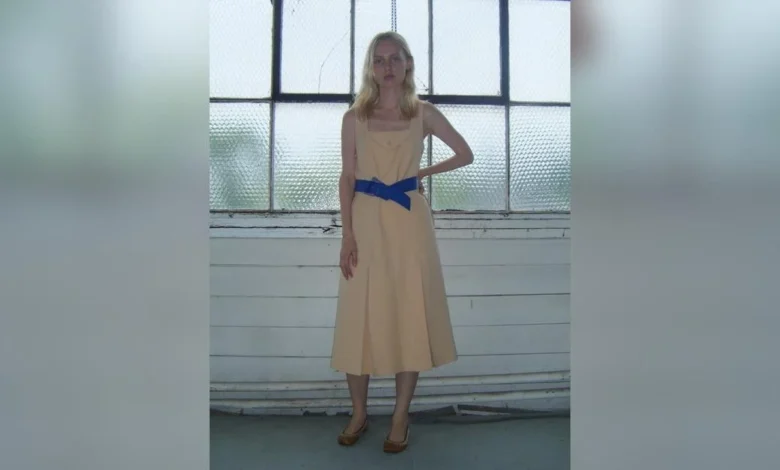
The intersection of fashion, fine art, and narrative storytelling often relies on the visual shorthand of clothing to convey personality, class, and emotional state before a single line of dialogue is spoken. For costume designer and stylist Jackie Knight, this process begins long before an actor steps onto a soundstage or into a fitting room. Rather than depending exclusively on digital mood boards or the flattened aesthetics of internet search algorithms, Knight’s methodology is grounded in rigorous, real-world observation—a practice shaped by her early academic foundations in fine art and curation.
Operating across a diverse portfolio that includes high-profile commercial campaigns, narrative films, music videos, and digital media projects, Knight has carved out a distinct niche in the styling industry. Her professional credits span collaborations with global conglomerates such as Apple, Amazon, Instagram, Ford Motor Company, and OVO, alongside high-visibility music video productions—including a widely viewed project for recording artist Drake that has amassed upwards of 11 million views. Despite the fast-paced nature of commercial production, where timelines are compressed and visual clarity must be achieved instantaneously, Knight maintains an analog, slow-looking approach to character development that prioritizes authenticity over transient fashion trends.
From Fine Art to Wardrobe: The Evolution of a Stylist
Knight’s entry into the world of costume design was not linear. Initially enrolled in a costume design program at Dalhousie University, she later pivoted to pursue a degree in curating and criticism at OCAD University. This transition proved pivotal in shaping her professional philosophy. During and after her studies, she worked closely within the contemporary art community, including a stint as an assistant to artist Shelley Adler and employment at the Franz Kaka gallery in Toronto.
This background fundamentally altered how she approached garments. In the visual arts, an object is rarely evaluated on surface-level appeal alone; context, historical weight, and conceptual underpinnings are paramount. Translating this mindset to costume design, Knight views clothing not merely as items to be worn, but as narrative text. A garment must justify its existence within the internal logic of a project, serving as an extension of a character’s lived experience.
Reflecting on her early misconceptions of the profession, Knight has noted that outsiders frequently mistake styling for an intuitive exercise in shopping and aesthetic curation. In practice, however, she discovered that the discipline demands rigorous problem-solving, psychological insight, and deep labor to achieve an effortless appearance on screen. This meticulous attention to detail has earned her recognition within industry publications such as Ad Age, The Drum, Shots, Ads of the World, and Little Black Book, cementing her reputation among directors and production companies who rely on her to construct cohesive visual worlds under tight deadlines.
The Methodology of Observation
A central tenet of Knight’s creative process is the rejection of homogenized digital aesthetics. While online platforms offer endless repositories of reference imagery, she argues that relying solely on curated digital feeds results in predictable, uninspired character design. Instead, her research is conducted in transit—documenting the idiosyncratic styling choices of everyday people encountered on the street, during travels, or in ordinary public spaces.
This field research focuses on the subtle, often overlooked markers of human behavior: the functional wear of an older jacket that has softened over years of use, the specific way a tie is tucked before eating, or the practical utility of footwear chosen for necessity rather than display. By cataloging these real-world anomalies, Knight builds comprehensive reference archives that inform her work, ensuring that the characters she outfits possess a tangible history.

This commitment to authenticity directly influences her execution on set. Knight actively resists the impulse to "overdress" or over-engineer a character’s wardrobe. In her view, excessive styling creates a barrier that constantly reminds the audience they are watching a performance. By contrast, strategic restraint—such as a weathered button, a subtle stain, or a garment that appears to have survived multiple professions—allows the audience to subconsciously piece together a character’s backstory without heavy-handed exposition.
The Demands of Commercial Production and Narrative Pace
The modern commercial landscape presents unique challenges for costume designers. Unlike feature films, which afford months of pre-production and extended character arcs, commercials often require the immediate establishment of a complex familial history, professional background, or emotional state within a window of 15 to 60 seconds.
Knight has adapted successfully to this high-speed environment, utilizing the constraints of commercial production to hone her visual efficiency. In successful commercial wardrobe design, the viewer absorbs contextual information instantaneously—such as the years of wear evident in a father’s shirt or the quiet rebellion represented by a teenager’s accessory choice. These micro-narratives require immense precision, balancing the demands of the brand, the director’s vision, and the editor’s cuts without sacrificing human realism.
Despite the rapid turnaround times required in advertising, Knight maintains a strict adherence to analog principles. She remains skeptical of the increasing reliance on automated tools and digital shortcuts in creative fields, asserting that genuine emotional resonance stems exclusively from lived human observation. The subtle imperfections she seeks out—a frayed cuff, an unexpected color pairing, or an imperfect fit—are qualities that algorithms and mass-produced aesthetics typically fail to capture with affection or nuance.
Broader Industry Implications and Future Outlook
As the entertainment and advertising industries continue to navigate shifts in digital media consumption and automated content generation, designers like Knight highlight the enduring value of human-centric storytelling. The ability to imbue physical objects with psychological depth remains a vital component of visual media, directly influencing how audiences connect with narrative content on an emotional level.
Looking ahead, Knight’s career trajectory points toward an expansion into feature-length independent cinema. This transition offers the opportunity to engage in slower, more immersive production rhythms, allowing her to develop character wardrobes across extended narrative arcs.
Yet, regardless of the medium—whether a high-visibility global ad campaign or a character-driven indie film—her core objective remains consistent. By anchoring her designs in the eccentricities of real life, Jackie Knight ensures that the individuals inhabiting the screen do not merely function as temporary images, but retain the lingering impression of a life continuing long after the frame fades to black.