Apollo Scooters Targets the Mass Market with the Launch of Its Most Affordable Electric Scooter Yet, the Dash

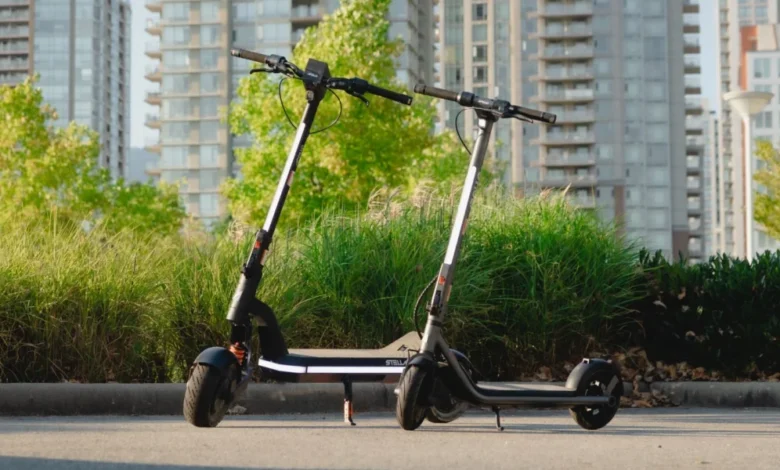
Known primarily for engineering high-performance, premium electric mobility solutions for urban commuters, Apollo has officially shifted its commercial strategy by introducing its least expensive model to date: the Apollo Dash. Retailing at a standard manufacturer’s suggested retail price (MSRP) of $699—and temporarily discounted to $599 as part of an aggressive Black Friday promotional window running through November 30—the Dash represents a calculated pivot. Rather than functioning as a stripped-down, budget-tier commodity scooter designed to cut corners, the Dash is engineered to distill Apollo’s proprietary hardware and software technology into a more accessible price bracket. This strategic shift places the premium manufacturer into direct competition with established mass-market entry-level giants such as Segway, Xiaomi, and NIU.
Evolution of the Electric Scooter Market and Apollo’s Strategic Pivot
Over the past several years, the urban personal electric vehicle (PEV) market has matured rapidly. Brands have increasingly stratified into two distinct categories: mass-market entry-level manufacturers focusing on high-volume, low-cost commuter vehicles, and premium manufacturers focusing on high-speed, dual-motor, long-range machines equipped with advanced suspension systems. Apollo successfully carved out its reputation in the latter category, capturing a loyal customer base seeking robust build quality and advanced engineering.
However, industry data reveals a distinct consumer migration pattern. Market research indicates that a staggering 52% of Apollo’s existing customer base previously owned entry-level scooters from mass-market competitors like Segway, NIU, and Xiaomi. Historically, these riders faced a significant financial barrier when looking to upgrade, as transitioning to an Apollo machine typically meant crossing the $1,000 threshold.

Recognizing this market friction, Apollo conceptualized the Dash to bridge the gap. By lowering the entry price to $599, the company aims to capture urban commuters much earlier in their consumer lifecycle, integrating them into the proprietary Apollo ecosystem before they invest in competing mid-tier brands.
Hardware Engineering and Technical Specifications
To achieve a competitive price point without sacrificing core reliability, Apollo’s engineering team focused on optimizing performance architecture. The Apollo Dash is built around a robust 48-volt electrical system, a notable inclusion for a vehicle in the sub-$700 price class. This 48V architecture powers a Bosch motor rated at 600 watts of nominal power and 1,200 watts of peak power, capable of propelling the scooter to a top speed of 20 mph (32 km/h).
Powering the system is a 480Wh battery pack, which Apollo rates for up to 25 miles (40 km) of range when operated in Eco mode. A critical advantage of the 48V electrical architecture, according to the manufacturer, is its ability to maintain consistent power delivery as the battery depletes. Lower-cost scooters utilizing standard 36V systems frequently suffer from sluggish, degraded performance during the final third of a battery cycle. The Dash’s higher voltage threshold helps mitigate this voltage sag, ensuring stable throttle response throughout the commute.
Weighing in at 43 lbs (19.5 kg), the Dash strikes a deliberate balance between structural rigidity and portability, making it manageable for commuters who need to carry the vehicle up flights of stairs or stow it beneath a desk.

Engineering Trade-Offs and Design Limitations
Developing a competitive mass-market vehicle inevitably requires design compromises. To hit the $599 introductory price point, Apollo elected to omit mechanical or hydraulic suspension entirely from the Dash. Consequently, the ride quality relies entirely on the chassis geometry and pneumatic tires rather than shock absorbers.
Furthermore, the vehicle carries a strict maximum payload capacity of 220 lbs (100 kg). Company representatives have candidly noted that heavier riders, or those navigating exceptionally uneven terrain, steep urban inclines, and poorly maintained road infrastructure, would be better served by stepping up to more robust models within the lineup, such as the Apollo Go.
Feature Set and Technological Integration
Despite the absence of suspension and the lower price ceiling, the Apollo Dash retains a remarkably comprehensive feature list typically reserved for much more expensive personal electric vehicles.

Safety and durability features include an IP66 water resistance rating, shielding vital electronic components against heavy rain and localized water ingress. The scooter utilizes self-healing tubeless tires designed to automatically seal minor punctures, reducing routine maintenance headaches for daily commuters. Braking duties are handled by a sophisticated regenerative braking system that simultaneously reclaims kinetic energy to feed back into the battery pack.
For urban visibility and security, the Dash incorporates built-in electronic turn signals, Apollo’s signature Beam stem light for nighttime navigation, NFC unlocking capabilities, and native Apple Find My integration. The hardware communicates seamlessly with the proprietary Apollo smartphone app, allowing users to customize ride profiles, monitor vehicle diagnostics, and track location data in real time.
Rigorous Validation and Pre-Production Testing Chronology
Prior to greenlighting mass production, Apollo subjected the Dash prototype to an extensive validation timeline. The company reports that the structural frame underwent rigorous stress testing equivalent to 10,000 kilometers (6,200 miles) of simulated wear and tear.
Following laboratory durability trials, Apollo deployed a closed beta test program to evaluate real-world performance under diverse urban conditions. Over the course of the beta phase, testers accumulated a collective 1,002 miles across 144 distinct rides. Crucially, the beta cohort reported zero tire punctures or unexpected mechanical maintenance issues. Data logged during the trials indicated that beta riders averaged 19 miles (30 km) per trip while consistently returning to their destinations with an average of 29% battery reserve remaining, validating the real-world efficiency of the 480Wh battery pack and motor pairing.

Market Implications and Competitive Landscape
The launch of the Apollo Dash marks a pivotal milestone not only for the company’s product portfolio but also for the broader micro-mobility market. By positioning a feature-rich, high-voltage vehicle at the $599 launch price ($699 MSRP), Apollo is directly challenging mass-market incumbents that have long dominated commuter sales through sheer affordability.
Industry analysts suggest that this move could intensify competition within the mid-to-low tier commuter segment. Traditional budget brands may find themselves under pressure as consumers increasingly demand premium software integrations—such as Apple Find My, NFC security, and advanced app connectivity—at lower price points. At the same time, Apollo’s parallel Black Friday promotions across its higher-end catalog indicate that the brand is attempting to capture market share across all consumer segments simultaneously.
As urban centers continue to prioritize sustainable, compact personal transportation alternatives, the success of the Apollo Dash will likely serve as a litmus test for whether premium micro-mobility manufacturers can successfully scale downward into mass-market volume without compromising brand equity or long-term product reliability.