Renault Unveils the Forefront Concept: A Modular Autonomous Electric Vehicle Designed for High-Risk Military and Civilian Missions

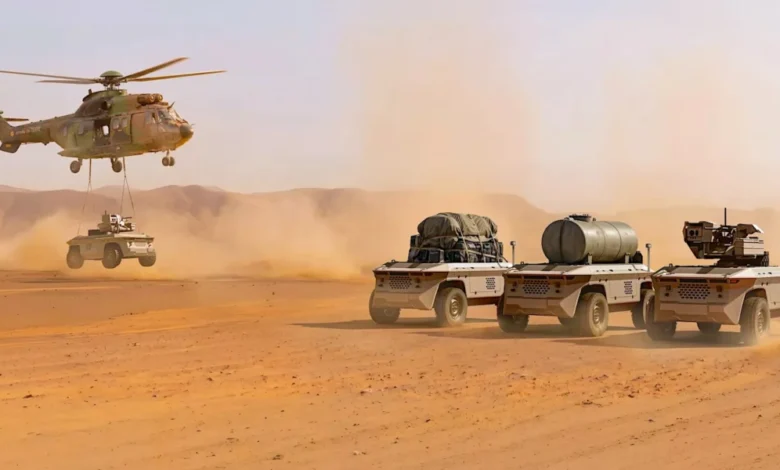
The evolution of modern military logistics and tactical deployment is increasingly intersecting with sustainable technology, prompting legacy automotive manufacturers to adapt their engineering expertise for defense applications. Renault Group, one of Europe’s leading automotive producers, has announced a strategic collaboration with Belgian defense electronics firm John Cockerill to develop the Forefront concept. This autonomous, all-electric ground vehicle platform is specifically engineered to navigate complex terrain and execute high-risk operations for the French Army, known formally as the Armée de Terre, while maintaining dual-use capabilities for the civilian sector.
The partnership merges Renault’s industrial capacity for high-volume, cost-effective vehicle manufacturing with John Cockerill’s specialized defense engineering capabilities. As modern armed forces seek to minimize personnel exposure in hostile environments, unmanned ground vehicles (UGVs) have emerged as a critical asset. The Forefront platform represents a significant step toward industrializing reliable, modular robotic transport systems that can operate independently in hazardous and inaccessible theaters.
Strategic Collaboration and Engineering Objectives
The development of the Forefront concept addresses a growing demand for versatile autonomous platforms capable of performing logistical and tactical tasks without risking human lives. According to Renault Group CEO François Provost, the project leverages the unique strengths of both corporate entities to deliver a scalable solution for demanding sectors.

"Forefront Concept demonstrates the contribution that Renault Group’s industrial and technological expertise can make to a strategic sector such as unmanned ground vehicles with multiple applications expected across both civilian and military sectors in the years to come," Provost stated. "This innovative project brings together two complementary areas of expertise: Renault Group’s in the rapid, large-scale and cost-effective development and production of high-performance, reliable technological products and John Cockerill’s in the defense industry."
The collaboration relies on Renault’s established framework for mass production, ensuring that advanced military-grade technology can be industrialized at a controlled cost. By utilizing standardized automotive components and scalable EV architectures, the partnership aims to avoid the traditionally inflated procurement costs associated with bespoke defense manufacturing. Meanwhile, John Cockerill contributes decades of tactical vehicle development and electronics expertise, ensuring the platform meets the rigorous survivability, mobility, and communication standards required by modern armed forces.
Design and Dual-Use Versatility
While initially conceptualized to support military logistics in high-risk zones, the Forefront platform has been designed with modularity at its core, allowing it to transition seamlessly between defense and industrial applications. The vehicle’s architecture supports various mission modules, enabling it to function as a cargo carrier, remote surveillance platform, or infrastructure support mule.
The emphasis on modularity aligns with broader trends in both defense procurement and commercial utility vehicles. In hazardous industrial environments—such as heavy construction, mining, or post-disaster recovery—unmanned platforms mitigate risks to workers while maintaining productivity. By positioning the Forefront as both a military logistics asset and a heavy-duty industrial mule, Renault and John Cockerill aim to secure a broad market footprint that spans European defense ministries and commercial sectors.

Industry analysts note that dual-use autonomous platforms offer significant financial advantages, as shared research and development costs can be amortized across both military and civilian production lines. This economic model ensures a more sustainable manufacturing ecosystem for specialized electric platforms that might otherwise face limited production runs if restricted exclusively to defense contracts.
Chronology and Development Roadmap
The Forefront project is currently in its initial conceptual and rendering phase. Following the formal introduction of the design, the engineering teams from Renault and John Cockerill are preparing to transition the project from digital models to physical prototypes.
Over the coming months, the first series of Forefront prototypes will undergo rigorous field testing and tactical evaluations. These trials will take place within controlled military proving grounds and simulated operational environments to assess the vehicle’s structural durability, energy efficiency, autonomous navigation capabilities, and off-road mobility. Feedback gathered from these initial trials will inform subsequent iterations of the hardware and software architecture before any consideration is given to full-scale series production.
This phased testing schedule mirrors standard defense acquisition protocols, where concepts must prove their reliability under extreme stress before receiving authorization for operational deployment. The involvement of the Armée de Terre in upcoming evaluations ensures that the platform’s development remains closely aligned with the actual tactical requirements of modern infantry and logistical units.

Implications for the Defense and Automotive Sectors
The introduction of the Forefront concept highlights a broader industry shift toward electrification and autonomy within military supply chains. Traditional defense contractors are increasingly partnering with mainstream automotive manufacturers to leverage commercial advancements in battery technology, electric powertrains, and artificial intelligence-driven navigation.
For Renault Group, the project represents an opportunity to diversify its revenue streams and demonstrate the robustness of its electric vehicle architectures in extreme conditions. As European nations look to modernize their defense capabilities while meeting stringent environmental targets, electric and hybrid military platforms are expected to play a crucial role in reducing logistical carbon footprints and fuel dependency on the battlefield.
Furthermore, autonomous ground vehicles reduce the vulnerability of supply convoys, which have historically been primary targets in asymmetric warfare. By utilizing battery-electric propulsion, such vehicles also benefit from a significantly lower thermal and acoustic signature compared to conventional internal combustion engine counterparts, enhancing operational stealth during reconnaissance and supply missions.
As the Forefront prototypes advance toward their upcoming field trials, the success of the Renault-John Cockerill partnership will serve as a bellwether for how effectively commercial automotive manufacturing techniques can be integrated into the highly specialized defense sector.