While Most of America Pushed Back Against Big Tech, This Small North Dakota Town Embraced a Massive $3 Billion Data Center

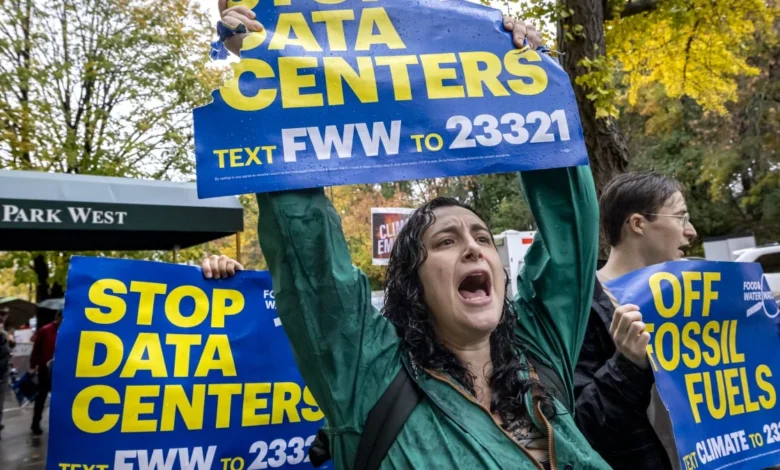
The American electoral landscape on Election Day bore witness to a widespread, coordinated pushback against the rapid expansion of digital infrastructure. Across multiple states and municipalities, voters approved more than 40 distinct ballot measures designed to halt, slow, or heavily regulate the construction of new data centers. This wave of resistance reflected growing anxieties over the immense strain these facilities place on local electrical grids, water resources, and community noise levels, driven largely by the surging demands of artificial intelligence and cloud computing. Yet, amidst this national wave of skepticism and regulatory tightening, a solitary rural community chose a radically different path.
In the small town of Harwood, North Dakota, residents decisively rejected a ballot measure that would have introduced additional bureaucratic hurdles and stringent oversight for large-scale developments, specifically targeting facilities like data centers. While the overwhelming majority of American municipalities experiencing the tech boom have rushed to erect protective zoning barriers, Harwood’s electorate signaled a willingness to welcome industrial-scale technological growth, setting the community apart as a unique case study in rural economic development versus modern infrastructural expansion.
The Local Referendum and the Numbers Behind the Vote
The vote in Harwood centered on a specific procedural question rather than a direct referendum on construction itself. Residents were asked to consider a ballot measure that would have mandated additional, rigorous steps for the town government when evaluating, approving, and administering large commercial developments. Proponents of the measure argued that heightened oversight was necessary to protect the rural character of the area and ensure that massive infrastructure projects would not overwhelm local municipal resources.
However, the local electorate disagreed. Out of a total population hovering between 845 and 940 residents—depending on municipal records versus federal census estimates—approximately 430 voters cast ballots in the election. When the tallies were finalized, roughly 75 percent of those voters cast their ballots against the proposed administrative restrictions. By defeating the measure, the town effectively streamlined the pathway for major industrial investments, ensuring that future evaluations would proceed under existing, less cumbersome regulatory frameworks.
This decisive outcome quickly drew national attention, prompting some media outlets, including The Washington Post, to label Harwood as a singular anomaly: the rare U.S. town that explicitly said yes to data centers during an election cycle defined by nationwide resistance. Although the literal construction of the facility was not formally a standalone question on the ballot, the rejection of the regulatory hurdle served as a clear mandate from the community in favor of economic partnership with the tech sector.
The Driving Force: Applied Digital and the $3 Billion Project
At the center of Harwood’s localized debate is a massive economic proposition: a proposed $3 billion, 1.8-million-square-foot data center slated for construction immediately outside the town limits. Spearheaded by Applied Digital, a prominent designer and operator of next-generation digital infrastructure, the sprawling facility represents one of the largest capital investments in the region’s modern history.
For a small rural community, a project of this magnitude carries profound economic implications. Proponents of the development point to the potential for substantial property tax revenues, which can be utilized to improve local public schools, upgrade municipal roads, and fund emergency services without placing a heavier tax burden on residential property owners. Furthermore, the construction phase and subsequent operational longevity of a 1.8-million-square-foot facility promise to generate construction jobs, technical careers, and secondary economic stimulation for local businesses, ranging from contractors to hospitality providers.
Applied Digital’s investment strategy aligns with a broader national trend wherein data center developers increasingly look away from congested, high-cost metropolitan data hubs like Northern Virginia’s Data Center Alley. Instead, companies are targeting rural and semi-rural regions where vast expanses of land are accessible, and where local governments are often more eager to negotiate favorable tax incentives in exchange for long-term economic revitalization.
A National Wave of AI and Data Center Backlash
To fully understand the significance of Harwood’s vote, it must be viewed against the broader backdrop of the 2026 midterm elections, which served as a national referendum on the physical footprints of the artificial intelligence boom. Throughout 2026, public apprehension escalated regarding the unprecedented resource consumption of modern data centers. These facilities, packed with thousands of high-performance servers, require staggering amounts of electricity to power the processors and sophisticated cooling systems necessary to prevent overheating.
In numerous states, including traditional technology corridors and emerging secondary markets alike, citizens mobilized to express their discontent. Environmental concerns regarding carbon emissions from fossil-fuel-reliant grids, coupled with fears of skyrocketing residential electricity bills and severe water depletion from evaporative cooling systems, fueled a potent political backlash. On Election Day, voters translated these frustrations into legislative action, successfully passing more than 40 local and regional measures aimed at curbing data center expansion.
Industry analysts have characterized this collective resistance as a critical turning point—a clear indication that the physical reality of the AI revolution is colliding with community tolerance limits. While tech sector executives continue to emphasize the economic inevitability of digital transformation, local populations are increasingly asserting their right to shape the physical landscapes of their hometowns. Consequently, legislative bodies in several U.S. states are already drafting bills for the upcoming 2027 legislative sessions that could expand state-level bans or impose moratoriums on new data center permits.
Chronology of Events Leading to the Harwood Vote
The developments in Harwood did not happen in a vacuum; they represent the culmination of months of local discourse, proposal filings, and nationwide political polarization regarding digital infrastructure.
Early Planning and Proposal Phase: Applied Digital identifies the region outside Harwood, North Dakota, as an optimal site for a massive 1.8-million-square-foot digital infrastructure campus, initiating preliminary discussions with local stakeholders and municipal authorities regarding zoning and resource access.
Rising National Tensions: Throughout the first half of 2026, public debate intensifies nationwide over the environmental and infrastructural strains caused by AI data centers, culminating in the drafting of restrictive ballot measures across multiple states ahead of the midterms.
Local Mobilization in North Dakota: As news of the multi-billion-dollar project spreads, local community groups in and around Harwood begin debating the long-term impact of the development, leading to the introduction of a local ballot measure intended to increase bureaucratic oversight and evaluation standards for large-scale projects.
Election Day Referendum: On Election Day, voters across the United States cast ballots on dozens of anti-data center measures. Concurrently, Harwood residents head to the polls to decide on their town’s administrative hurdle proposal.
The Decisive Result: With approximately 75 percent of participating voters rejecting the added restrictions, Harwood stands apart from the national trend, effectively clearing the procedural path for Applied Digital’s development and cementing its status as an outlier in the 2026 electoral landscape.
Economic Versus Environmental Priorities
The divergence between Harwood’s decision and the national trend highlights a fundamental tension in modern American infrastructure development: the friction between local economic advancement and broader environmental or quality-of-life concerns.
For communities facing economic stagnation or a declining tax base, the arrival of a multi-billion-dollar corporate entity like Applied Digital can feel like an economic lifeline. Rural towns often struggle to retain younger populations and maintain aging infrastructure. The substantial corporate tax contributions promised by large-scale data centers offer a tangible solution to these persistent municipal challenges, funding vital public goods without requiring deep cuts to local services.
Conversely, critics and resident-led opposition groups in other parts of the country argue that the long-term costs frequently outweigh the initial financial windfall. Concerns over grid reliability are paramount; when massive data centers draw tens or hundreds of megawatts of continuous power, local utility companies are often forced to extend fossil-fuel generation or fast-track transmission line construction, frequently passing infrastructure upgrade costs down to ordinary residential ratepayers. Furthermore, the industrial hum of cooling fans and the heavy industrialization of previously pastoral landscapes can permanently alter the character of rural communities.
Official Responses and Industry Implications
While major industry trade groups and tech conglomerates have largely maintained a cautious public posture regarding the wave of midterm restrictions, the underlying message has not gone unnoticed. Representatives for data center developers have repeatedly emphasized that modern facilities are increasingly designed with energy efficiency, water conservation, and renewable energy integration in mind. Companies argue that technological innovations in server architecture and cooling methodologies will progressively mitigate the environmental footprint of these installations.
Nevertheless, the outcome in Harwood provides a contrasting narrative that the tech industry is likely to leverage in future public relations and lobbying efforts. By demonstrating that at least some local populations enthusiastically embrace high-tech investment, proponents can argue that community collaboration and thoughtful economic partnership remain viable alternatives to blanket bans and moratoriums.
Economic analysts observing the sector note that the events in North Dakota may serve as a blueprint for how developers approach site selection in the future. Rather than focusing exclusively on densely populated states where regulatory pushback is fiercest, companies may increasingly prioritize rural municipalities where local governance structures are more adaptable and where communities view industrial technological development as an opportunity for revitalization rather than a threat to local resources.
Broader Impact and What Lies Ahead for 2027
As the dust settles on the 2026 midterm elections, the national conversation surrounding digital infrastructure is pivoting toward the legislative agendas of 2027. The sheer volume of approved anti-data center measures guarantees that lawmakers at both the state and federal levels will be forced to address the growing friction between energy grid capacity and technological expansion. States that have historically welcomed tech investments are now grappling with the reality of constrained power supplies, prompting a reevaluation of tax incentives and zoning exemptions.
For Harwood, North Dakota, the immediate future involves transitioning from the political debate of the ballot box to the practical realities of large-scale construction. As Applied Digital moves forward with its $3 billion project, municipal leaders will face the ongoing responsibility of monitoring the development to ensure that local infrastructure adapts smoothly to the influx of industrial activity. While the town’s residents have chosen to embrace the economic potential of the digital age, the long-term success of the partnership will depend heavily on effective project management, environmental stewardship, and continuous communication between the developer and the community.
Ultimately, Harwood’s vote serves as a powerful reminder that national trends do not dictate the will of every individual community. While the broader American landscape demonstrated a profound hesitation toward the rapid, unchecked expansion of AI infrastructure, this small North Dakota town chose to gamble on the future of technology, betting that the rewards of a multi-billion-dollar investment outweigh the uncertainties of the digital frontier.